
Table of Contents
What Does Ham Radio Stand For? Easy Beginner's Guide
- Posted by:Retevis
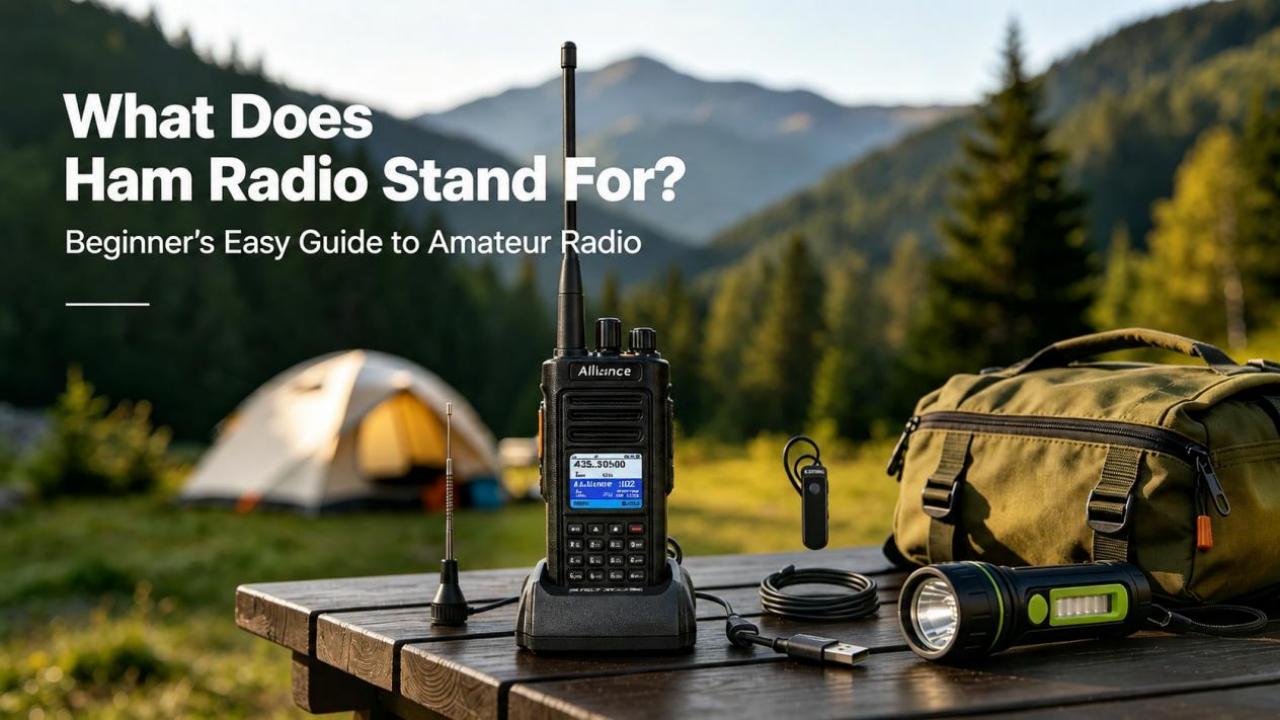
What Does Ham Radio Stand For Exactly?
What ham radio actually means
Put simply: ham radio stands for amateur radio. It’s a non-commercial hobby open to people who earn an official license. Licensed operators can use special radio frequency bands to talk to others nearby or across the world. You can use voice, text, digital data, or even Morse code to communicate. Groups like the U.S. FCC and global telecom organizations set rules for the hobby to keep signals clear and avoid interference.
Where the word “ham” comes from
The word “ham” got its start in the 1800s, when telegraph machines were the main tool for long-distance messages. Professional telegraph workers used “ham” — short for “ham-fisted” — to tease unskilled beginner operators. These new users often made mistakes and disrupted messages.
When wireless radio (the early version of today’s radios) appeared in the early 1900s, the nickname carried over. Professional radio operators used “ham” to make fun of hobbyists whose homemade equipment sometimes messed with commercial signals. Over time, amateur radio operators took the word and turned it into a title of pride. By the 1920s, “ham radio” was the standard name for the hobby.
Some people claim the name comes from three Harvard students’ initials, but most historical records confirm the telegraph origin is the real story.
Ham radio vs. amateur radio — is there a difference?
If you’re still asking what does ham radio stand for, you might wonder if “ham radio” and “amateur radio” mean different things. The short answer: no, they describe the exact same thing.
“Amateur radio” is the formal name used by governments and official groups. “Ham radio” is the casual name used by hobbyists and the general public.
Operators call themselves “hams” or “amateur radio operators” interchangeably. There’s no functional difference between the two terms.
What you can do with ham radios
Ham radios isn’t just for casual chats. People use it for all kinds of practical and fun activities:
- Talk to people nearby using local repeater towers that extend signal range
- Make contact with people in other countries using shortwave frequencies
- Send emergency messages when cell towers and internet go down
- Build and test your own antennas or equipment
- Communicate through amateur radio satellites in space
- Help with community events like marathons or parades
- Try Morse code or digital message modes
Why Ham Radios Still Matters in 2026
You might think ham radio is old-fashioned in the age of smartphones, but it still offers unique benefits you can’t get anywhere else.
First, it works when all other communication fails. During hurricanes, wildfires, earthquakes, and other disasters, cell towers often fall, internet cables break, and power goes out. Ham radios run on batteries and send signals directly through the air. They don’t need any other infrastructure to work. That makes them a critical lifeline for communities in crisis. Many hams volunteer with groups like ARES to help first responders during emergencies.
Second, it connects you to a global, welcoming community. Ham radio lets you talk to people in almost every country on Earth — no internet needed. Local radio clubs offer free training, exam help, and mentorship for new people. Scheduled group chats (called “nets”) give beginners a low-pressure way to practice. Most hams love helping new operators learn the ropes.
Third, it teaches you real, hands-on tech skills. When you use ham radio, you learn how electronics work, how radio signals travel, how to build antennas, and how to use digital communication tools. You don’t just passively scroll through a screen — you experiment, build, and problem-solve. The hobby grows with you: you can start with a simple handheld radio and work your way up to more advanced setups over time.
How to Pick Your First Ham Radio
Once you understand what does ham radio stand for and want to get started, picking your first radio can feel confusing. Here’s what you need to know to choose the right one for you.
First, ask yourself a few simple questions:
Will I use it mostly at home, or on the go?
Choose a base station radio for home use, or a handheld/mobile radio for outdoor and travel use.
How far do I want to talk to people?
Consider your range needs: local communication needs less power, while long-distance contacts may require higher power, better antennas, or repeaters.
How much do I want to spend?
Set a budget based on your needs. Entry-level radios are affordable, while advanced models offer more features and performance.
What license level do I plan to get?
Your license determines which frequencies, power levels, and operating privileges you can use. Choose a radio that matches your license goals.
Most beginners start with a Technician license, which works with VHF/UHF frequencies. If you plan to upgrade later for global shortwave access, look for a multi-band radio.
Ham Radio Type Comparison
There are three main types of ham radios for beginners. The table below breaks down how they compare:
|
Radio Type |
Portability |
Typical Power |
Price Range |
Best Use Case |
Who Should Buy It |
|
Handheld Radio(HT) |
Great (fits in your pocket) |
1–5 watts |
$25–$200 |
Local chats, hiking, events, emergency kits |
Total beginners, casual users |
|
Mobile Mounted |
Moderate (mounts in your car) |
25–50 watts |
$100–$500 |
Commuting, driving around the region |
People who want more range on the road |
|
Base Station |
Low (stays at home) |
50–100+ watts |
$300–$2,000+ |
Long-distance chats, home experimenting |
Serious hobbyists who want global range |
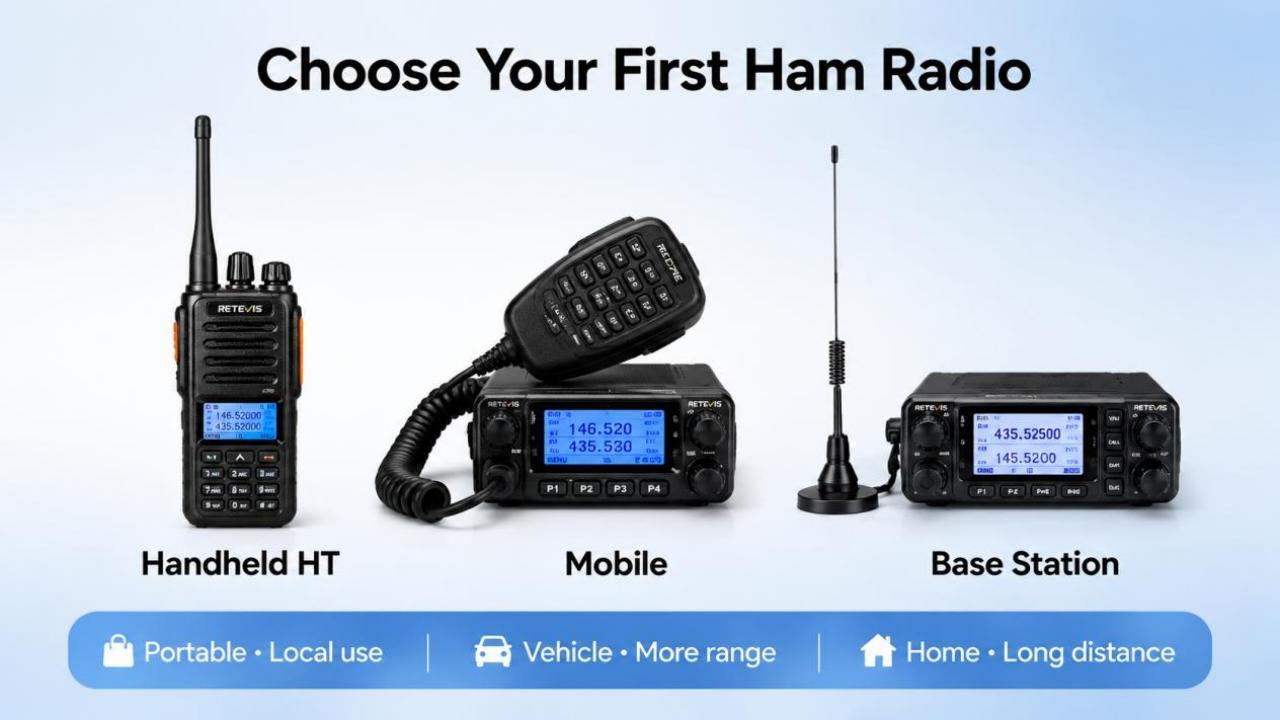
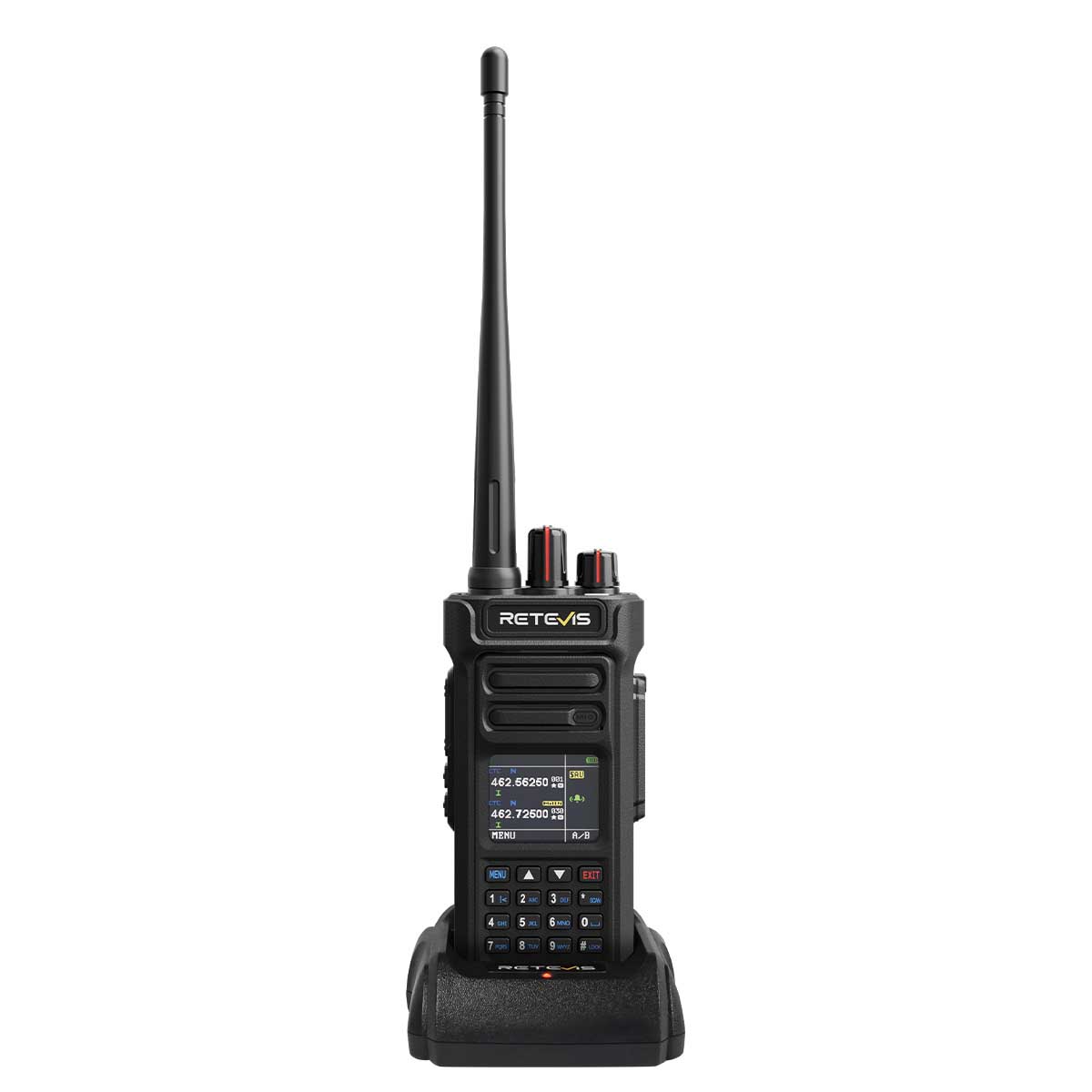
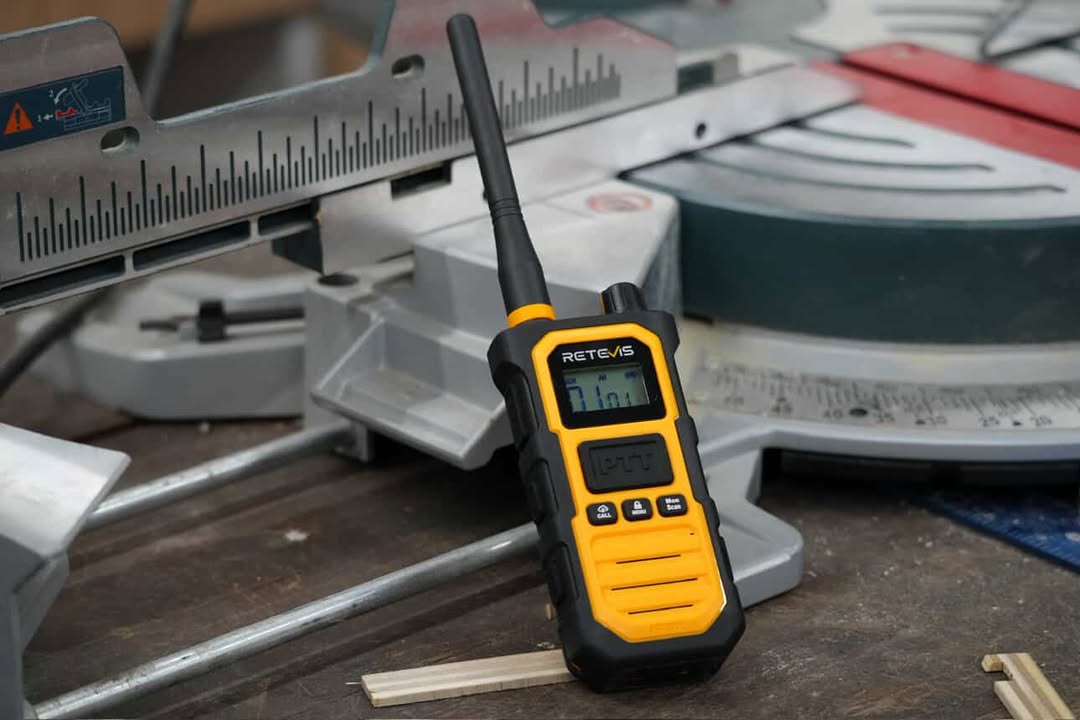
For almost all new operators, a handheld transceiver (HT) is the best first pick. It’s affordable, easy to carry, and works perfectly with an entry-level license. You can always add a mobile or base station later as you learn more.
Top features to look for in your first radio
You don’t need all the fancy features right away. Focus on these beginner-friendly options:
- Dual-band VHF/UHF support: works with the most common beginner frequencies
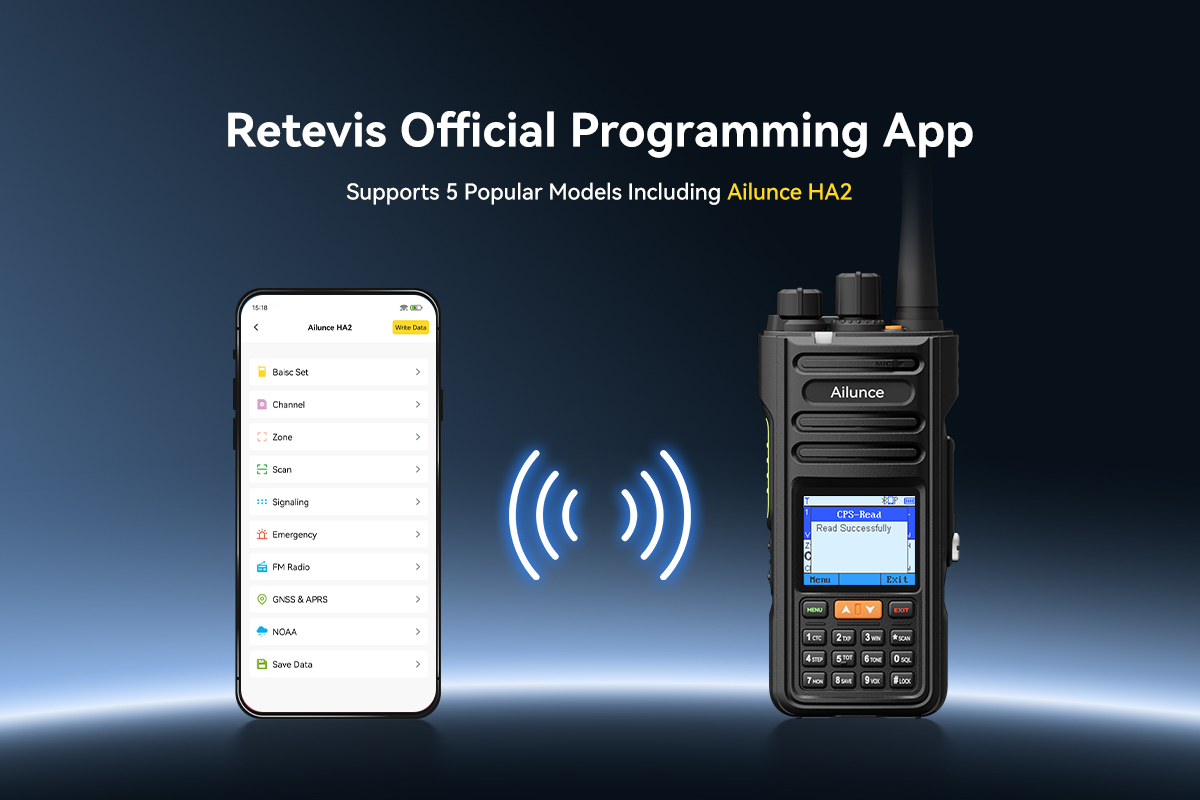
- Easy programming: works with free tools like CHIRP so you don’t have to type everything manually
- 8+ hours of battery life: lasts through a full day of use
- Weather alert channels: warns you of incoming storms
- CTCSS/DCS tone support: lets you use local repeater towers
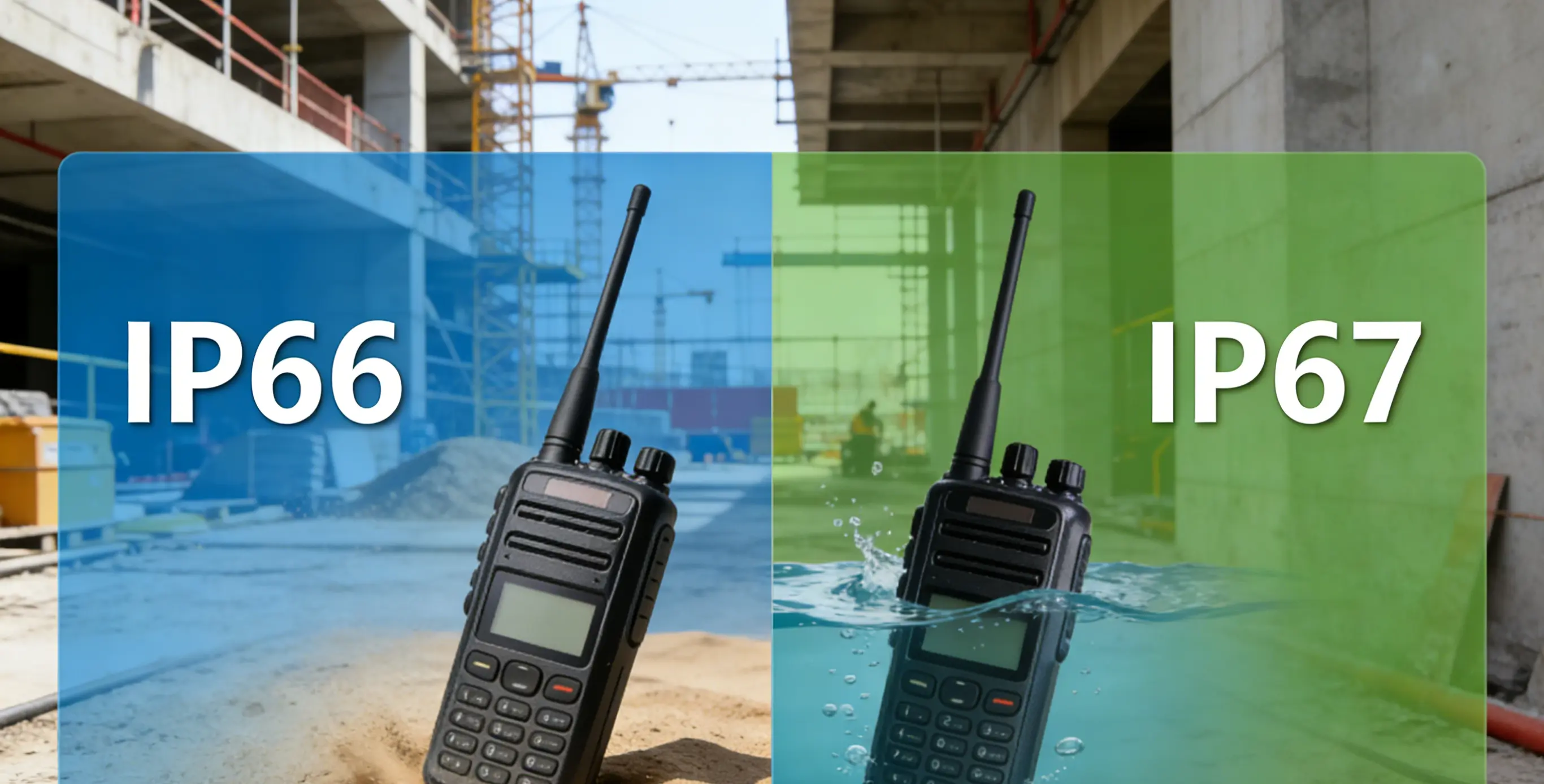
- Durable build: holds up to outdoor use and occasional drops
Key Rules Every New Operator Should Know
Before you buy a radio and get on the air, there are a few important rules you need to follow.
You need a license to transmit
This is the most important rule for anyone asking what does ham radio stand for: you must have a valid amateur radio license to send signals on ham frequencies. Listening to ham radio is always free and legal, but transmitting without a license can lead to big fines and legal trouble.
In the U.S., the FCC offers three license levels:
- Technician Class: The entry-level license. You pass a 35-question multiple-choice test about rules, safety, and basic radio theory. It gives you full access to VHF/UHF bands for local chats. Most beginners start here.
- General Class: The mid-level license. You pass a second 35-question test. It gives you access to most shortwave bands for global communication.
- Amateur Extra Class: The highest license. You pass a 50-question test. It gives you full access to every ham radio frequency and mode.
You don’t need to know Morse code for any license today. Most people can pass the Technician test after 10–15 hours of studying free online materials.
Basic Etiquette to Follow
Ham radio has a culture of politeness and respect. Follow these simple rules to make a good impression:
- Say your call sign at the start and end of every transmission
- Listen for a few seconds before you talk to make sure the frequency isn’t in use
- Keep your messages clear and short
- Avoid heated topics like politics or religion on public frequencies
- Never send encrypted messages — it’s against FCC rules
- Be patient with other beginners. Everyone was new once.
Four Common Myths & Facts
A lot of wrong ideas keep people from trying ham radio. Let’s clear them up:
- Myth 1: Only older people do ham radio. Fact: People of all ages enjoy ham radio, from kids to seniors. It’s growing in popularity with young people who love STEM, prepping, and off-grid living.
- Myth 2: You have to learn Morse code. Fact: The U.S. dropped Morse code requirements in 2007. Most hams use voice or digital modes exclusively.
- Myth 3: Ham radios are just expensive walkie-talkies. Fact: Regular walkie-talkies have very short range and use limited frequencies. Ham radios can reach much farther, access more bands, and work with repeaters and satellites.
- Myth 4: It’s too technical for beginners. Fact: You can start using a basic handheld radio with almost no prior knowledge. You can learn more advanced skills over time, and the community is happy to help.
Common Questions About Ham Radio
Do I need tech experience to start ham radio?
No. You can earn your Technician license and use a basic handheld radio without any prior tech experience. The test covers simple rules and safety facts that are easy to learn with free study guides. You can pick up more advanced skills at your own pace as you go.
How much does a ham radio license cost?
Most in-person exam sessions cost $15–$25 per try. If you pass, the FCC charges a $35 fee for your license, which lasts 10 years. You can find free study guides and practice tests online, so you can usually get licensed for under $60 total.
How far can a ham radio reach?
It depends on the type of radio and antenna you use. A basic handheld radio reaches 1–5 miles with its stock antenna, or 10–20+ miles if you use a local repeater. A home base station on shortwave frequencies can reach hundreds or thousands of miles — even across the world.
Is Morse code still used in ham radio?
Some hams still use Morse code (called “CW” in the hobby) for long-distance contacts, but you don’t have to learn it. You can enjoy a full ham radio career without ever using Morse code.
Final Thoughts & Next Steps
To wrap it up: what does ham radio stand for? It stands for amateur radio — a hobby of connection, learning, and community service that’s been around for over 100 years. In a world where most communication relies on the internet and cell towers, ham radio gives you independent, reliable communication that works no matter what.
If you’re ready to get started, follow these simple steps:
- Study for the Technician license test using free online practice tools.
- Find a local volunteer exam session near you.
- Buy an entry-level dual-band handheld radio to start practicing.
- Join a local ham radio club to meet other operators and get hands-on help.
You can start small with casual local chats, and grow into long-distance contacts, public service work, or technical experiments as you learn more.




 Google
 Amazon
Comments
No data Yet