
Table of Contents
Cross Band Repeater Radio in Action: From the HAM Shack to Off-Road Convoy – Bridging UHF and VHF in Three Scenarios
- Posted by:Retevis
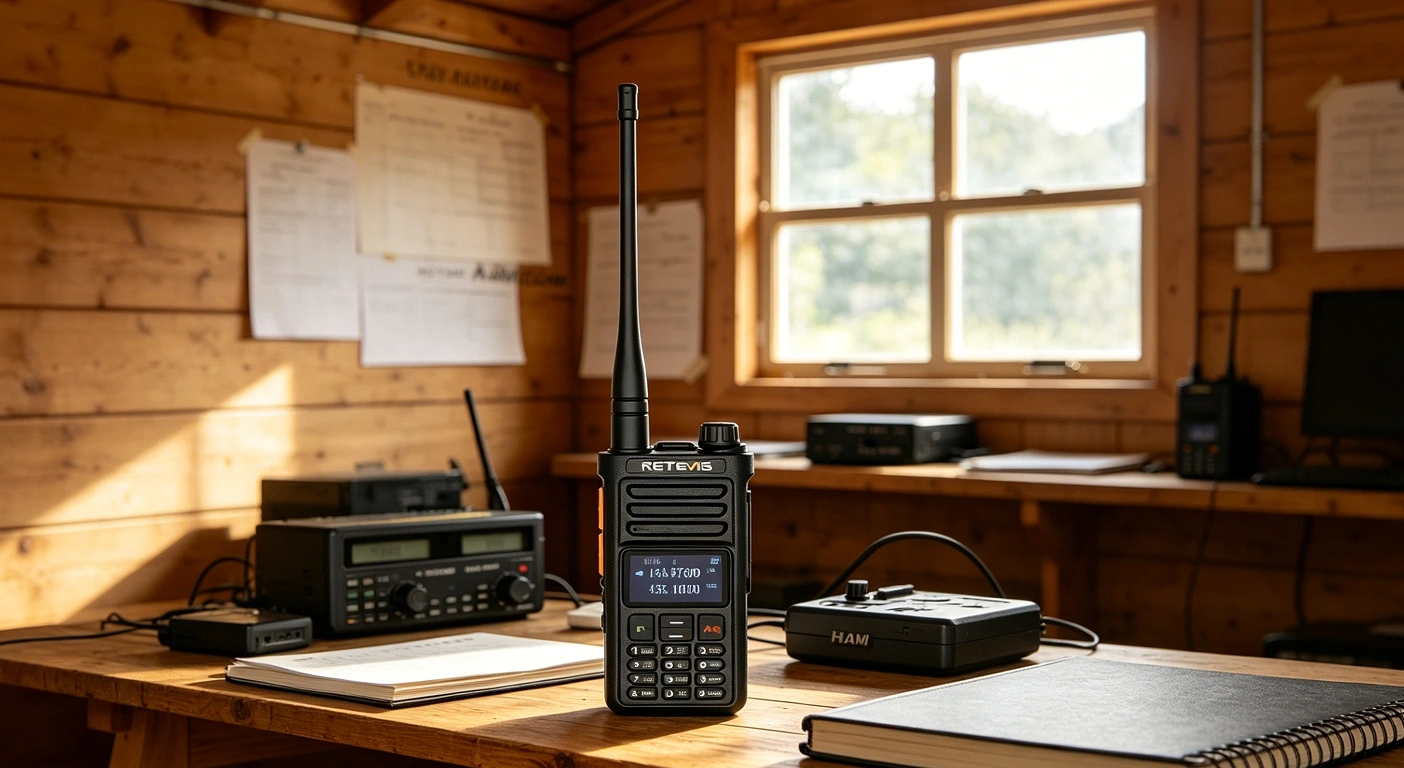
What Is a Cross Band Repeater Radio?
In wireless communications, band isolation has always been a core pain point for users. VHF offers low propagation loss but limited penetration through obstacles, while UHF provides strong penetration but poor diffraction over hills. When a team uses both VHF and UHF devices, communication gaps inevitably appear.
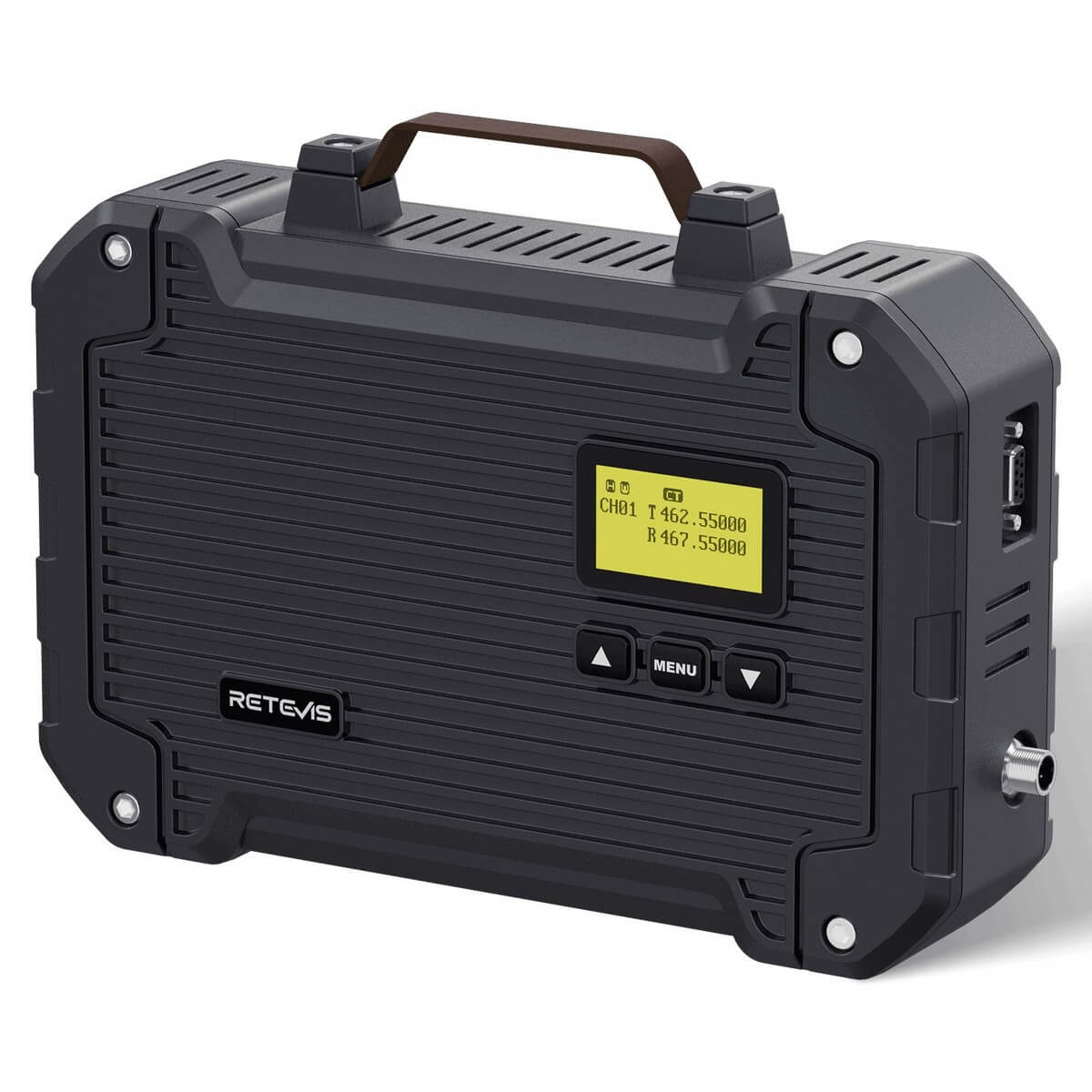
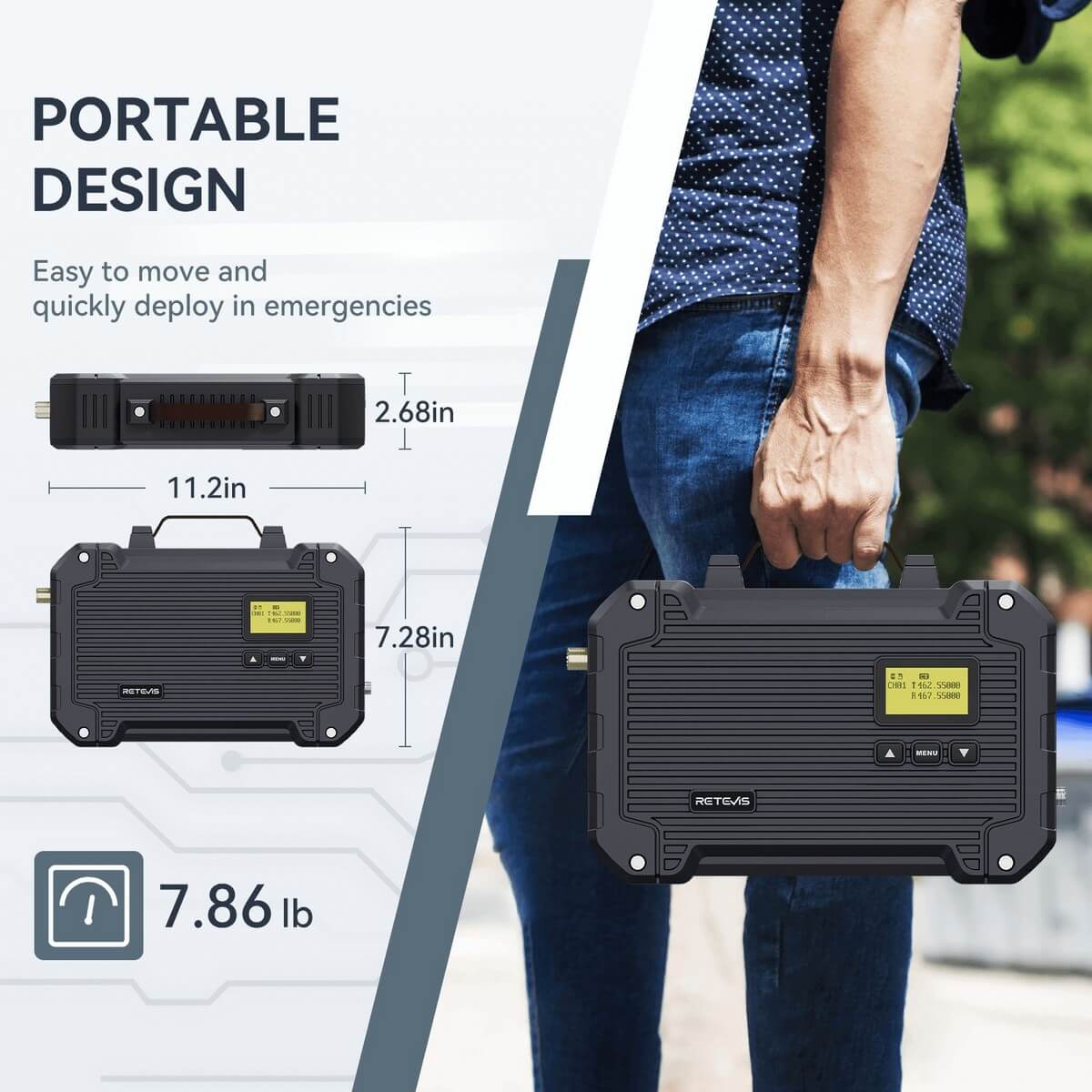
A cross band repeater radio solves this problem by receiving signals on one frequency band and automatically retransmitting them on another, bridging the gap between UHF and VHF. The RA89R‘s Aut Repeat (Automatic Repeater Function) supports three operating modes:
- OFF: Disables the repeater function for normal two-way radio operation.
- UNIDIR (Unidirectional): Signals are forwarded in one direction only (e.g., UHF→VHF or VHF→UHF). Reverse direction is not forwarded.
- BIDIR (Bidirectional): Signals are forwarded in both directions between bands, creating a full-duplex bridge.
Understanding these three modes is the first step toward effective cross band repeater radio configuration. Below, we examine three real-world off-road scenarios using the RA89R cross band repeater radio.
Scenario 1: HAM Shack Communication – Breaking Band Barriers and Extending Range
When the UHF handheld inside the shack can’t reach the VHF station outside
Many HAM operators have a fixed shack equipped with only a single band – for example, a VHF base station or a UHF mobile rig. When trying to contact a friend on the opposite band, direct communication is impossible. Handheld transceivers (HTs) inside the shack have low transmit power and struggle to reach distant repeaters. If the shack has an outdoor VHF Yagi antenna but the indoor HT is on UHF, the radio signal cannot be radiated effectively.
RA89R: Let the outdoor VHF antenna serve the indoor UHF gear
Deploy an RA89R in the HAM shack, configured in UNIDIR (unidirectional) mode. Connect the RA89R’s VHF port to the outdoor VHF antenna, and use the UHF port for indoor HTs. The indoor UHF HT transmits at low power; the RA89R receives and retransmits via the VHF antenna, enabling the signal to reach distant VHF repeaters.
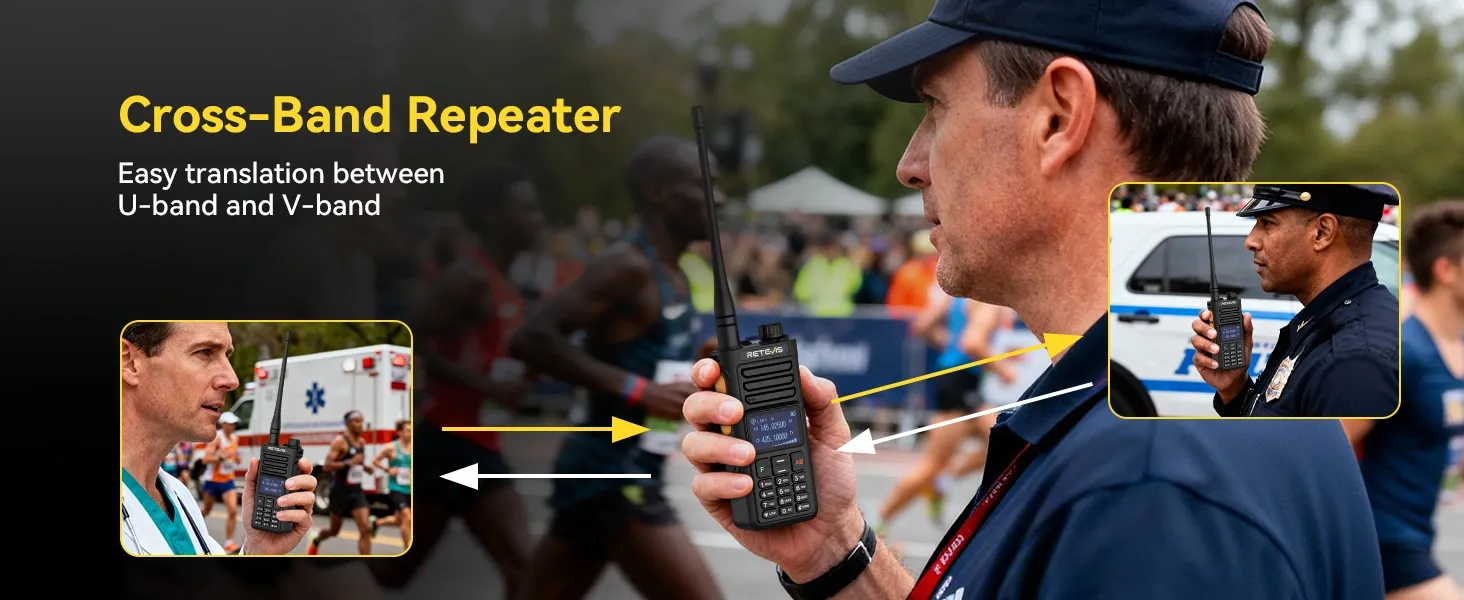 Conversely, when an external VHF station calls, the RA89R converts the signal to UHF, allowing indoor UHF HTs to hear clearly. For two-way conversation, set the RA89R to BIDIR mode for a full-duplex bridge between VHF and UHF.
For HAMs who enjoy DX or daily monitoring, the RA89R’s cross band repeater function makes the shack more flexible and efficient – seamless band bridging without additional dual-band equipment.
Scenario 2: Emergency Rescue – Band Bridging for ARES and Disaster Response
Different rescue teams speaking different bands – the frequency Tower of Babel
During natural disasters (earthquakes, floods, typhoons) or mountain search‑and‑rescue operations, communication infrastructure is often destroyed. Different rescue teams may use different bands – some on VHF, some on UHF. Band incompatibility prevents direct information sharing and delays rescue efforts. Moreover, the terrain is complex: VHF diffracts well in valleys but offers limited penetration through rubble; UHF penetrates debris but is easily blocked by hills. No single band covers all areas effectively.
RA89R: Build a “translation bridge” between VHF and UHF
Deploy the RA89R as an emergency communication node at a temporary command post or on high ground, configured in BIDIR (bidirectional) mode. Connect ground search teams on VHF and rear command (or other UHF teams) on UHF. Any call from either side is automatically forwarded to the other band, enabling real‑time cross‑band conversation.
When only one‑way forwarding is needed (for example, sending front‑line signals back to command without requiring return calls), UNIDIR mode can be used, selecting the appropriate direction based on the situation.
In ARES (Amateur Radio Emergency Service) practice, a cross band repeater radio is an indispensable tool in the emergency communication toolkit. With reliable dual‑band repeater capability, the RA89R provides critical communication support in rescue operations.
Scenario 3: Off‑Road Overlanding – A Mobile Repeater for Convoy Communication
Lead vehicle calls the tail – then a hill kills the signal
During off‑road overlanding across deserts, forests, or mountains, a convoy can stretch for miles. The distance between the lead vehicle and the tail vehicle often exceeds the effective range of handheld radios. Worse, different vehicles may use different bands – some VHF mobiles, some UHF portables. Terrain like hills and ridges frequently blocks signals, causing intermittent communication between the front and rear of the convoy.
RA89R: Turn the middle vehicle into the convoy’s mobile repeater
Install an RA89R in a middle vehicle of the convoy, configured in UNIDIR (unidirectional) mode. For example, the lead vehicle transmits on UHF; the RA89R receives on UHF and retransmits on VHF to the tail vehicle. Replies from the tail follow the reverse path. The RA89R’s repeater capability provides sufficient coverage for the entire convoy, maintaining a stable link even over undulating terrain.
If the convoy has mixed‑band equipment, set the RA89R to BIDIR mode, allowing UHF mobiles and VHF portables to talk directly without any extra steps.
For overlanding enthusiasts who frequently organize long‑distance trips, the RA89R‘s cross band repeater function acts as a “mobile repeater.” The lead vehicle scouts ahead, the tail vehicle provides support, and the middle vehicle automatically forwards signals – communication remains clear throughout the journey.
Conclusion
The cross band repeater radio breaks the invisible barrier between UHF and VHF, allowing devices on different bands to communicate freely. In the HAM shack, it’s a versatile tool to extend your station’s reach. In emergency rescue, it‘s a lifeline connecting multiple teams. In off‑road overlanding, it’s a mobile repeater that keeps the convoy together.
The RA89R‘s Aut Repeat automatic repeater function offers three modes – OFF, UNIDIR, and BIDIR – flexibly adapting to various scenarios. Choosing a cross band repeater radio means having an extra layer of communication assurance when it matters most.







 Google
 Amazon
Comments
No data Yet