
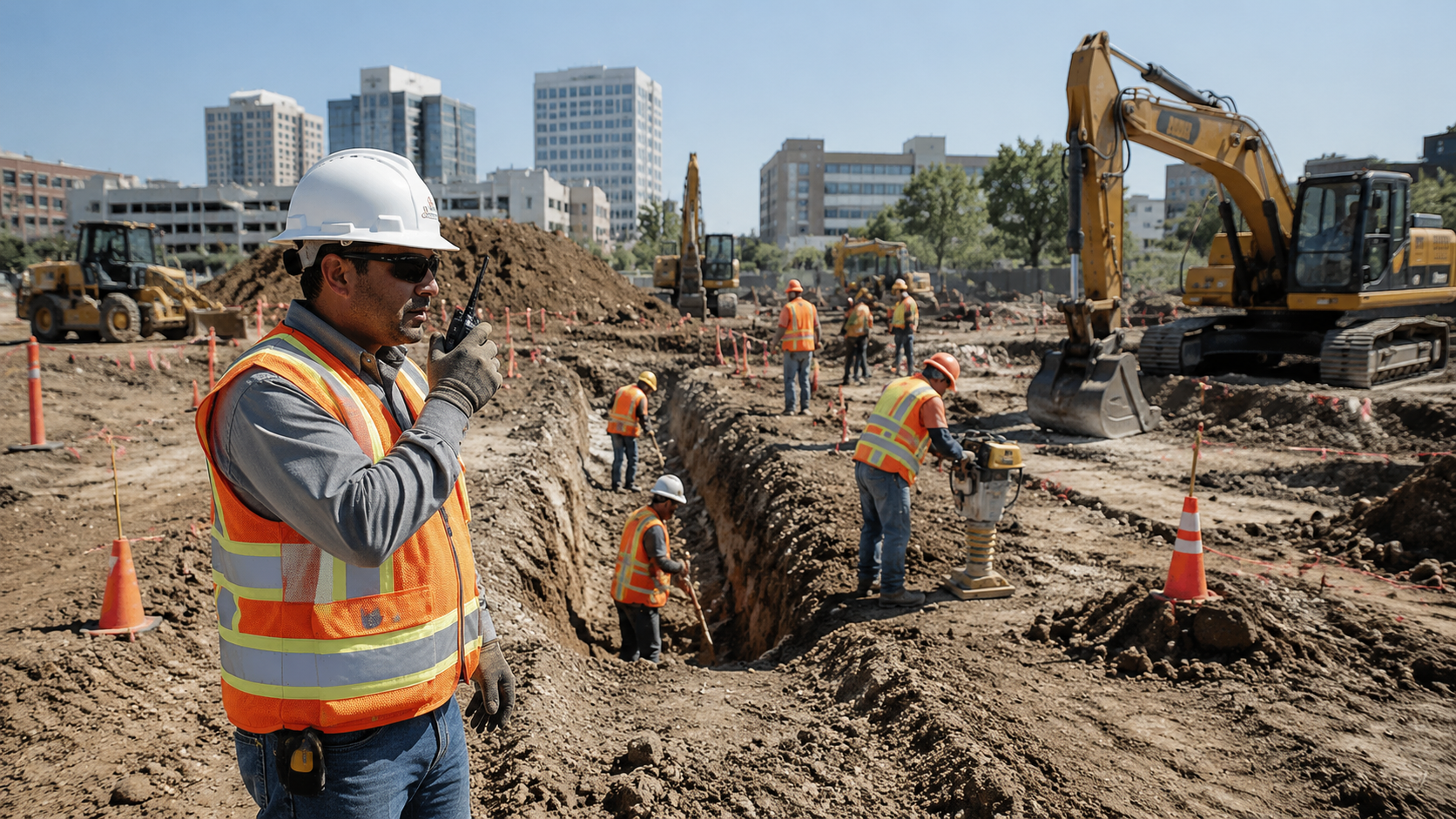
Excavation sites are among the most challenging environments for construction communication. A foreman may be standing only meters away from a trench crew, yet instructions still fail to reach clearly. Unlike open road or vertical construction sites, excavation work introduces constant signal disruption caused by terrain changes, underground depth, and heavy machinery interference.
That is why choosing the right radio for excavation crew communication is not just about range or price. It directly affects coordination speed, worker safety, and jobsite efficiency.
In trenching, foundation work, and utility excavation, communication systems function as an invisible safety layer. When they fail, everything slows down—or becomes risky.
Why Excavation Sites Disrupt Communication
Many contractors assume outdoor construction sites naturally support reliable radio use. Excavation quickly proves otherwise. Once digging begins, the jobsite itself starts reshaping communication performance.
Below-Grade Work Blocks Signal Paths
Two-way radios rely on relatively open line-of-sight conditions. Excavation breaks that assumption completely.
Trenches, foundation pits, shoring systems, and elevation drops all interrupt signal paths. Even shallow excavation can weaken transmission between surface crews and below-grade workers.
Changing Terrain Creates Dead Zones
Unlike static construction sites, excavation zones evolve throughout the day. Soil is removed, stockpiled, backfilled, and relocated continuously.
This means a two way radio for excavation crew that worked in the morning may experience reduced reliability in the afternoon simply due to site reshaping.
Heavy Machinery Masks Critical Audio
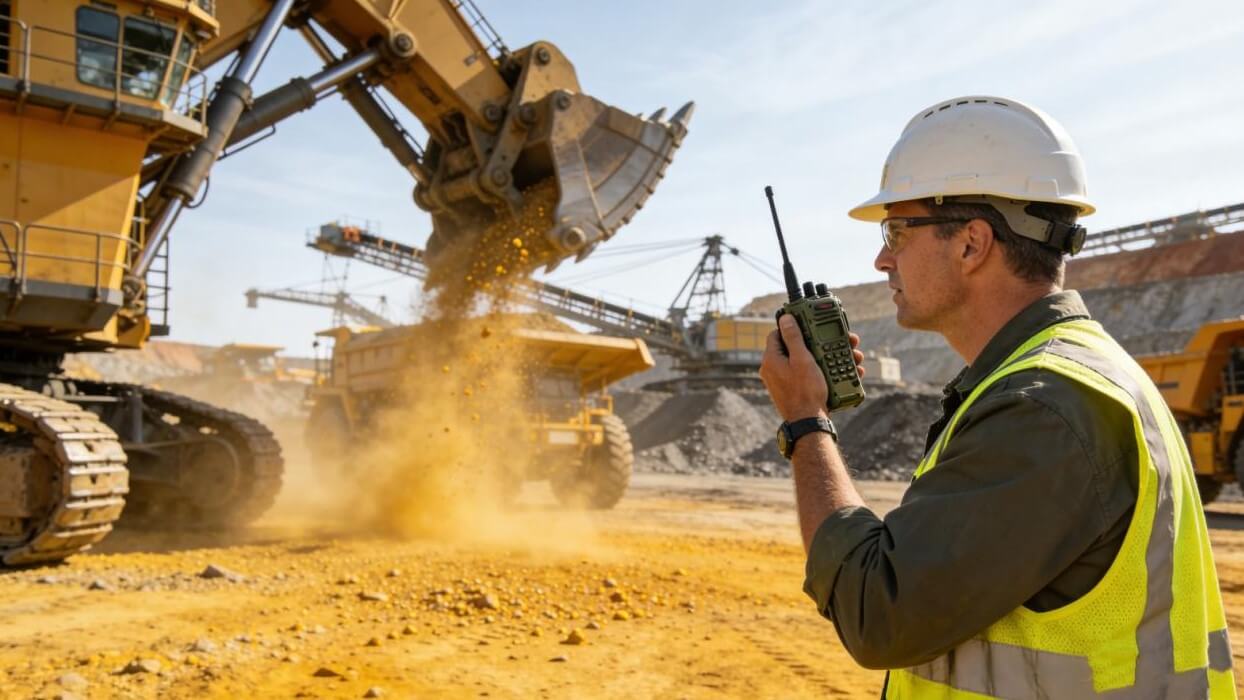
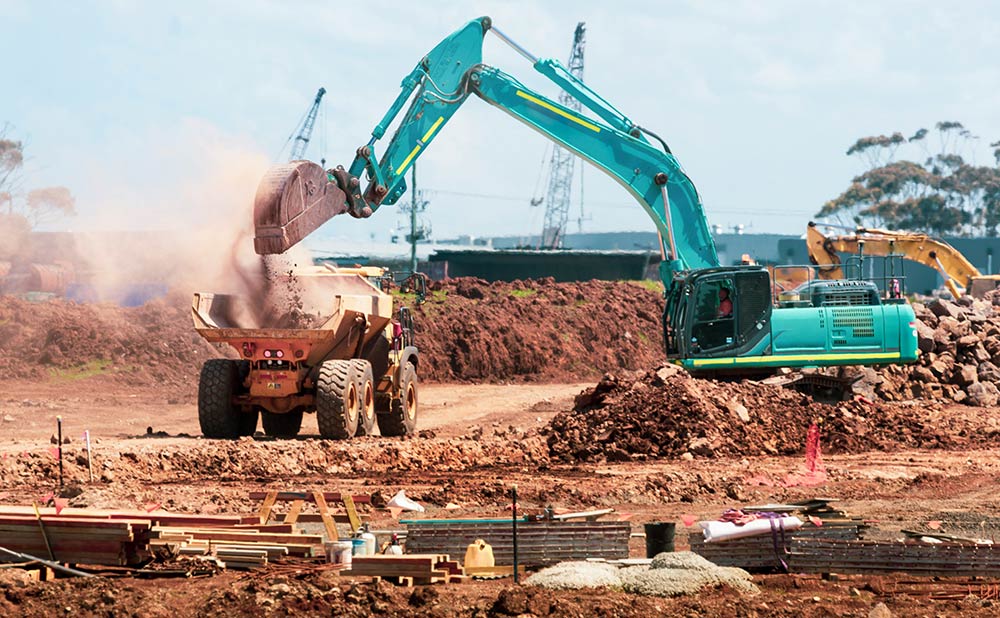
Excavators, loaders, compactors, and dump trucks generate constant high-decibel noise. In these conditions, communication failure is not only about signal loss—it is about audio clarity.
Even if a message transmits successfully, poor audio quality can make it unusable in real time operations.
What a Reliable Excavation Communication Radio Must Deliver
Not every construction radio is suitable for excavation environments. A true jobsite-ready device must solve real operational problems, not just meet technical specifications.
1. Stable Real-World Coverage
Marketing range numbers rarely reflect real excavation conditions.
A reliable long range job site radio must maintain stable communication between:
- trench bottom and surface crew
- excavator operator and spotter
- pipe crew and foreman
- multiple active excavation zones
The key is not maximum range, but consistent performance in obstructed terrain.
2. High-Clarity Audio in Noise
Excavation environments demand radios that remain intelligible under pressure.
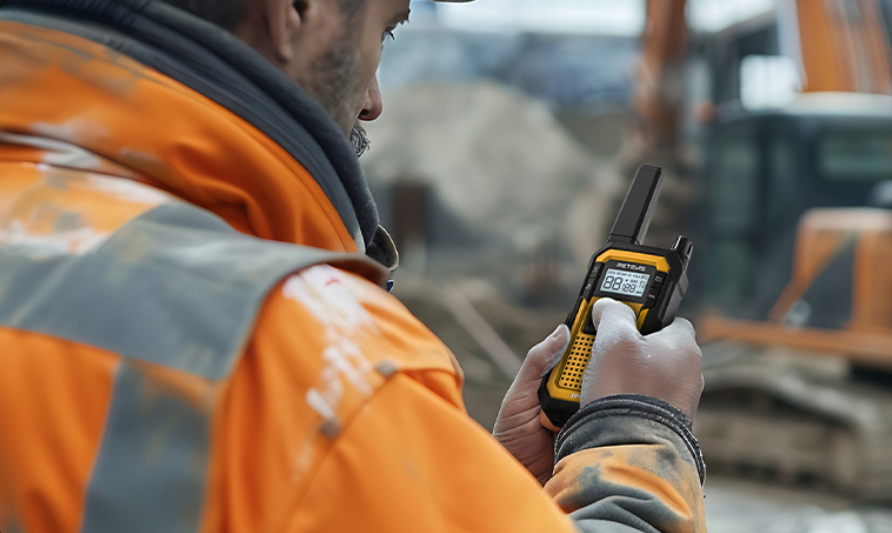
A high-quality walkie talkie for excavation crew use should provide:
- strong speaker output
- noise suppression
- clear voice filtering
- minimal distortion at high volume
If instructions must be repeated, efficiency and safety both suffer.
3. Rugged Design for Extreme Jobsite Conditions
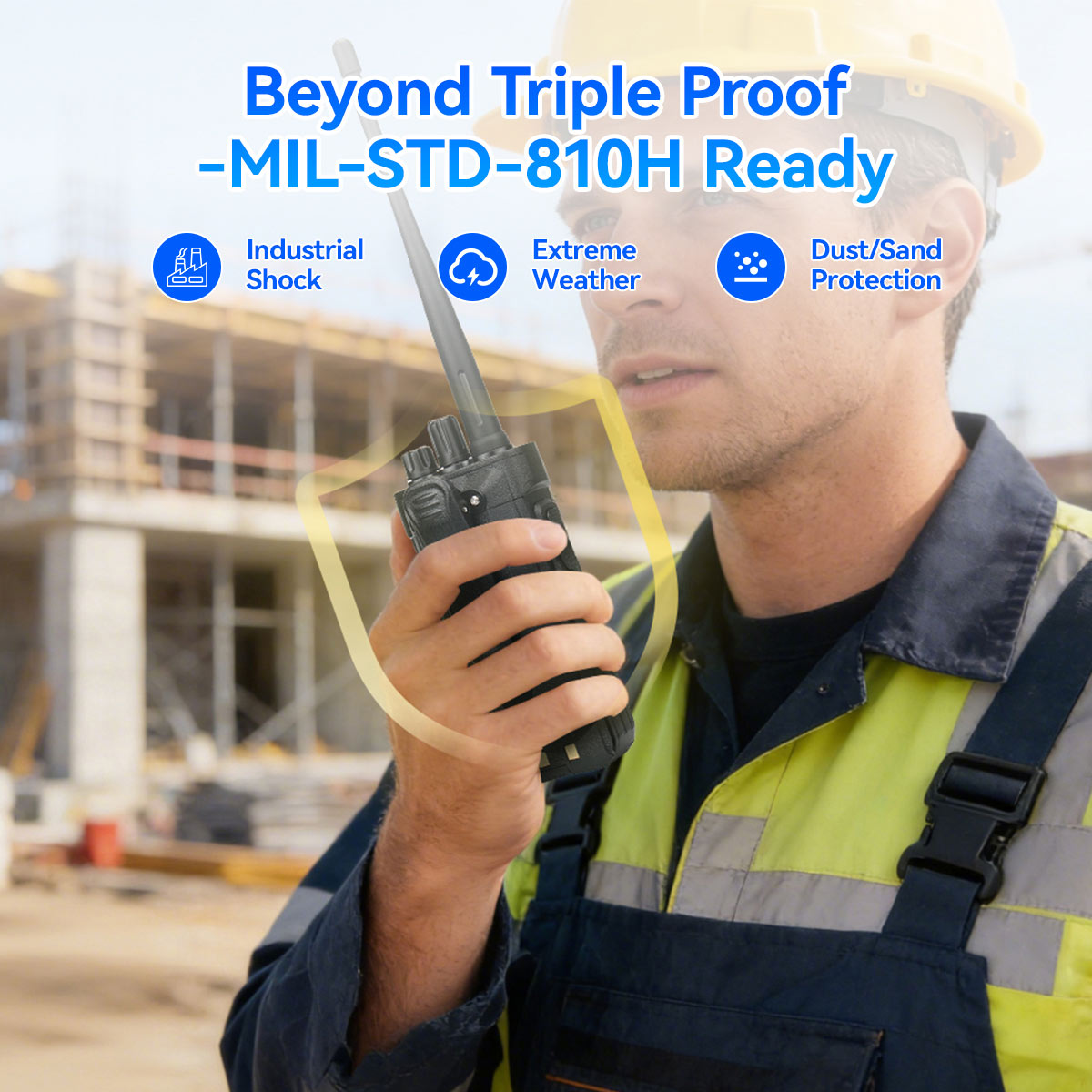
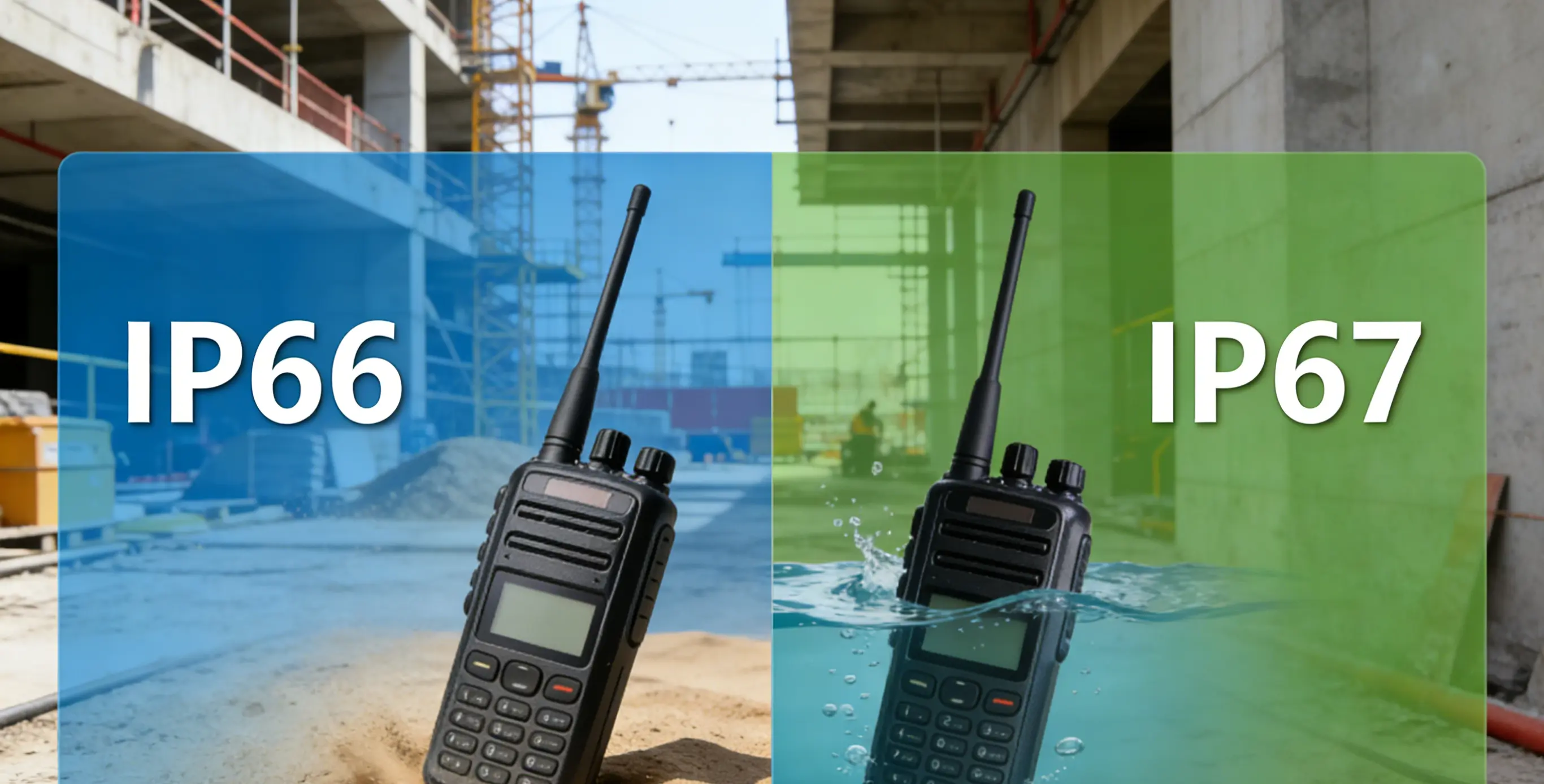
Excavation tools are exposed to dust, mud, vibration, moisture, and accidental drops daily.
A proper portable construction radio must be engineered for:
- impact resistance
- dust protection
- water resistance
- long-term field durability
Without this, equipment failure becomes a recurring operational cost.
4. Full-Shift Battery Reliability
Excavation schedules are unpredictable. Delays from inspections, underground utilities, weather, or hauling logistics can extend working hours.
A dependable long range job site two way radio must support full-shift operation without mid-day charging interruptions.
VHF or UHF: Which Works Better for Excavation?
Frequency selection plays an important role in excavation communication systems.
VHF for Open Earthworks
VHF performs well in:
- large open excavation fields
- rural land development
- wide earthmoving zones
It benefits from fewer obstructions and longer open-air propagation.
UHF for Complex and Urban Excavation
UHF is often better suited for:
- urban utility excavation
- foundation work near structures
- underground infrastructure corridors
It handles obstacles and reflections more effectively.
For teams comparing options, frequency choice should always be based on real jobsite conditions rather than assumptions.
Why “Long Range” Claims Can Be Misleading
A long-range walkie talkie sounds ideal for excavation crews—but real-world conditions are very different from lab tests.
Manufactured range figures are typically based on:
- open terrain
- no obstructions
- ideal weather conditions
Excavation sites include:
- trench walls
- machinery interference
- stockpiles
- steel structures
- constantly shifting layouts
What crews actually need is not maximum theoretical distance, but stable communication in active work zones.
A dependable long range jobsite walkie talkie must perform reliably where people are physically working—not just on paper.
How Better Radios Improve Excavation Performance
Reliable communication systems directly impact how excavation crews operate.
Faster Coordination Between Teams
Operators, spotters, and ground crews can synchronize movements without delays, reducing idle time and improving workflow efficiency.
Reduced Operational Downtime
Miscommunication can halt entire sequences of work, especially during utility exposure or trench adjustments. Clear radios help prevent unnecessary stoppages.
Improved Safety Response
Excavation conditions can change rapidly due to soil instability, weather shifts, or underground hazards. Immediate communication enables faster reaction and safer decision-making.
Common Mistakes When Selecting Excavation Radios
Many communication failures start long before the job begins.
Choosing Based on Price Only
Low-cost radios may struggle in noisy and obstructed environments, leading to frequent replacement and lost productivity.
Over-Focusing on Range Specs
Range is often irrelevant compared to real site performance in trenches and below-grade work areas.
Ignoring Audio Quality
Even a strong signal is useless if messages cannot be clearly understood around machinery noise.
Skipping Field Testing
The only reliable way to evaluate a radio is real jobsite testing under actual excavation conditions.
How to Choose the Right Excavation Communication System
Before selecting a radio for excavation crew communication, consider:
- Is the site open or urban?
- Are crews working above grade, below grade, or both?
- How intense is machinery noise?
- How often does site layout change?
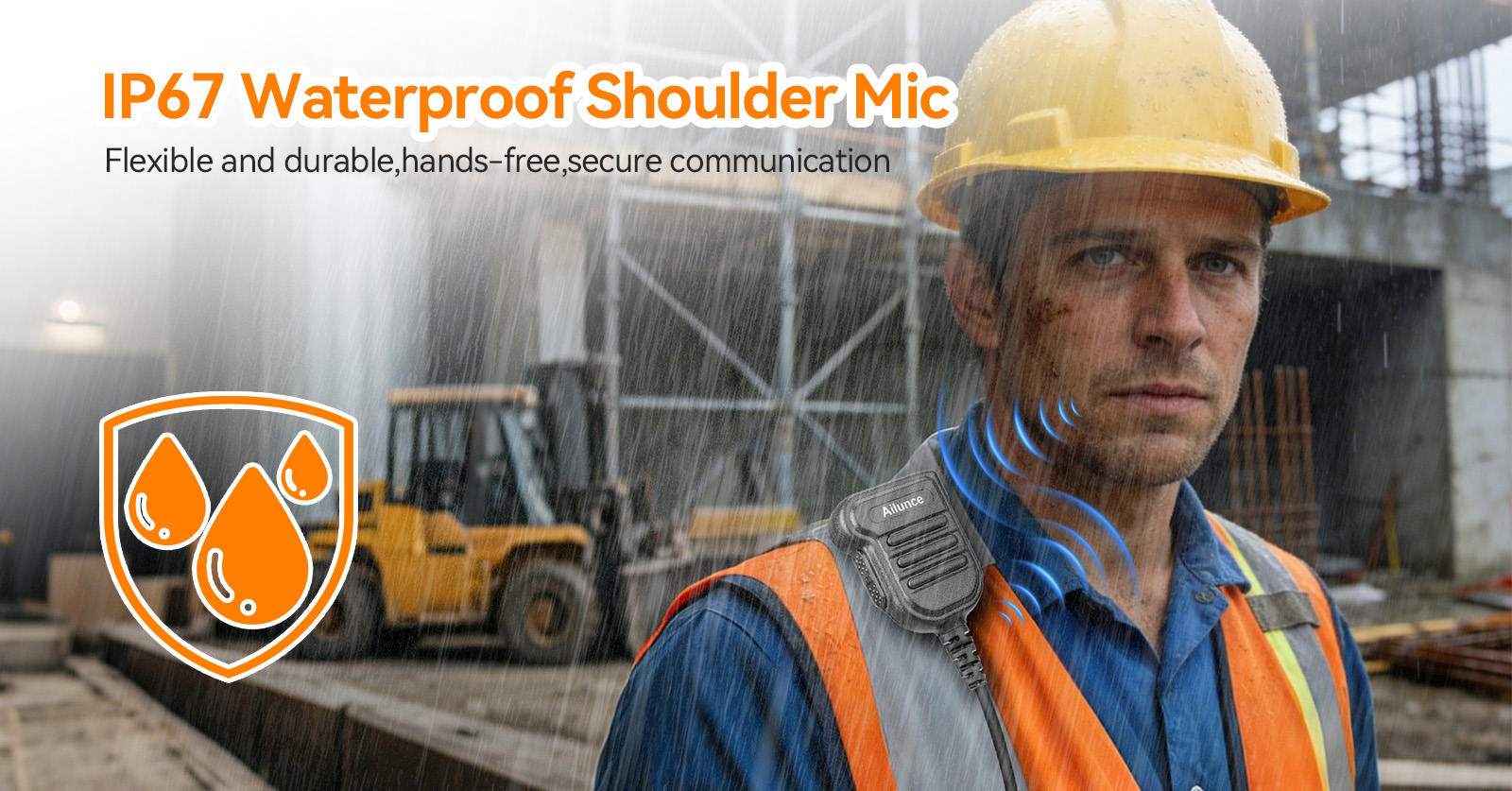
- Do workers need hands-free accessories?
The most effective systems combine:
- stable site coverage
- clear audio under noise
- rugged construction
- full-shift battery life
- simple operation with PPE
Final Thoughts
Excavation environments redefine what “reliable communication” means. Depth changes, shifting terrain, and constant machinery noise make trench work one of the most demanding scenarios for radio performance.
The best construction jobsite radio is not the one with the highest advertised range. It is the one that performs consistently in the real conditions of excavation work.
When communication is stable, coordination improves. When coordination improves, safety and productivity follow naturally.
In excavation, every clear message is part of the jobsite’s safety system—and every missed one is a risk you cannot afford.




Comments
No data Yet