
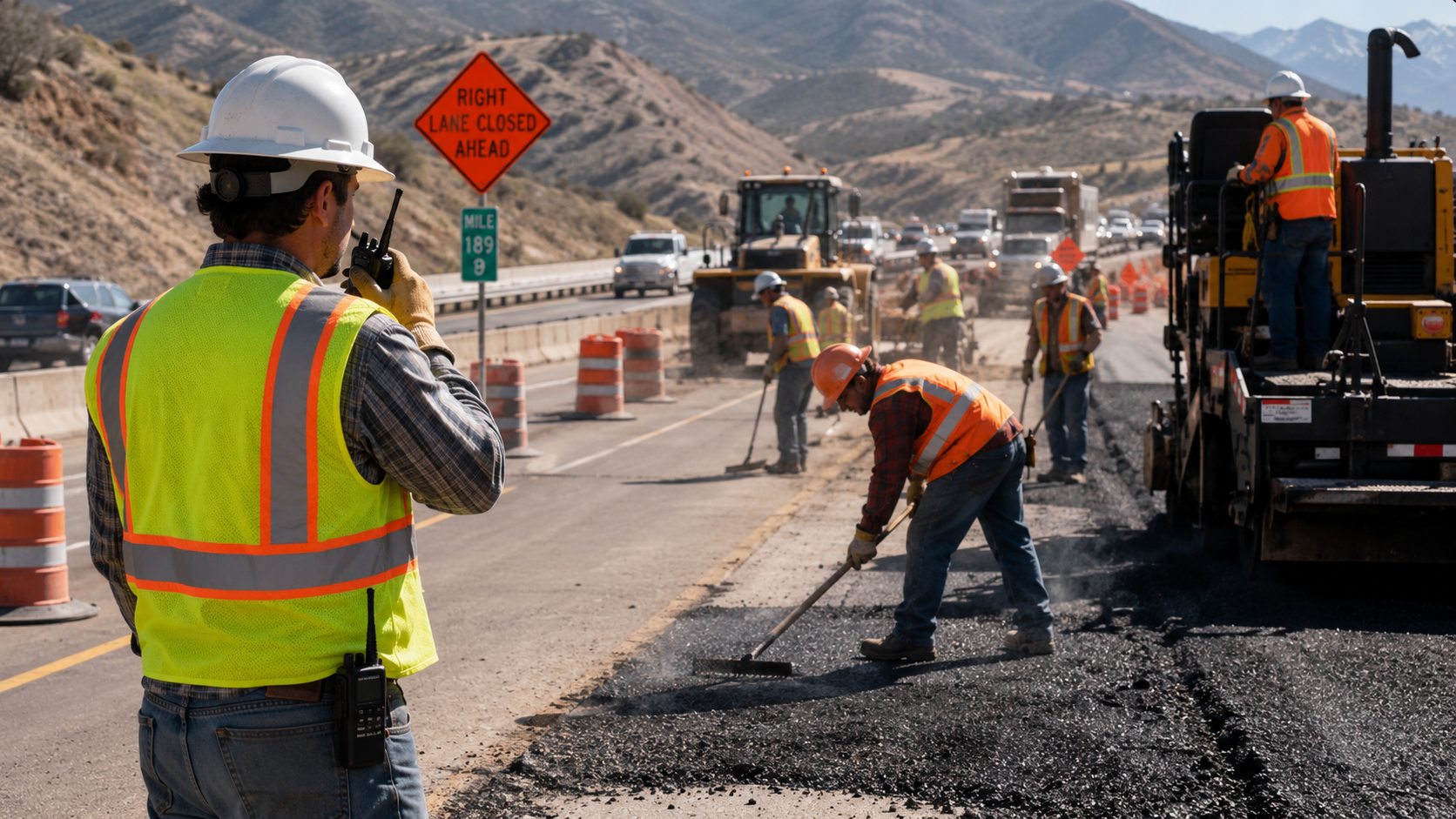
Highway construction sites operate in a world measured by seconds. Traffic moves at high speed just feet away from workers. Heavy machinery shifts constantly. Work zones expand, shrink, and relocate throughout the day. In this environment, communication failures are not minor inconveniences. They are safety hazards.
That is why reliable communication systems have become a core part of modern road construction safety planning. From lane closures and paving operations to crane lifts and emergency response coordination, a dependable radio for road construction helps crews react faster, work safer, and maintain efficiency under pressure.
For many highway contractors, communication systems now rank alongside PPE, traffic barriers, and safety signage as essential jobsite infrastructure.
Why Highway Road Work Requires Specialized Communication
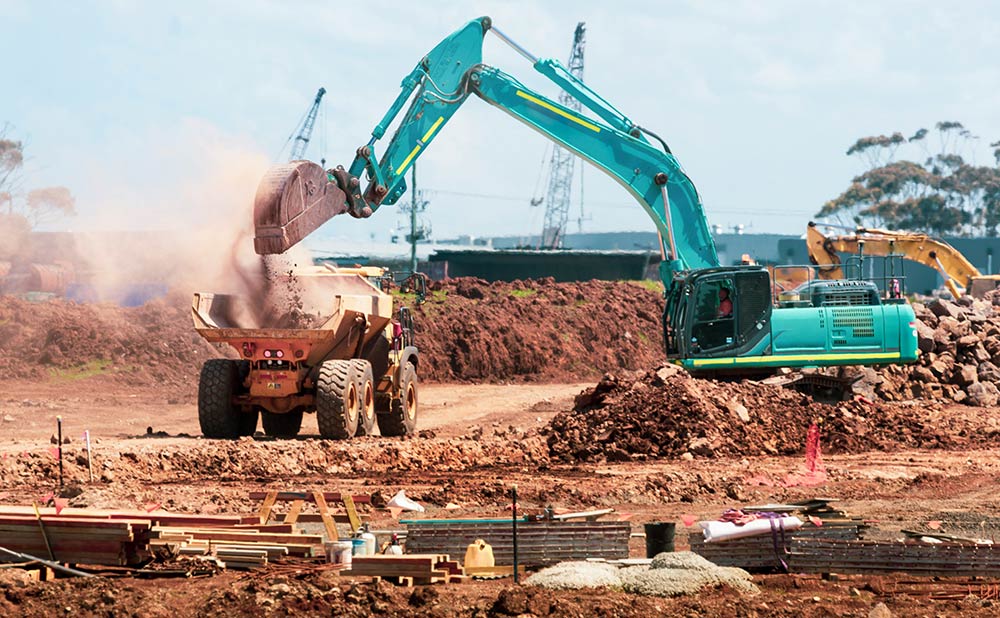
Unlike vertical construction projects, highway work sites are often stretched across long distances with limited visual contact between crews. Workers may be separated by curves, elevation changes, moving equipment, or active traffic lanes.
This creates several communication challenges:
- High background noise from engines, asphalt equipment, and passing vehicles
- Rapidly changing work zones
- Limited visibility during night work or bad weather
- Multiple subcontractors operating simultaneously
- Increased risk of struck-by incidents
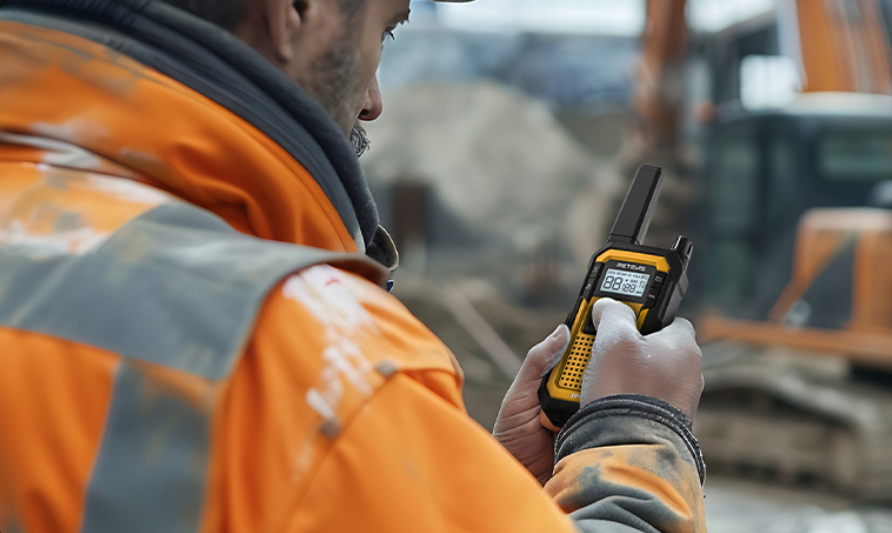
Traditional communication methods like hand signals or mobile phones are often too slow or unreliable for these conditions. A dedicated two way radio for road construction provides instant push-to-talk communication without depending on cellular coverage.
In emergency situations, that speed matters.
According to highway safety studies, delayed communication is frequently linked to near misses involving backing vehicles, lane intrusions, and equipment movement conflicts. Clear radio protocols help reduce these risks by keeping all crews synchronized in real time.
The Role of Communication Protocols in Highway Safety
A radio alone does not create an effective communication system. The real safety advantage comes from standardized communication protocols.
Professional highway crews typically follow structured radio procedures designed to minimize confusion during high-risk operations.
These protocols often include:
Standardized Call Signs
Instead of using names, crews identify themselves by role or zone.
Examples:
- “Traffic Control 2”
- “Paving Lead”
- “Northbound Spotter”
This reduces misunderstandings, especially on large projects involving multiple contractors.
Message Confirmation Procedures
Critical instructions are repeated back to confirm accuracy.
Example:
“Lane 2 closure begins in 3 minutes.”
“Copy. Lane 2 closure in 3 minutes.”
This simple practice dramatically reduces communication errors.
Dedicated Emergency Channels
Many highway projects separate daily operations from emergency communications. This prevents critical alerts from being buried under routine chatter.
Short, Clear Transmissions
Professional radio communication prioritizes clarity over conversation. Long transmissions increase channel congestion and create confusion during active operations.
Why Mobile Phones Are Not Enough on Road Construction Sites
Some smaller crews attempt to rely on smartphones for coordination. In practice, phones introduce several operational problems on active highway projects.
|
Mobile Phones |
Construction Radios |
|
Depend on cellular signal |
Direct radio-to-radio communication |
|
Require dialing |
Instant push-to-talk |
|
Difficult with gloves |
Built for PPE environments |
|
Fragile in dust/rain |
Ruggedized for job sites |
|
Slow during emergencies |
Immediate group communication |
A professional walkie talkie for road construction is specifically engineered for hazardous, noisy, and fast-moving environments.
Modern construction radios also include features designed for highway work, such as:
- Noise cancellation
- Emergency alert buttons
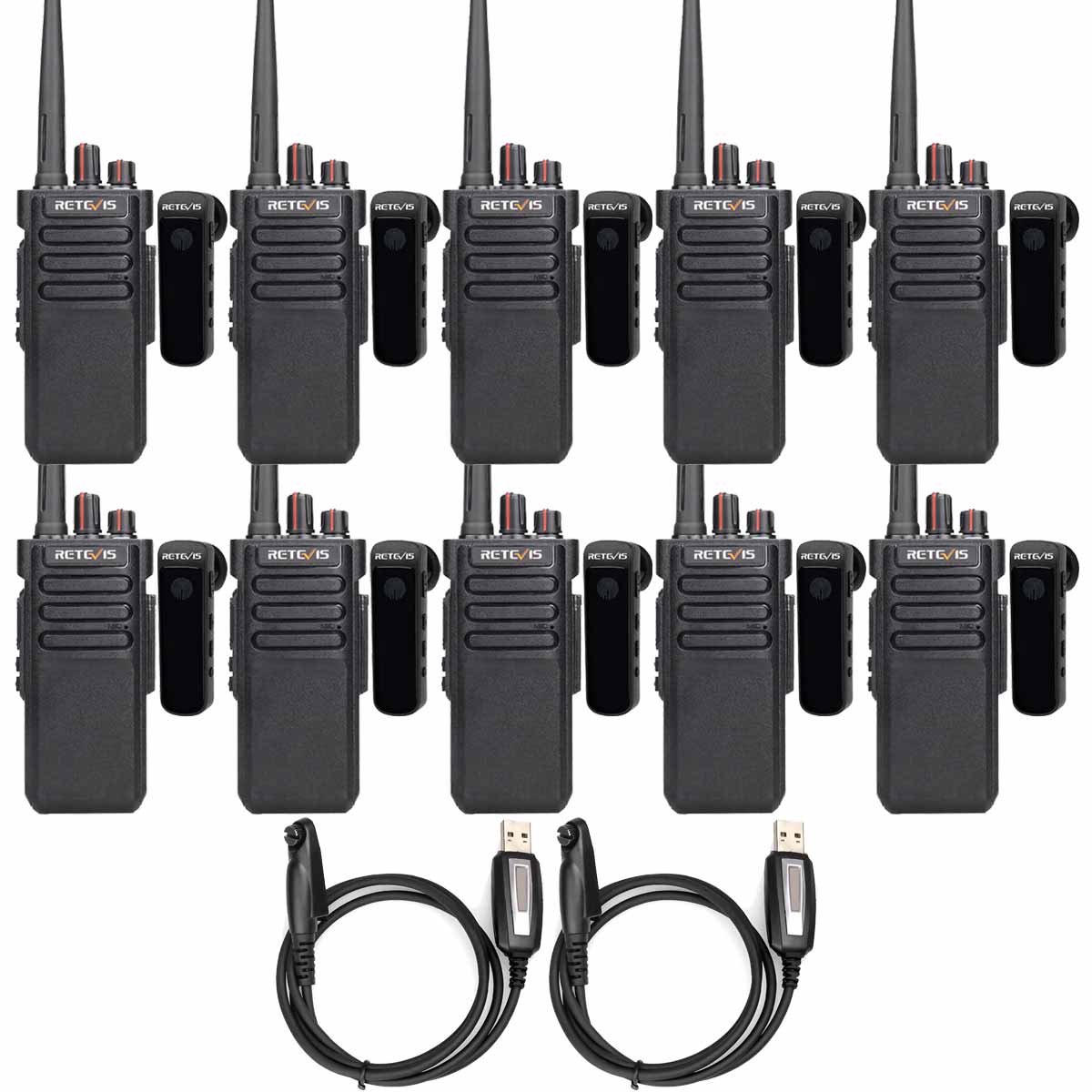
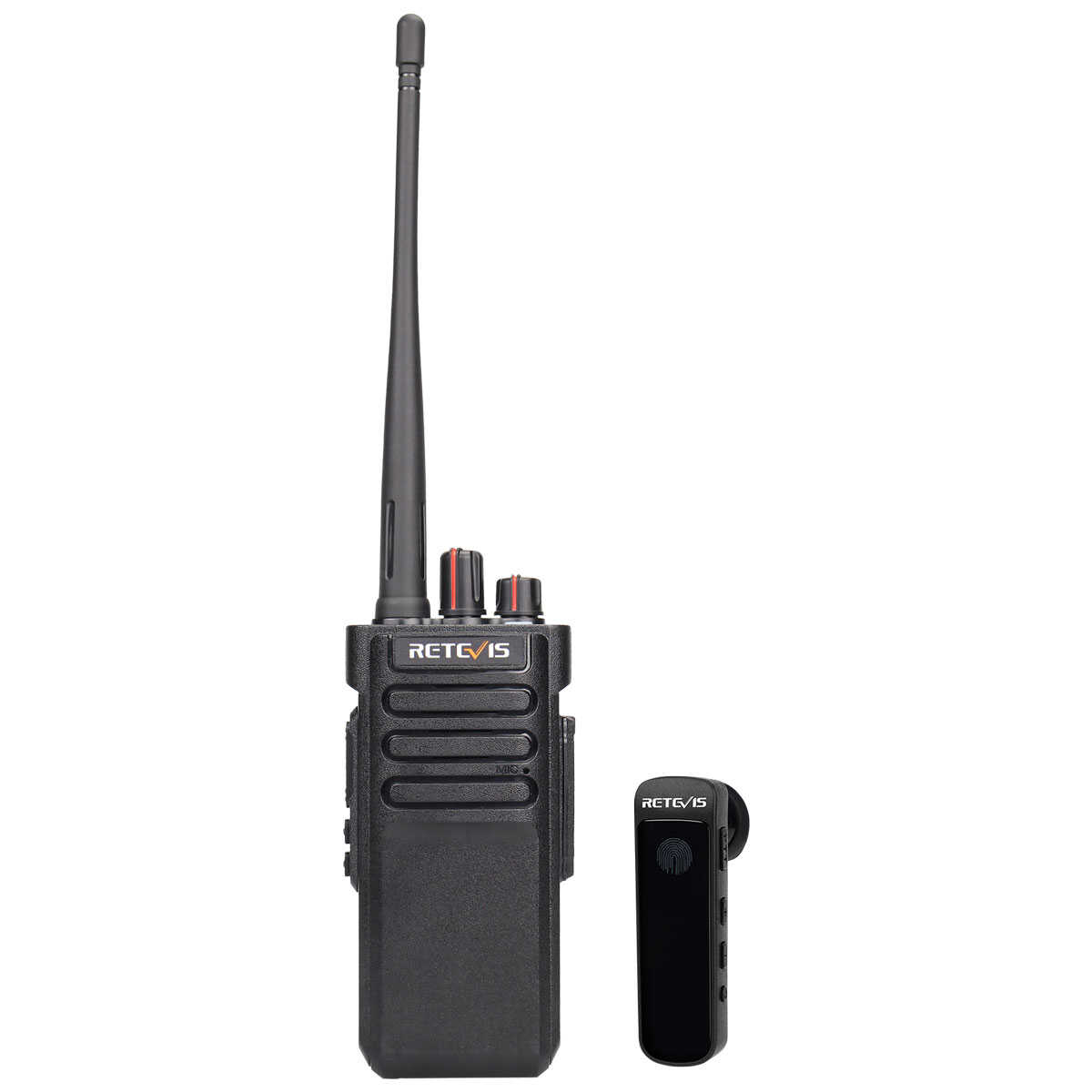
- Hands-free headset compatibility
- Long battery operation
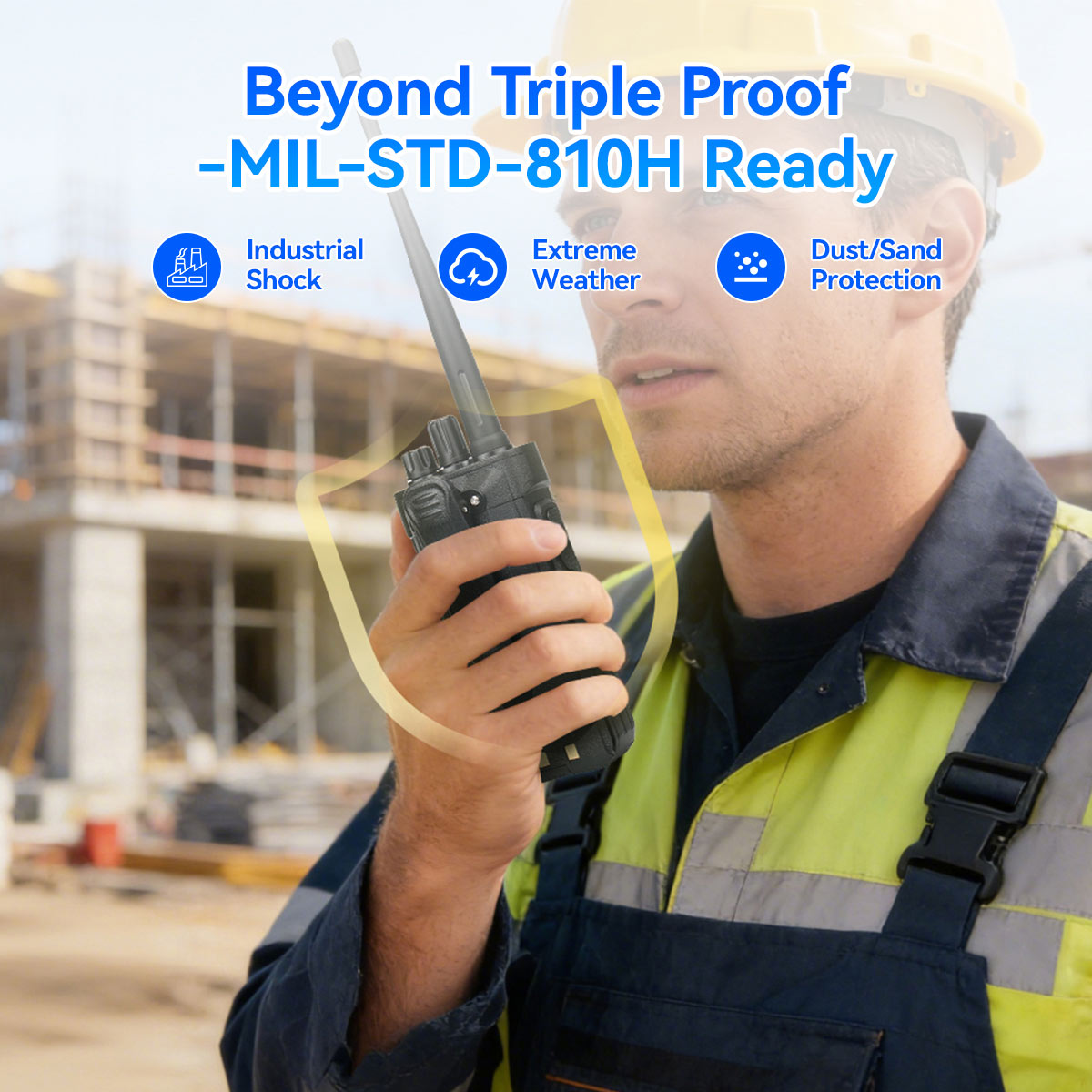
- High-IP weather protection
For crews working in rain, asphalt dust, or extreme temperatures, durability becomes just as important as audio clarity.
Key Features to Look for in Highway Construction Radios
Not all radios are designed for infrastructure work. Highway crews require equipment capable of handling long distances, harsh weather, and constant movement.
Here are the most important features professionals prioritize when selecting high-quality construction radios.
1. Long-Range Communication Capability
Highway projects can extend for miles. Standard consumer walkie talkies often struggle in these conditions due to terrain interference, equipment obstruction, or signal limitations.
A professional long range job site radio should provide:
- Reliable coverage across extended work zones
- Strong signal penetration around equipment
- Stable communication near concrete barriers and bridges
Long-range capability becomes especially important for:
- Highway resurfacing projects
- Bridge construction
- Night paving operations
- Multi-zone traffic control setups
2. Rugged Durability and IP Ratings
Road construction environments are brutal on electronics.
Radios may be exposed to:
- Dust from concrete cutting
- Water during rain operations
- Asphalt particles
- Vibration from heavy machinery
- Frequent drops onto pavement
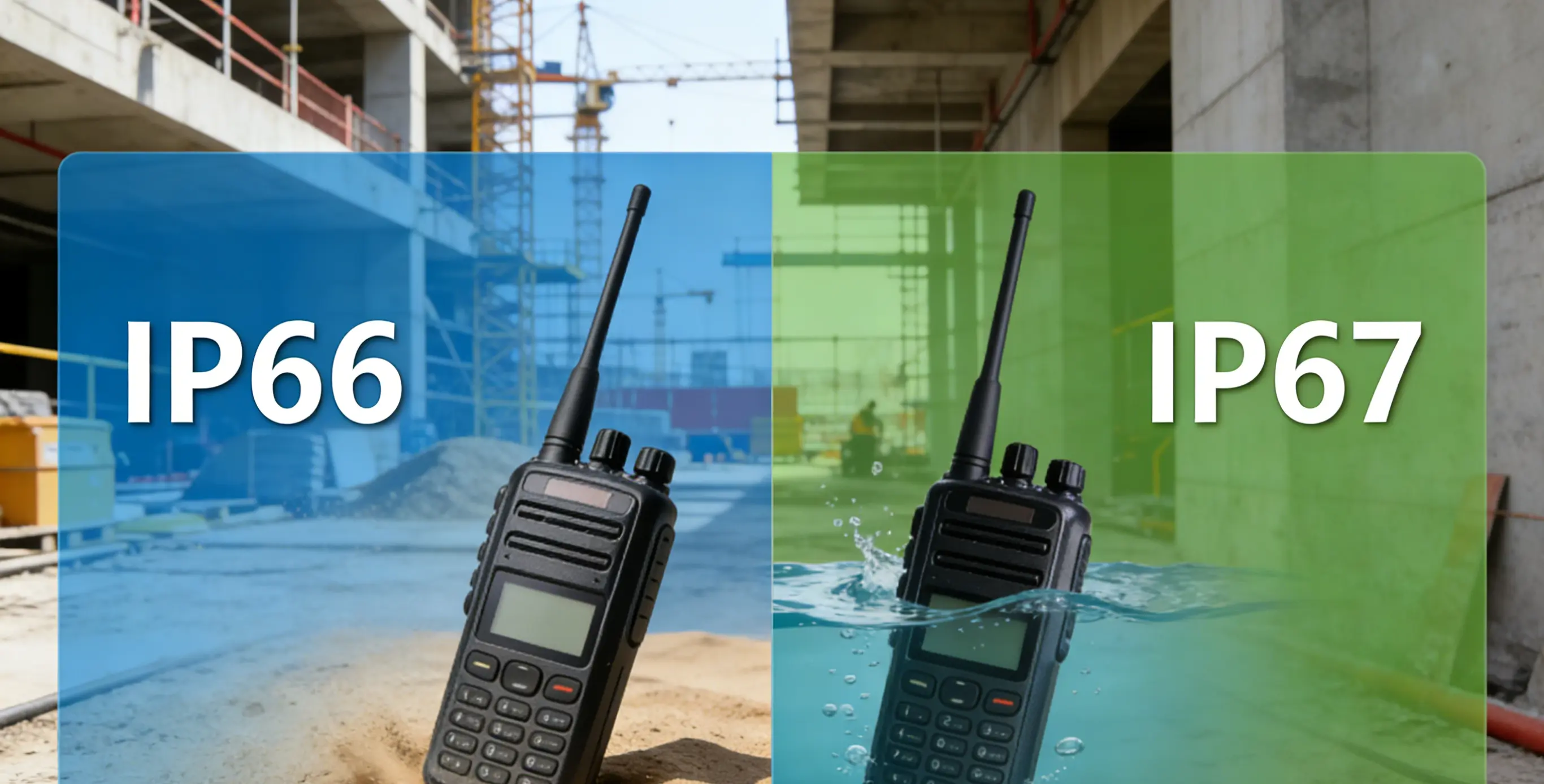
This is where IP ratings become critical.
A quality portable construction radio should offer strong dust and water protection to survive demanding outdoor conditions.
For crews comparing protection levels, understanding the difference between waterproof and dustproof ratings is essential.
3. Audio Clarity in High-Noise Environments
One overlooked factor in highway safety is audio intelligibility.
Traffic noise can easily exceed safe hearing thresholds, especially near:
- Milling machines
- Rollers
- Excavators
- Concrete saws
- Passing trucks
Modern safety-first construction radios often use:
- AI-based noise suppression
- Wind-noise reduction
- High-output speakers
- Noise-canceling microphones
Without these features, workers may miss critical instructions during active operations.
4. Hands-Free Operation for Safer Workflows
Workers handling equipment cannot safely stop to hold a radio every few minutes.
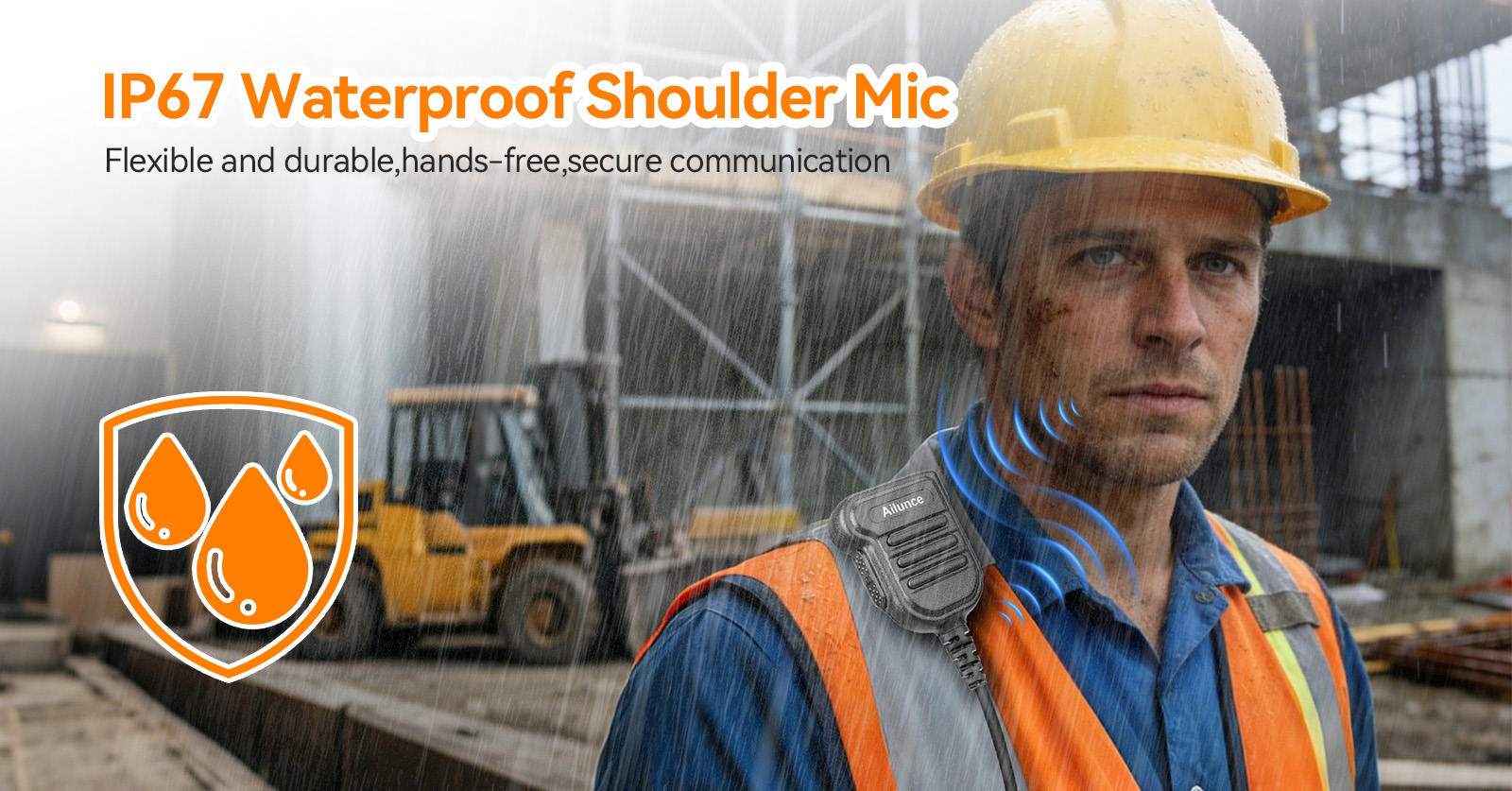
Hands-free accessories improve both productivity and safety by allowing communication without interrupting physical tasks.
Common solutions include:
- Shoulder microphones
- Helmet headsets
- Wireless PTT systems
- Remote speaker microphones
For crane spotters, traffic controllers, and paving crews, hands-free communication reduces distraction while maintaining constant coordination.
Common Communication Failures on Highway Projects
Even experienced crews encounter communication breakdowns. The most common issues include:
Overlapping Transmissions
Multiple users speaking simultaneously creates garbled audio and missed instructions.
Unclear Terminology
Different subcontractors may use different terminology for the same operation.
Dead Batteries Mid-Shift
Battery management is a surprisingly common source of radio failure during overnight paving work.
Poor Channel Discipline
Non-essential chatter can block urgent safety messages.
Most of these problems can be reduced through standardized radio training and pre-shift communication checks.
Best Practices for Highway Radio Communication
Professional road crews typically follow several field-tested communication habits:
Conduct Pre-Shift Radio Checks
Every shift should begin with:
- Battery inspection
- Audio testing
- Channel verification
- Accessory checks
Keep Messages Brief
Short communication reduces congestion and improves clarity.
Establish Emergency Keywords
Certain phrases should immediately signal priority traffic.
Examples:
- “Emergency traffic”
- “Hold all movement”
- “Worker down”
Train All Crew Members
Even the best long range job site walkie talkie cannot compensate for poor communication habits.
Training should include:
- Radio etiquette
- Emergency procedures
- Channel assignments
- Message confirmation protocols
Communication Technology Is Becoming a Competitive Advantage
As highway projects become larger and more safety-regulated, communication systems are evolving from simple tools into integrated safety infrastructure.
Modern systems now support:
- GPS location tracking
- Team-wide emergency alerts
- Bluetooth hearing protection integration
- Digital encrypted communication
- Cross-crew coordination across multiple zones
For contractors bidding on complex infrastructure projects, reliable communication systems increasingly demonstrate operational professionalism and safety readiness.
That matters not only for safety compliance, but also for project reputation.
Final Thoughts
Highway road work is one of the most dangerous sectors in construction. Fast traffic, heavy equipment, and changing work zones leave little room for communication mistakes.
A dependable radio for road construction is no longer just a convenience. It is part of the safety system that keeps crews connected and protected throughout the workday.
From establishing standardized communication protocols to selecting durable long range job site two way radios, successful highway operations depend on clear, immediate, and reliable communication.
Because on a live highway project, clarity travels faster than traffic. 🚧








Comments
No data Yet