
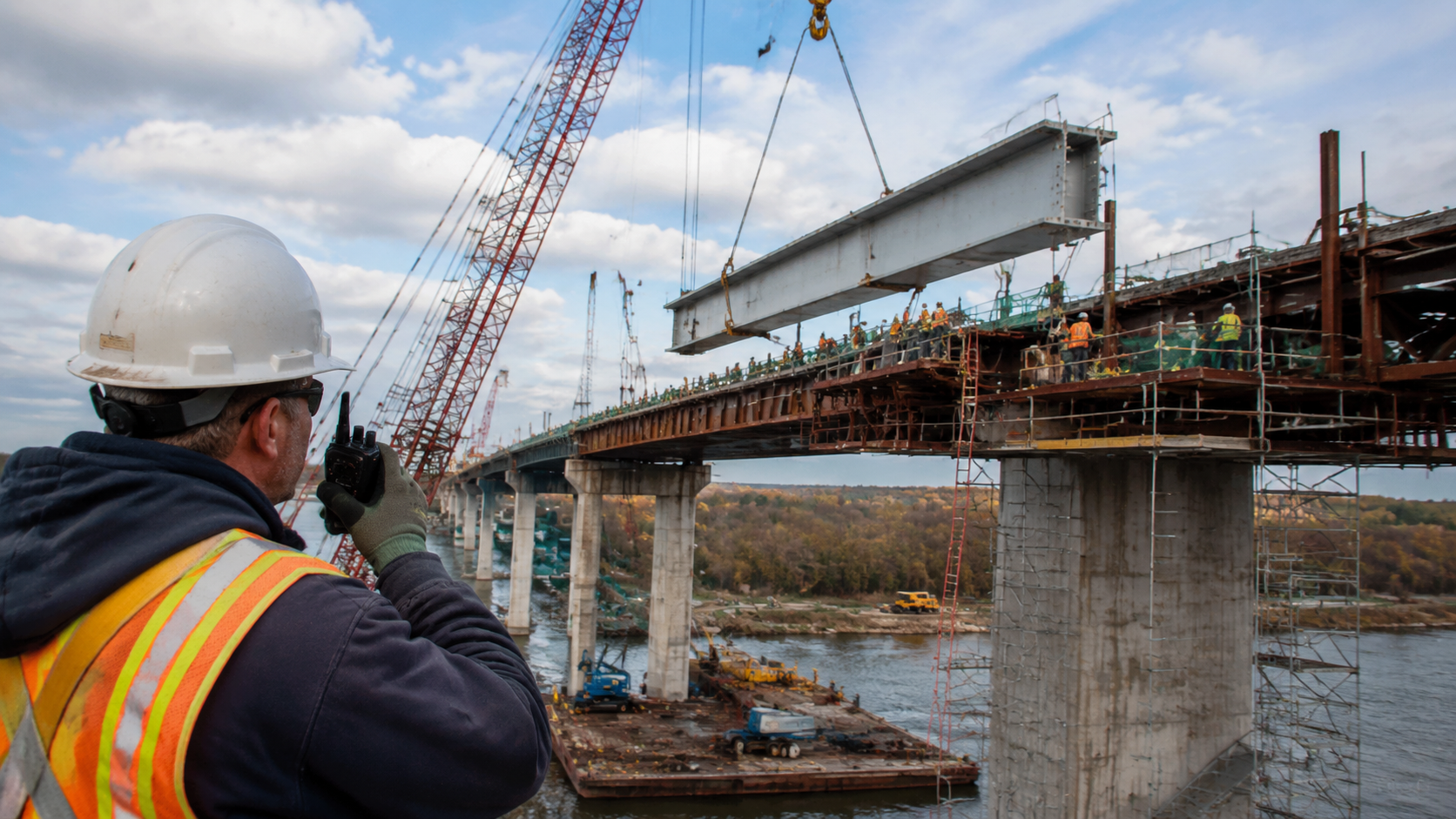
Bridge construction is one of the most demanding fields in modern infrastructure. A bridge project is rarely a simple, compact jobsite. Crews may work across long spans, multiple elevations, exposed environments, and noisy conditions—all at the same time. That is why communication is not a minor support tool in this sector. A reliable radio for bridge engineering is often essential for safety, coordination, and project efficiency.
For contractors, civil engineers, and infrastructure managers, choosing the right two way radio for bridge engineering can directly affect how well teams handle lifting operations, deck work, surveying, concrete pours, and emergency response. This article explains the main communication challenges in bridge construction, why radios still matter, and what to look for in a practical communication setup.
Why Communication Is Critical in Bridge Construction
Bridge jobsites are fundamentally different from many building sites. In a high-rise or commercial project, teams are usually concentrated within one structure. In bridge work, teams are often spread over long and narrow work zones, sometimes with water, traffic corridors, deep valleys, or remote terrain between them.
This creates several communication problems:
- long distances between crews
- blocked lines of sight
- high background noise
- limited mobile phone coverage
- simultaneous work by multiple teams
In practice, a dependable radio for civil engineering helps reduce delays, improve coordination, and support safer work execution.
The Main Communication Challenges in Bridge Engineering
1. Long-Distance Work Areas
One of the biggest reasons bridge projects need reliable radios is simple: distance. On a large bridge, work may be taking place at piers, abutments, deck sections, access roads, and staging areas at the same time. This makes long distance bridge comms a daily requirement, not a special feature.
A weak communication system can lead to:
- delayed instructions
- repeated movements
- confusion during sequencing
- slower response to hazards
A long distance construction radio is often a better fit than consumer devices because it is designed for real-time team coordination across spread-out jobsites.
2. Height and Structural Obstruction
Bridge crews do not just work far apart—they also work at different levels. Some teams may be on the deck, others below the structure, and others at pier level or on temporary scaffolding. Steel members, concrete mass, and construction equipment can all affect signal flow.
That is why a walkie talkie for bridge engineering must do more than advertise long range. It must perform reliably in real site conditions.
3. Noise and Weather Exposure
Bridge construction often includes wind, traffic, pile driving, welding, drilling, and crane activity. In these conditions, voice clarity matters as much as signal strength. A poor-quality radio may technically connect, but if speech is hard to understand, the result is still unsafe and inefficient.
A good two way radio for civil engineering should provide:
- clear voice transmission
- loud audio output
- stable performance in outdoor conditions
4. Remote or Difficult Locations
Many bridges are built in areas where mobile networks are weak or inconsistent. Mountain crossings, rural valleys, river corridors, and coastal zones often create communication gaps. In these environments, a long range walkie talkie is often more reliable than a phone-based solution.
Why Two-Way Radios Still Matter on Bridge Jobsites
Some project teams assume smartphones can replace radios. In reality, they serve different purposes.
Phones are useful for:
- photos
- reporting
- drawings and apps
- documentation
But a two way radio for bridge engineering is better for:
- instant push-to-talk communication
- group coordination
- hands-on use in active work zones
- fast response during safety-critical operations
A radio is especially valuable when one message must reach multiple people immediately. During a heavy lift or deck pour, there is no time for repeated one-to-one phone calls. A walkie talkie for civil engineering allows supervisors, operators, and crews to stay aligned in real time.
Key Use Cases for a Radio in Bridge Engineering
A professional radio for bridge engineering is most useful in tasks where timing, coordination, and safety depend on clear communication.
Crane and Lifting Operations
Bridge construction often involves heavy and complex lifting. Steel sections, precast units, reinforcement cages, and large formwork systems require close coordination between operators, riggers, signalers, and supervisors. In these moments, a two way radio for bridge engineering helps reduce misunderstanding and improve control.
Surveying and Alignment
Survey teams may work at separated points and need immediate confirmation of measurements and positioning. This is one area where a radio for civil engineering supports precision as well as efficiency.
Concrete Pours and Deck Work
Concrete placement often involves pump operators, placing crews, finishers, and inspection staff. A walkie talkie for bridge engineering makes it easier to coordinate pace, access, and sequencing.
Marine and Waterside Coordination
On river or coastal projects, communication between barges, floating platforms, and deck crews can be difficult. These are classic situations where long distance bridge comms become essential.
Safety and Emergency Response
Bridge construction combines fall exposure, moving equipment, traffic, and environmental risk. A long distance construction radio helps teams report incidents quickly and coordinate emergency action more effectively.
What to Look for in a Radio for Bridge Engineering
Choosing the right radio for bridge engineering should be based on jobsite conditions, not just product marketing. The following features matter most.
1. Reliable Range
For bridge projects, reliable range is the first priority. A long range walkie talkie should maintain communication across real site distances, not just ideal open-field conditions.
2. Clear Audio
A two way radio for civil engineering should provide strong, intelligible audio in noisy outdoor environments. Voice clarity is critical for lifting, supervision, and safety instructions.
3. Rugged Design
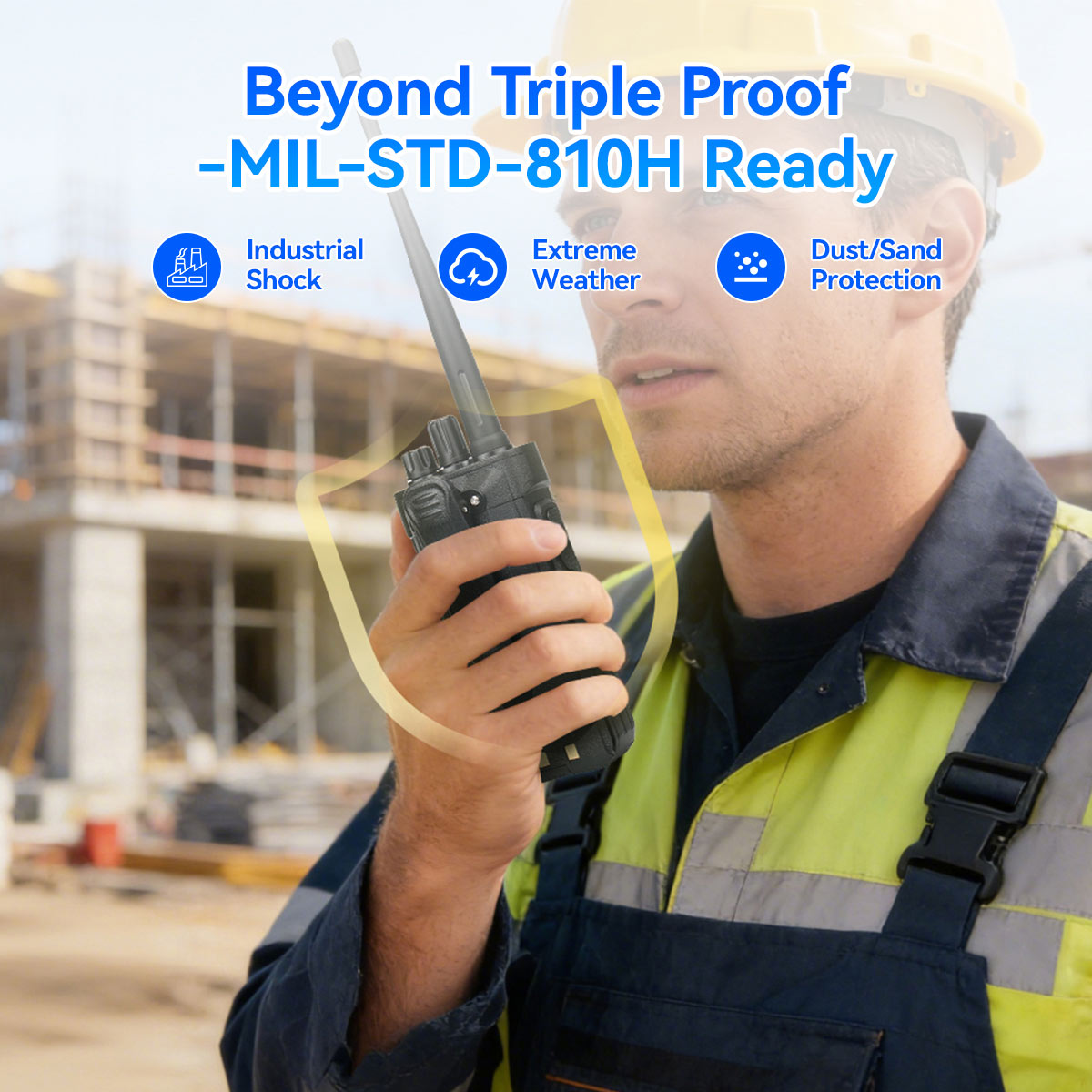
A walkie talkie for civil engineering should be able to handle rain, dust, drops, and daily construction wear. Bridge projects are often wet, windy, and physically demanding.
4. Long Battery Life
A radio must stay operational through long shifts. On large bridge sites, charging access may be limited, so strong battery performance is essential.
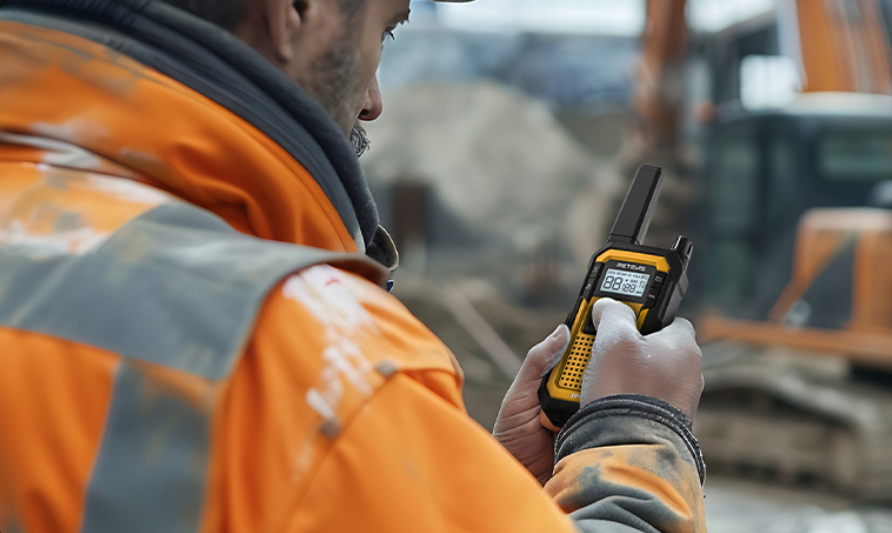
5. Easy Operation with PPE
Workers may be wearing gloves, hard hats, and harnesses. A two way radio for bridge engineering should be easy to use in those conditions.
Best Practices for Long Distance Bridge Comms
Even the best radio for bridge engineering works better when paired with a clear communication plan. A few practical steps can improve results significantly:
- assign channels by crew or task
- use short, clear instructions
- confirm critical commands during lifting
- test coverage across the full bridge footprint
- carry spare batteries for long shifts
- include radio checks in daily site briefings
These habits help teams get more value from their two way radio for bridge engineering and reduce preventable communication failures.
Common Mistakes to Avoid
When selecting a radio for civil engineering, many teams focus only on advertised range. That is a mistake. Real bridge environments include obstructions, weather, noise, and moving equipment.
Other common errors include:
- relying only on mobile phones
- ignoring audio quality
- skipping coverage tests
- using one channel for too many crews
- choosing devices not built for site conditions
A walkie talkie for civil engineering should support actual bridge operations, not just basic site-to-site contact.
Conclusion
Bridge construction depends on timing, coordination, and safety. Because crews work across long spans, multiple elevations, and noisy outdoor conditions, communication systems must be reliable and easy to use. That is why a professional radio for bridge engineering remains a key tool on modern infrastructure projects.
Whether the goal is crane coordination, surveying, deck work, or emergency response, the right two way radio for bridge engineering can improve both safety and efficiency. For projects that require dependable long distance bridge comms, a rugged and practical solution matters far more than consumer-grade convenience.




Comments
No data Yet