

Table of Contents
Explosion Proof Radios for 5 Chemical Plant Work Areas
- Posted by:Retevis
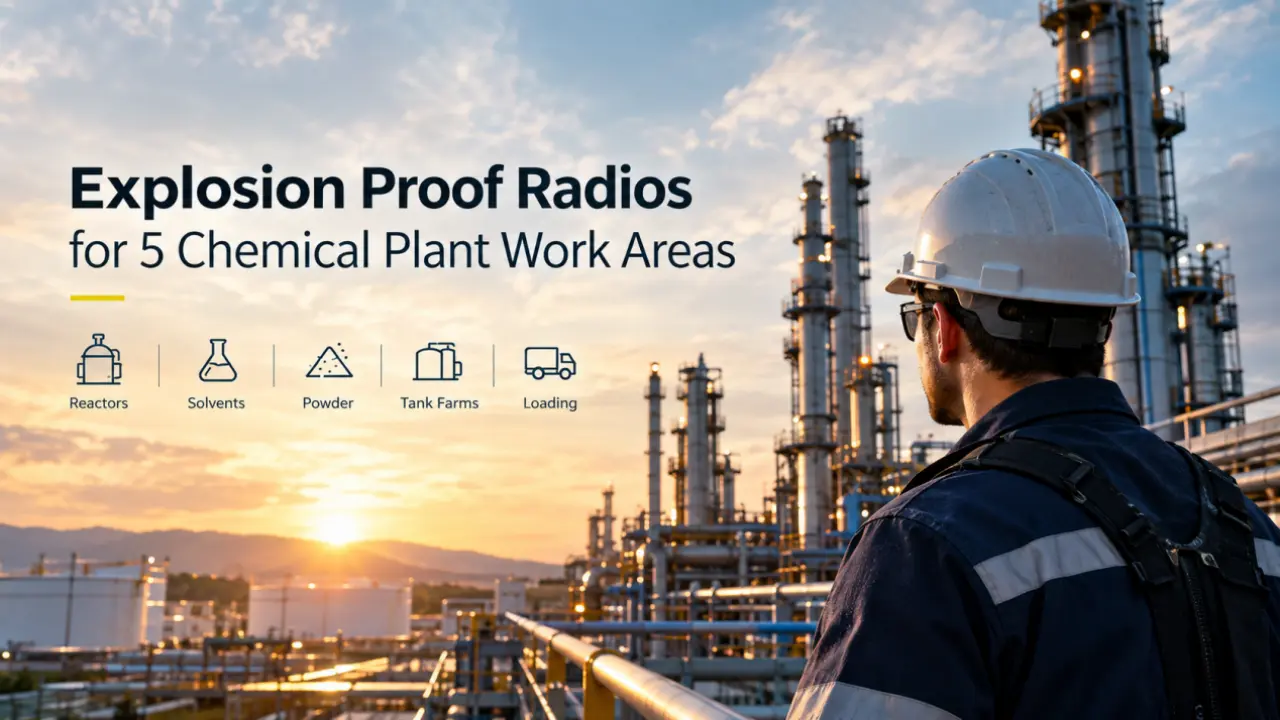
The plant has five distinct work areas, each with its own hazard rating. They are the reactor bays, solvent rooms, powder stations, tank farms, and loading racks. A radio that fits one area may fail the rules in another. This plain-language walkthrough covers what each area requires and where the Retevis explosion proof radios fit in.
5 Chemical Plant Work Areas That Require Explosion Proof Radios
Retevis designs and builds two way radios for workplaces where normal devices cannot safely operate. Over the last 16 years, the company has shipped more than 40 million units to customers in over 170 countries, serving more than 10 million users worldwide. Its range covers personal and business radios, amateur equipment, repeaters and accessories in nine industries and every product meets FCC and CE standards. Retevis enhanced communication in certified chemical plants by adding the intrinsically safe DMR MateTalk E2 last year
One plant, five areas
A chemical plant works five very different jobs at once. The reactor bay heats solvents under pressure. The solvent room dispenses liquids. The powder station loads bags of dust. The tank farm stores bulk product. The loading rack fills trucks. Each area has a hazard rating and the explosion proof radio carried by a worker must match. Using a single model for the whole site leaves some teams underprotected. This walkthrough explains each area in plain language for anyone choosing an intrinsically safe radio for chemical processing, and shows where the E1 hazardous area radio fits.
Reactor bays: talking to control room during reactions.
Reactors heat, mix and pressurisate flammable solvents. Vapors can be released from agitator seals, charge points and sample points during a normal shift. A hot running or pressure building reaction requires immediate reaction between the field operator and the control room.
The safety codes classify the space around open reactor ports as Zone 1, where flammable vapor is likely during normal working conditions. Gas group IIA includes alcohols and acetone; gas group IIB includes ethylene and diethyl ether. A radio covering IIB also covers IIA.
Operators call in readings next to running pumps and agitators, so the radio has to be able to cut through that noise and maintain a Zone 1 IIB rating. Retevis E1 is intrinsically safe radio for Zone 1 with IIB coverage. Its superheterodyne receiver keeps the signal in steel and pipework, and a side emergency button summons help at once.
Solvent Rooms: Hands-free calling around open vapor
Workers store and dispense solvents, move full drums and hook up transfer hoses. Open transfers release vapor and flowing liquid generates static charge. Open transfer points rate as Zone 1, with storage around them as Zone 2. Group IIA: Toluene, xylene, acetone, alcohols, diethyl ether: IIB.
 Hands are busy with drums and hoses, so workers need hands-free calling to confirm transfers or report spills. The radio requires Zone 1 IIB protection, voice-activated transmission and a splash-proof case.
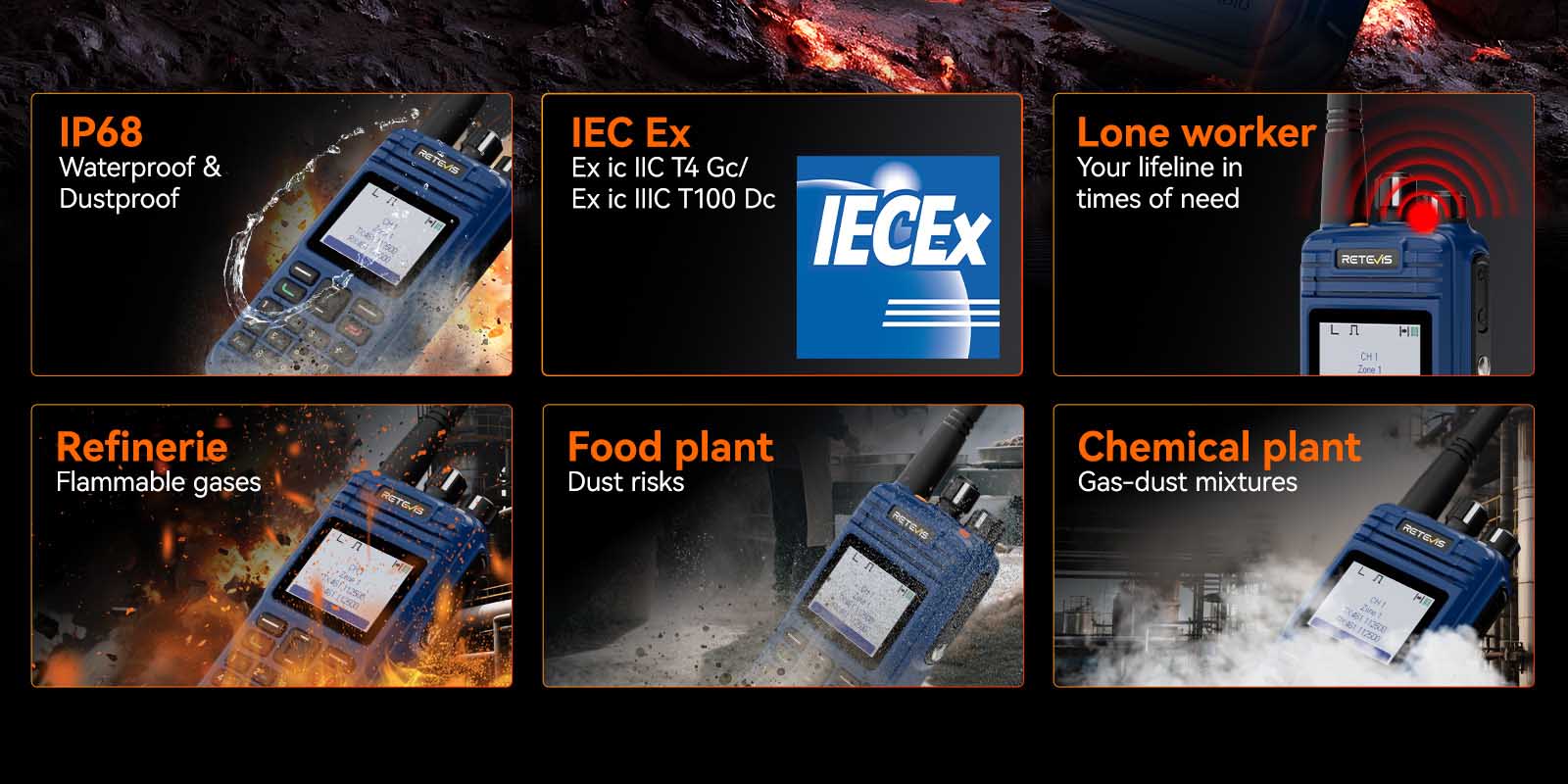
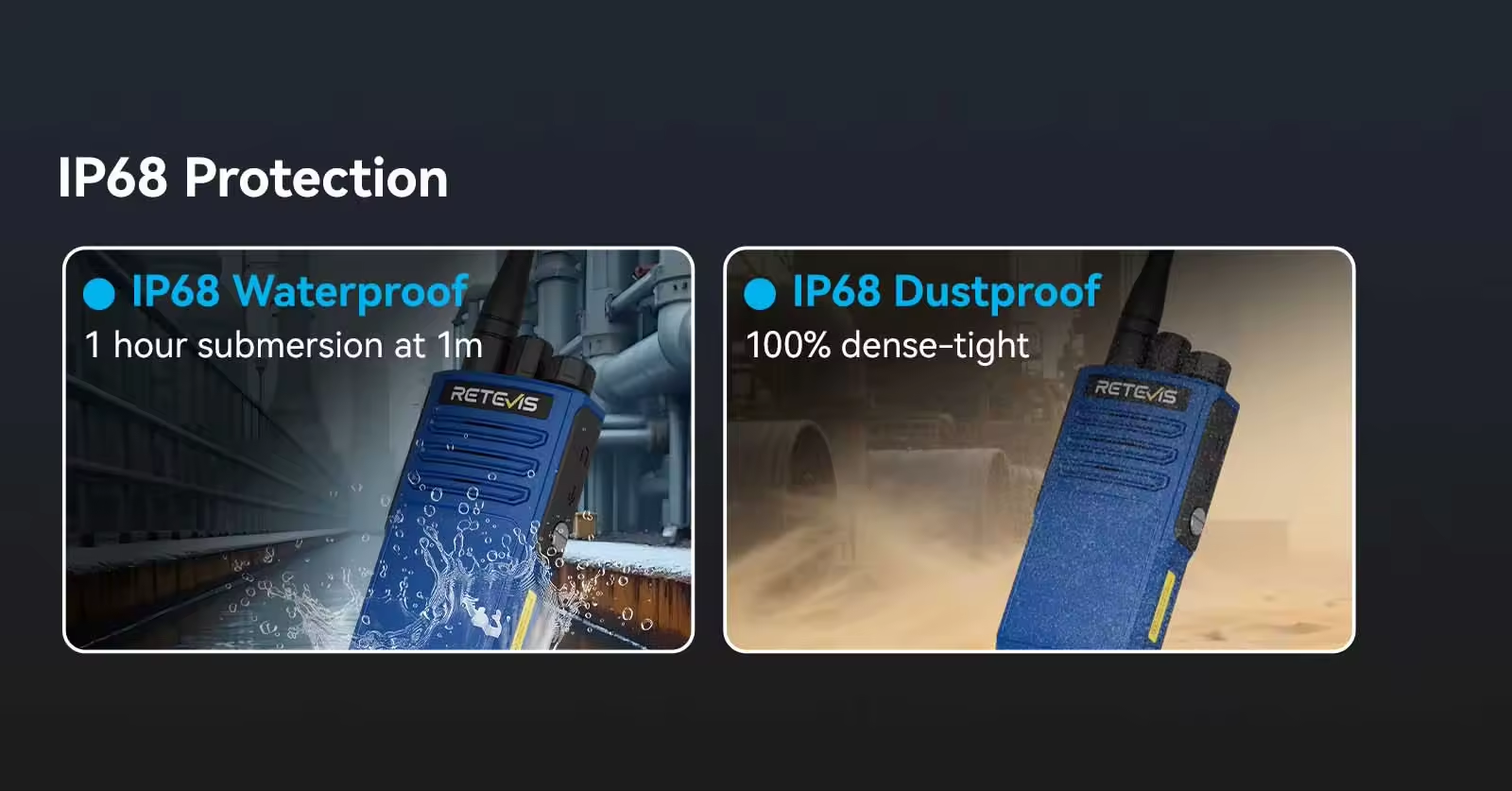
E1 has voice-activated VOX mode with earpiece and an IP68-sealed ABS and PC body for such rooms. Plants that perform hydrogenation work must handle hydrogen, a group IIC gas. The Retevis E2 is your ATEX radio for Zone 2 solvent areas work. ATEX and IECEx certified, IIC coverage. The E2 is not UL rated for Zone 1.
Powder charging: dust blocking, calls opened
Bags of powder charged into reactors throw dust into the air. Many fine powders will ignite from a tiny static spark, and dust settling on beams can lead to a second larger explosion. Sometimes there is solvent vapor as well as charging, which compounds the hazards.
Zone 21 is the space within approximately one meter of an open bag or charging port where, under normal work conditions, a dust cloud is probable. Dust group IIIB includes food, plastic and pharmaceutical powders. Dust group IIIC includes metal powders and carbon black.
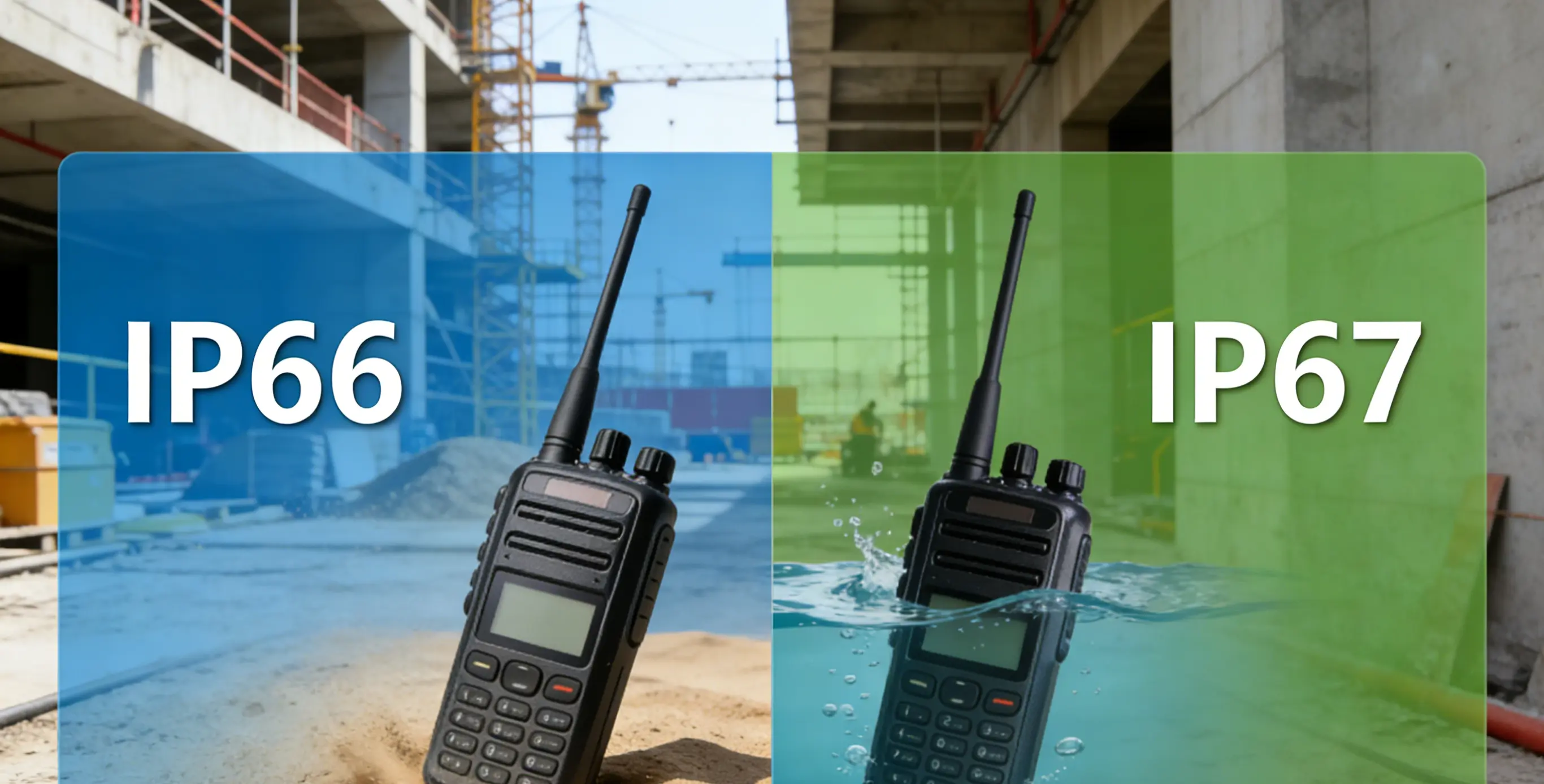
Each bag is opened by the worker who makes sure the reactor is ready and inerted. Fine dust gets into anything not sealed . So the radio has to be Zone 21 protected , IIIC covered , which covers IIIB too , and dust-tight . The E1 is certified to Zone 21 with IIIC dust coverage. It is IP68 rated to fully block fine powder.
Tank farms: guarding lone inspectors in outdoor rows
Tank farms spread out flammable liquid storage in rows in the open air. Vapor collects around tank bases, inside dikes and around gaging hatches. One person often makes the round alone. Open gaging points can rate as Zone 1 during the check. Tank bases and dikes rate as Zone 2. Usually groups IIA or IIB materials stored.
Inspectors report levels, leaks and valve positions from far rows where cell phones lose service, and a worker who falls or is overcome by vapor has no one nearby. The radio must be Zone 1 IIB rated, have automatic fall and no-motion alarms, weather sealing and battery life for the entire round.
 The E1 is designed for Zone 1 IIB protection, lone worker monitoring, fall detection, IP68 sealing, and a 2450mAh battery with a usage time of over 24.5 hours on a single charge. The E2 with IIC certification and integrated GPS can be fitted to Zone 2 rows for IIC gasses where rapid worker locati0n is required.
Loading racks: three-way coordination at every fill
Tank truck loading and unloading at the rack. Filling forces vapor out of the hatch, hose connections can leak product, and static grounding must be verified before flow begins. Zone 1 is open hatches and connections when transferring, with the rack around being Zone 2. IIA or IIB groups. Typically fuels and bulk chemicals.
Every load connects the driver, rack operator and pump house – grounding check, start, level updates, emergency stop – so the explosion proof radio functions out in all conditions and with pump noise, survives splashes and has an emergency button. The E1 is IP68 sealed to Zone 1 IIB requirements, has a superheterodyne receiver for clear audio close to pumps and has an emergency alarm for immediate stops.
Finding radios for the area
The plant area classification drawings and the markings on each radio certificate are the final authority. Each of the above areas will require an explosion proof radio suitable for the zone and material group, but the specific rating and features will vary from area to area. The E1 is the primary hazardous area radio for Zone 1 and Zone 21 work in chemical plant communication and the E2 covers Zone 2 gaps where IIC gasses, ATEX/IECEx certification or GPS is required.
EHS and production teams can give Retevis information on their area classifications to help choose a radio for chemical plant work areas. Or, they can visit the E1 and E2 handheld radio pages to see the certification details.



 Google
 Amazon

Comments
No data Yet