

Table of Contents
Four Stages to Plan a Two Way Radio for Lifting Operations Why a steel frame eats the radio signal
- Posted by:Retevis
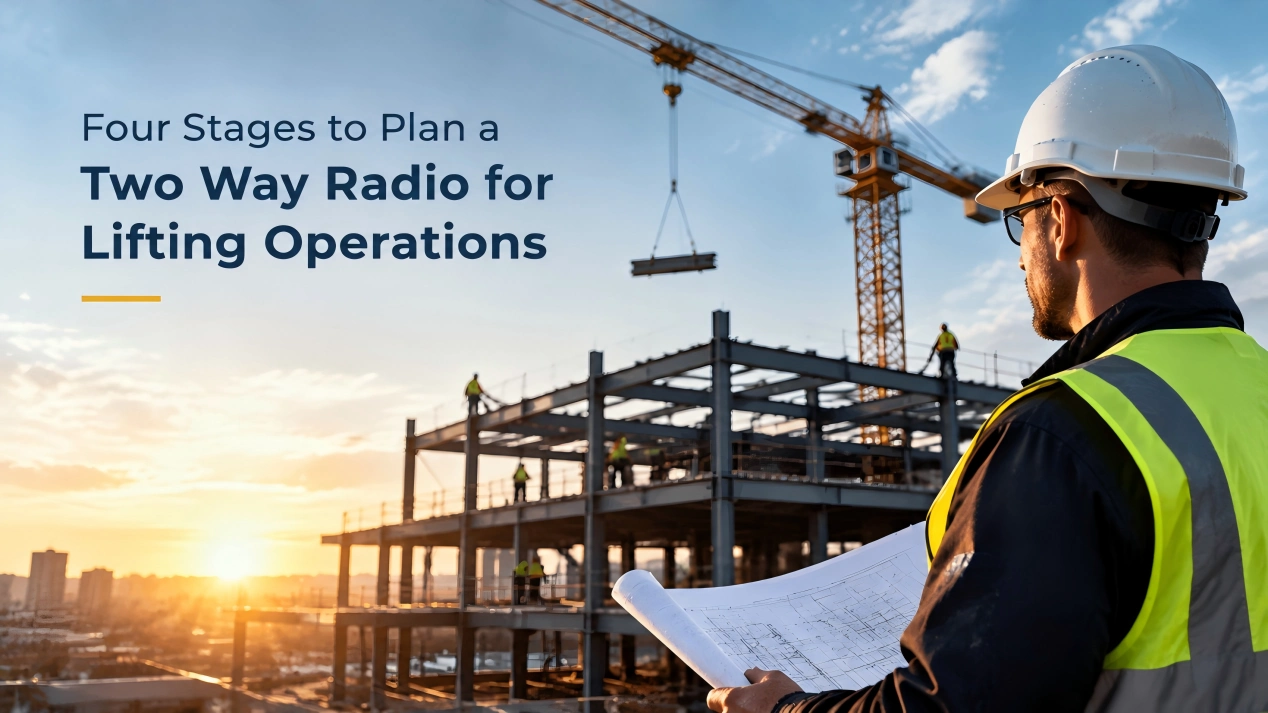
Structural steel erection runs on blind lifting. Once the columns rise, the tower crane operator sits high above the frame and cannot see the landing point, while the slinger-signaller works inside the structure and cannot see the hook. Every lift then depends on a clear voice path.
Three mechanisms break that path as the frame grows:
- Absorption — steel columns, beams and metal decking absorb RF energy directly.
- Reflection — signals bounce between dense members, arrive out of phase and cancel each other, so a radio works one minute and cuts out a step later.
- Shielding — each floor of metal decking forms a continuous layer, so the building behaves like a Faraday cage built one storey at a time.
CPA TIN 017, the UK radio specification for lifting operations, states the problem plainly: as the size and shape of the building changes, signal coverage may deteriorate. The March 2026 RAIB report at Port Glasgow showed the consequence of a broken voice path. A stop command never reached the crane driver, and two track workers were struck.
A radio system configured once on day one cannot survive a structure that changes every week. A construction site communication system on a steel frame has to be planned in stages.
Stage 1: Foundations — the planning window (weeks 1–2)
The site is open. Coverage is at its best and repeaters are rarely needed. This is the calm window, and the work that matters here is paperwork and programming rather than hardware.
- License first. PMR446 licence-free radios are barred from tower crane work under CPA TIN 017. They are limited to 0.5W, cannot legally use repeaters, share frequencies and carry weak encryption, so city-centre interference is severe. Cranes need Ofcom-licensed VHF/UHF channels at 3–5W.
- Pick the right licence. A Simple Site licence suits a single suburban project with self-coordinated frequencies and fast issue. A Technically Assigned licence gives coordinated, dedicated frequencies and suits crowded city sites.
- Allow lead time. The supplier must see the licence before programming the radios to the correct frequencies. The application cannot be left until the steel arrives.
- Lock the channel plan now. Allocate one dedicated channel per crane, with the crane number matching the channel number. Reserve separate channels for steel erectors and mechanical trades, and an independent crash radio channel for multi-crane sites.
Stage 2: Columns — blind lifting begins (weeks 3–5)
Columns become a metal forest. Sightlines close and multipath reflection starts shifting coverage around the structure.
- Run the first full radio check across every lift position before lifting starts, and repeat it at the beginning of every shift.
- Confirm where the repeater will sit once the frame climbs.
- Fit handsets with security tethers so a dropped radio cannot fall from height. Test gloved operation and a remote speaker-microphone on site.
- Program slinger handsets to a single locked crane channel. Multi-channel access belongs on the Appointed Person and crane supervisor sets.
Stage 3: The frame goes up (weeks 6–10)
This is the hardest phase. Signallers work inside the steelwork, the signal path crosses layers of beams, and the first dead zones appear. Crew numbers and trade channels grow week by week.
- Move or add repeaters as the structure climbs. CPA TIN 017 allows repeaters only on licensed systems, and blind lifting inside a growing frame often needs them.
- Complete the channel architecture: one channel per crane, separate steel and M&E channels, and on multi-crane sites a dedicated crash channel restricted to operators and the Appointed Person. Each crane cab should carry hands-free normal and crash controls.
- Test the chain, not just the radio. A signal from a signaller at the far bay must reach the cab and the supervisor at the same time.
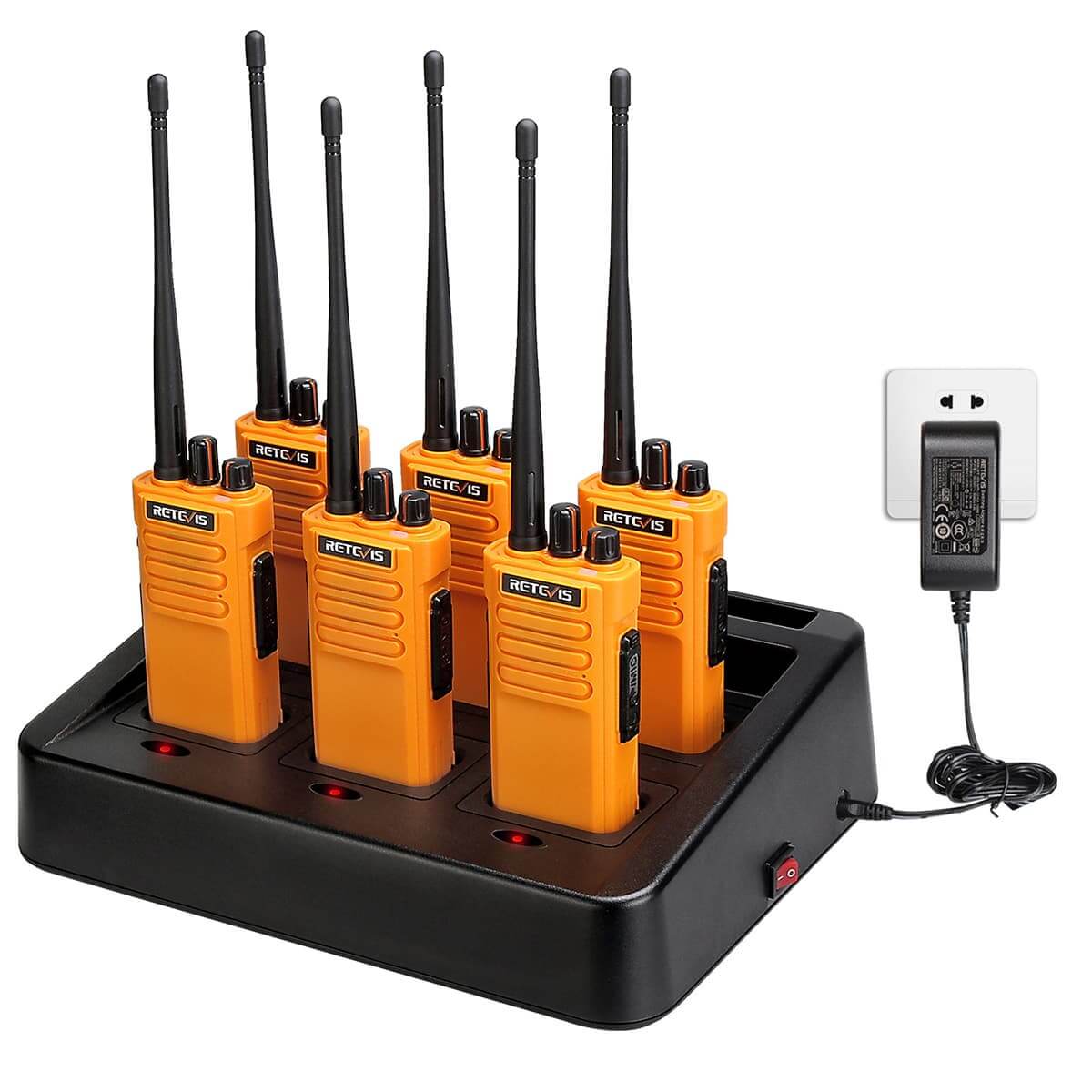
- Tighten battery discipline. Continuous lifting can require multiple battery changes in a shift. Spare charged batteries and a charging rota are part of the system.
Stage 4: Decking, floors and top-out (weeks 11–14)
Metal decking creates the largest shield on the project. Floors close over, internal communication depends on repeaters, and the boundary between inside and outside coverage hardens.
- Re-plan coverage by floor and reset power levels to avoid overshooting into adjacent sites.
- Re-test every handover point where loads move between an outside crane and internal teams.
- Before the steelwork contractor demobilises, record every radio, channel and repeater position, and hand the asset register to the principal contractor. The following trades inherit the same steel shield.
Who owns the radio system on a UK steel site
Responsibility for the radio chain is split across the parties on a UK steel project. The crane is hired, the Appointed Person may come from the rental company, the signallers work for the steel contractor, and the principal contractor coordinates the whole site.
Two UK arrangements decide where the buck stops:
- CPA hire — the user, normally the steel contractor, plans, supervises and executes all lifting. The hire company supplies plant only.
- Contract lift — the crane company assumes control of the lifting operation.
The February 2026 CPA tower crane guidance sharpens the point. Even when the Appointed Person is supplied by the rental company, the crane user retains responsibility for that person's competence and must review and approve the lift plan to meet CDM duties.
Before steel arrives, state in the subcontract who holds the Ofcom licence, who programs the channels, who supplies the crash radio, and which parties must interwork. Channel clashes and dead zones otherwise sit in the gap between contracts.
Three certified industrial radios matched to the stages
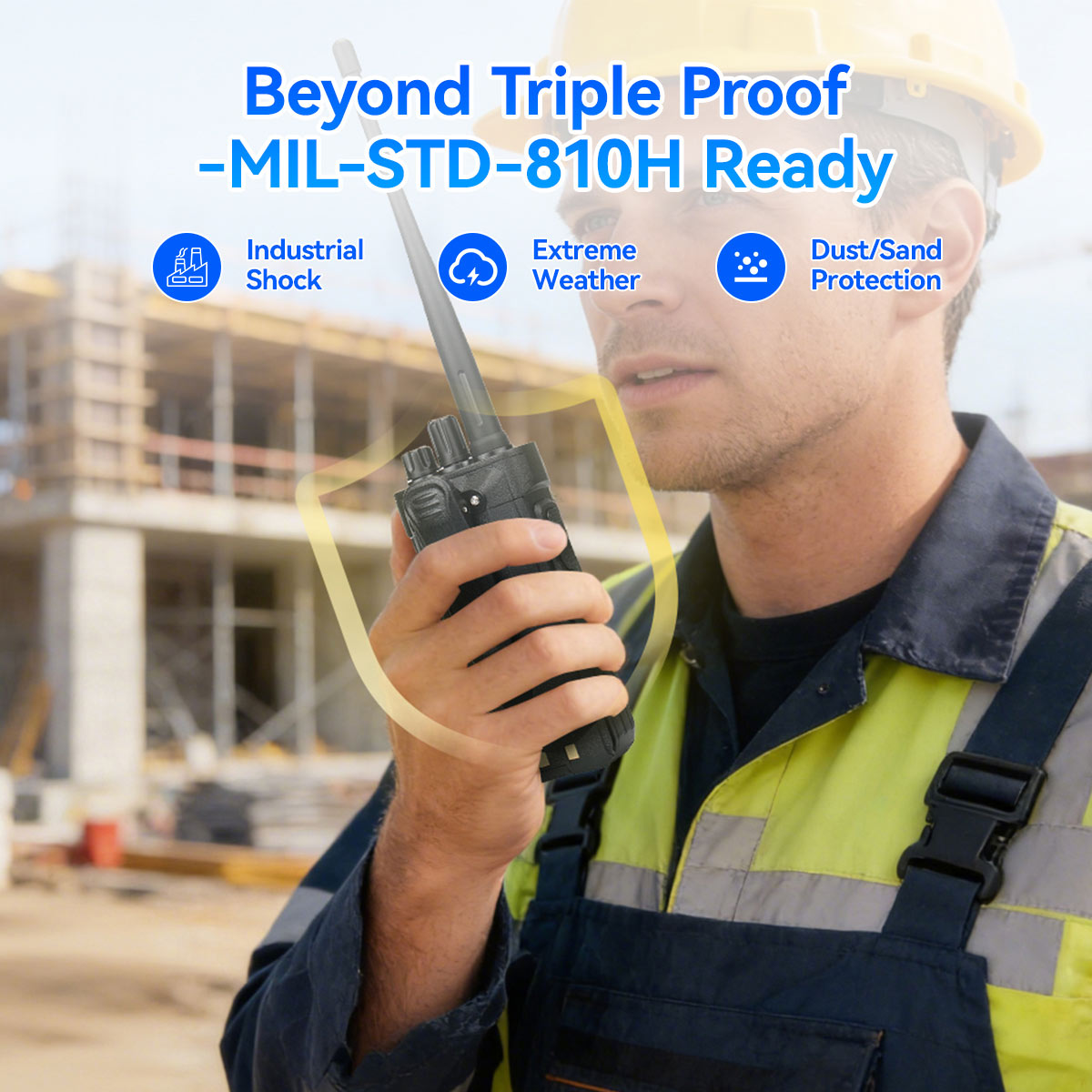
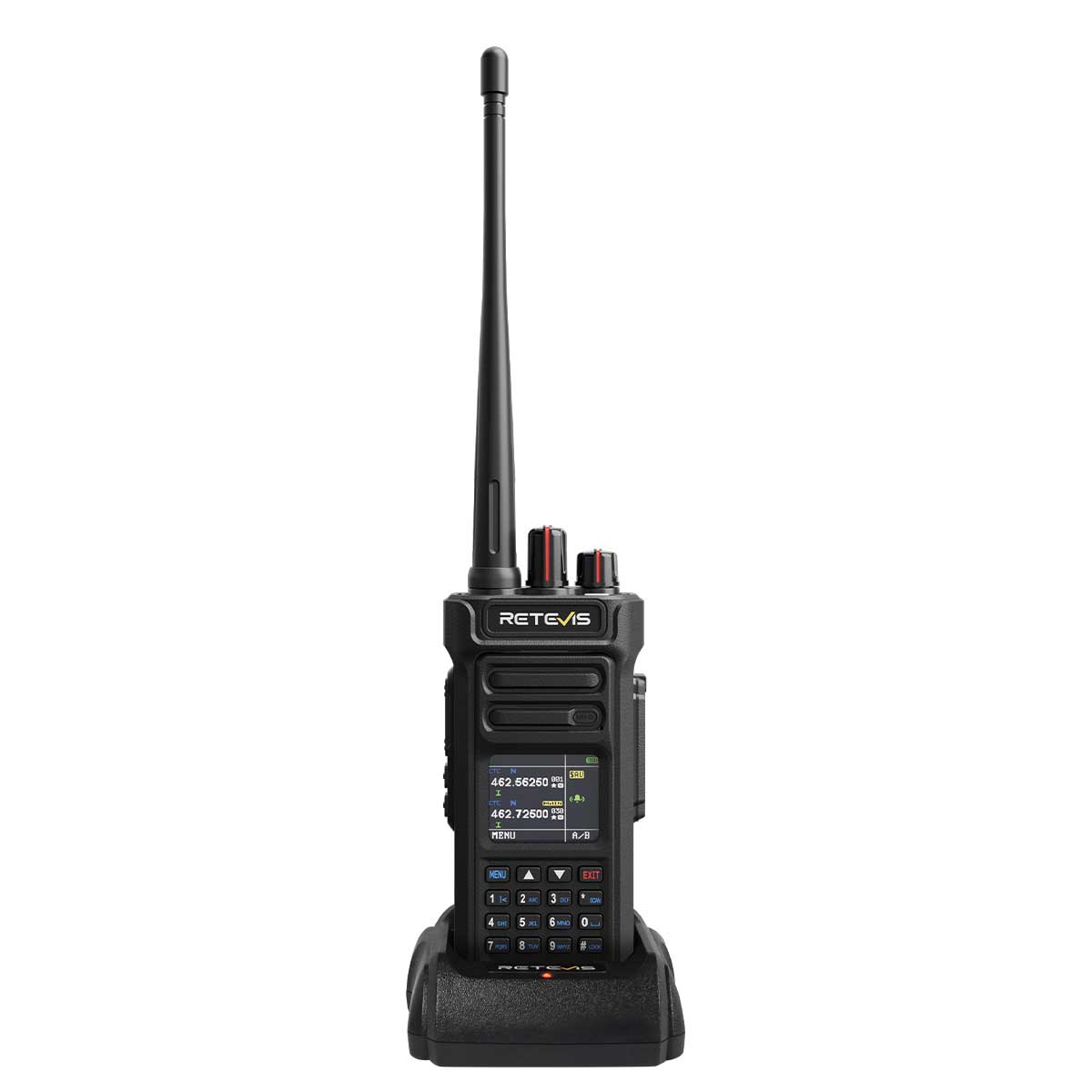
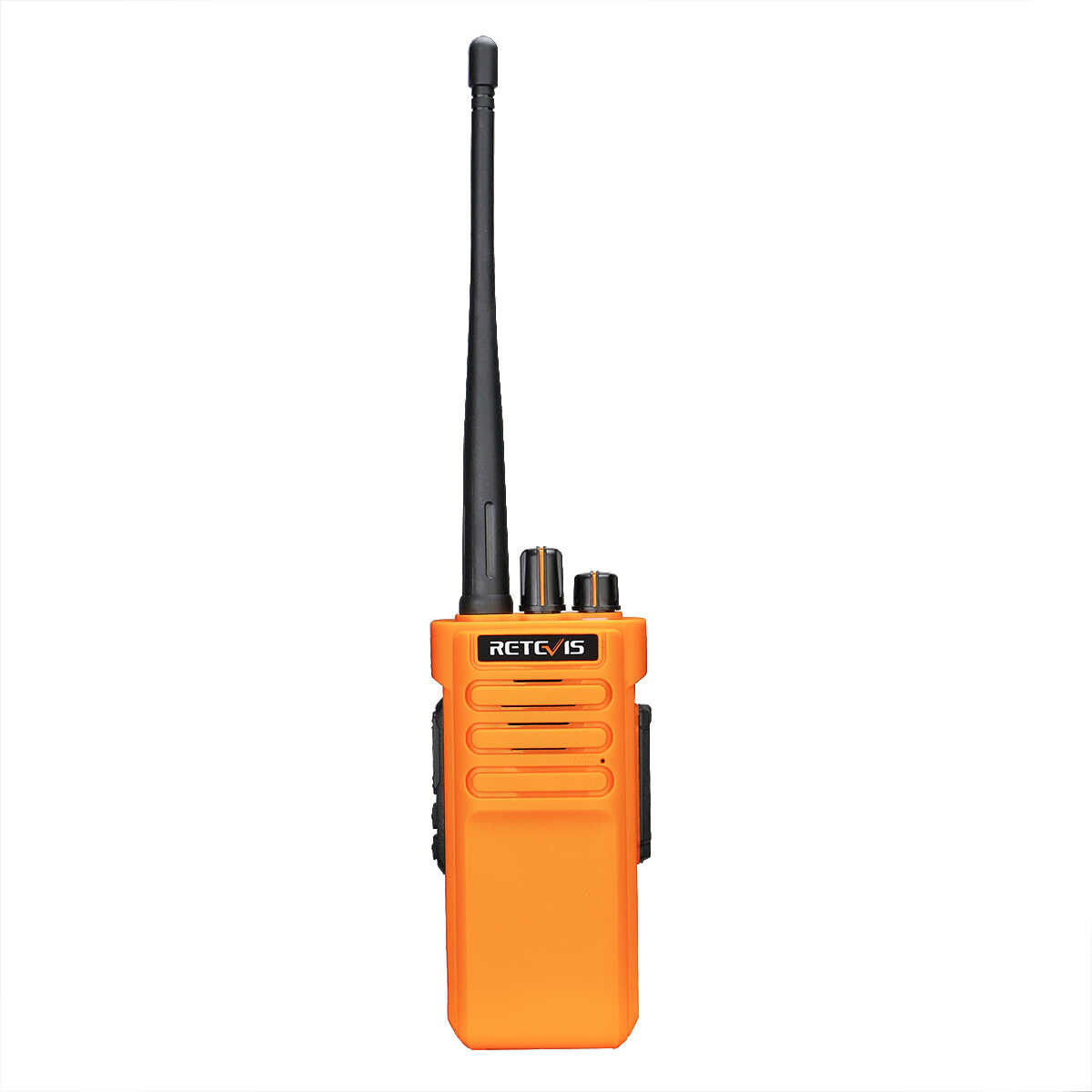
All three are UHF DMR digital radios for use on licensed UK frequencies. Digital mode gives the benefits CPA TIN 017 names: crisper audio, stronger encryption, roughly 20–25% better battery life, and safety functions such as lone-worker and man-down alarms.
RT29D — the long-range, long-shift unit for Stage 3
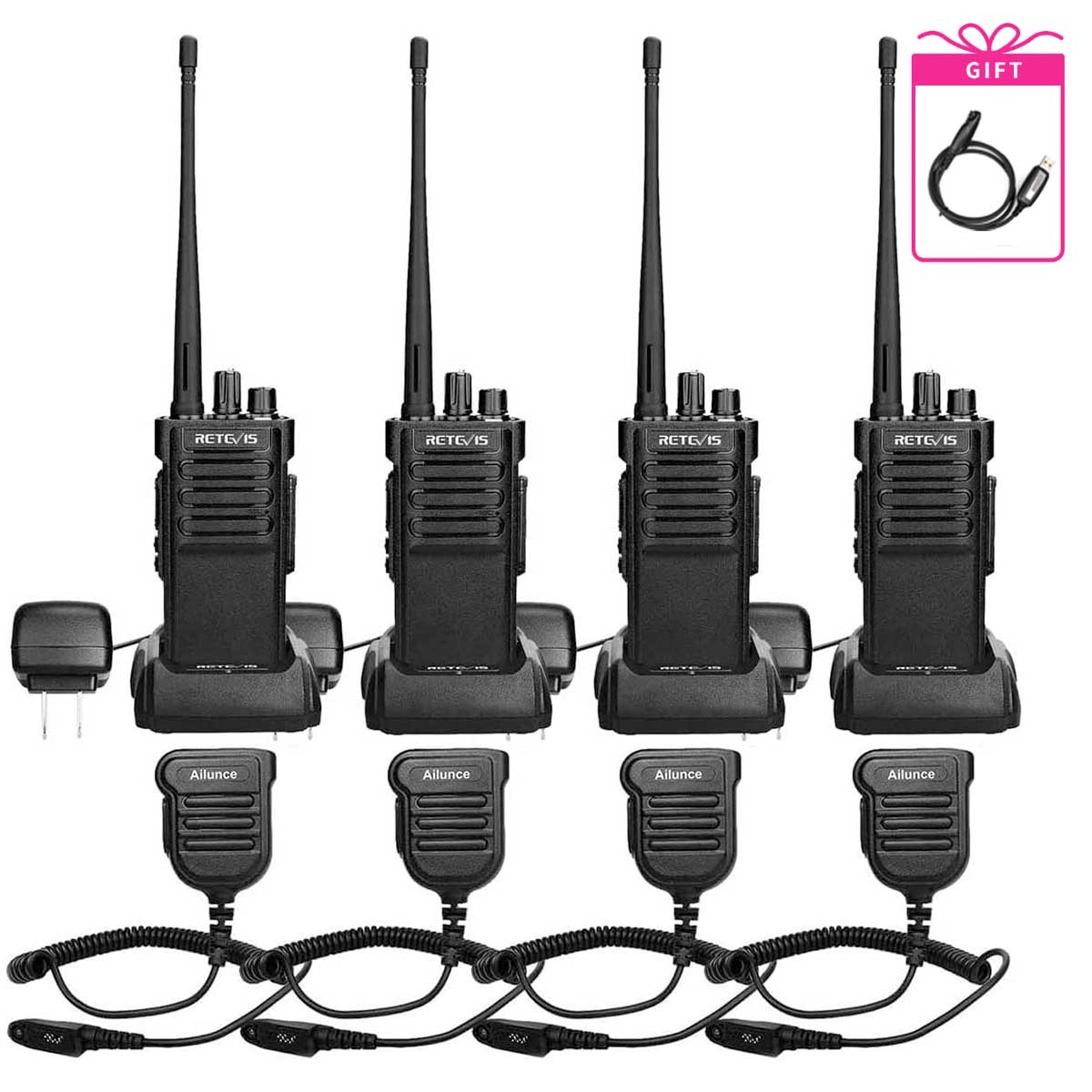
- 10W/4W/1W long-range output, 128 channels across 8 zones
- 3200mAh battery, the largest of the three, for back-to-back lifts
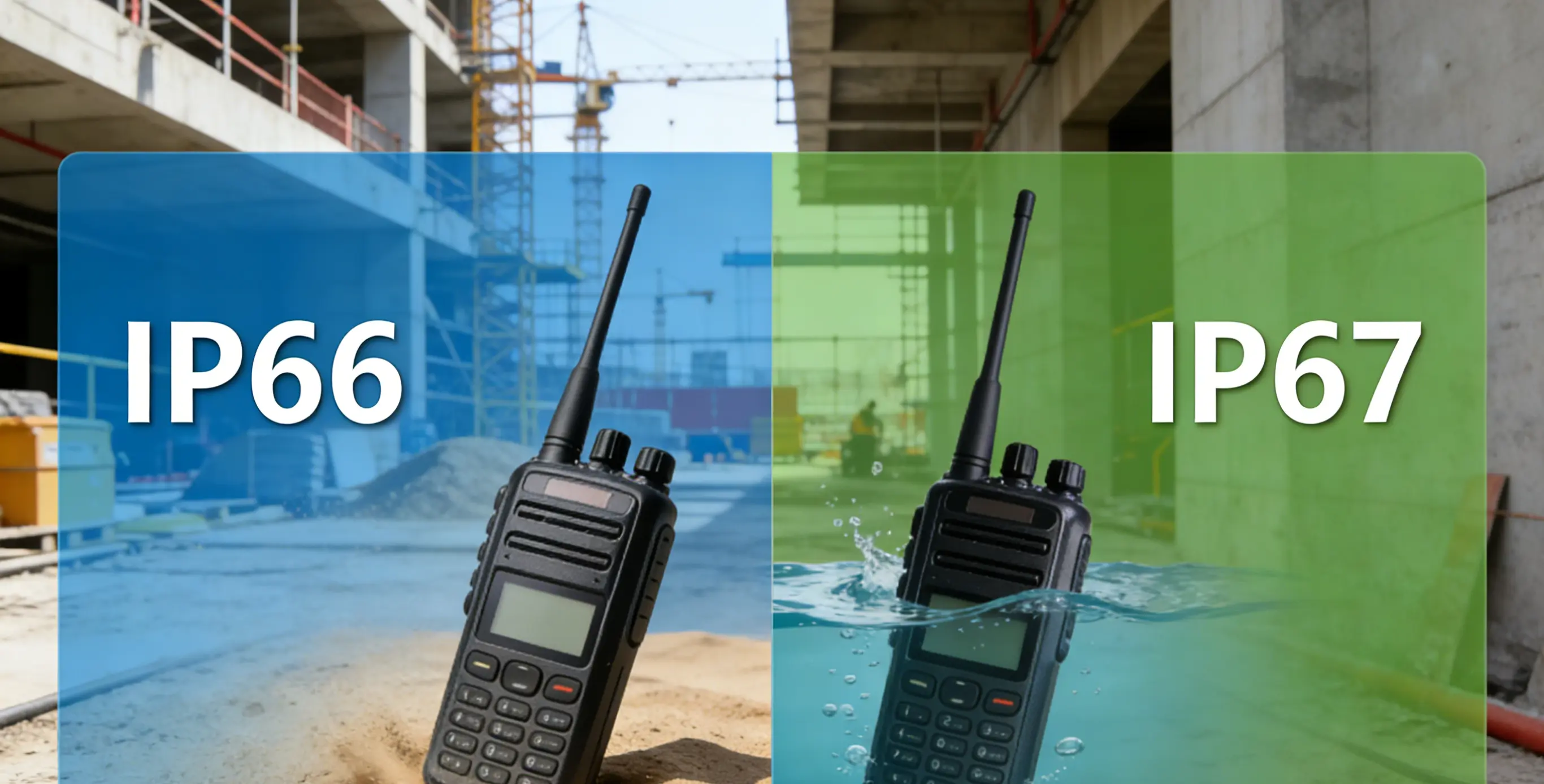
- IP67, DMR encryption, DCDM dual-capacity direct mode, and an optional Bluetooth version for hands-free cab use
- Best placed with signallers during the heaviest frame-erection weeks
Link to Retevis RT29D Bluetooth Long Range Waterproof Rugged DMR Radio

NR30D — the city-centre, multi-crane unit
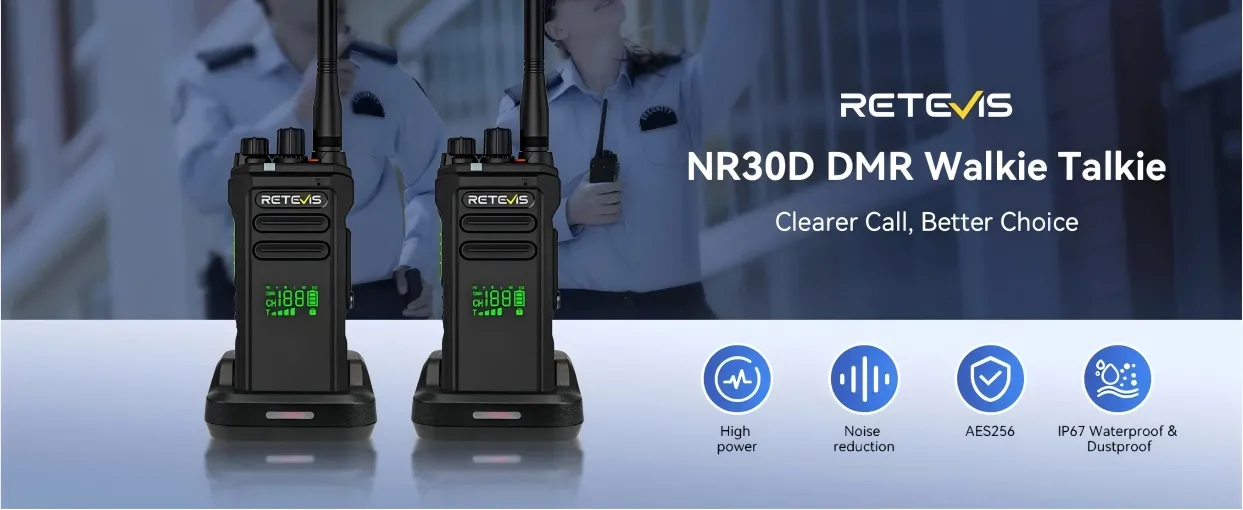
- 10W/5W/1W output, 64 channels across 2 zones
- AES256 encryption blocks adjacent-site interference and keeps commands on the correct crane
- IP67, noise reduction, VOX, lone-worker function, hidden display, 2800mAh battery
- Best for crowded city sites where several cranes and trades share the airwaves
Link to Retevis NR30D AES256 Long Range Waterproof DMR Business Radio with Noise Reduction
RB48D — the supervisor and lone-worker unit
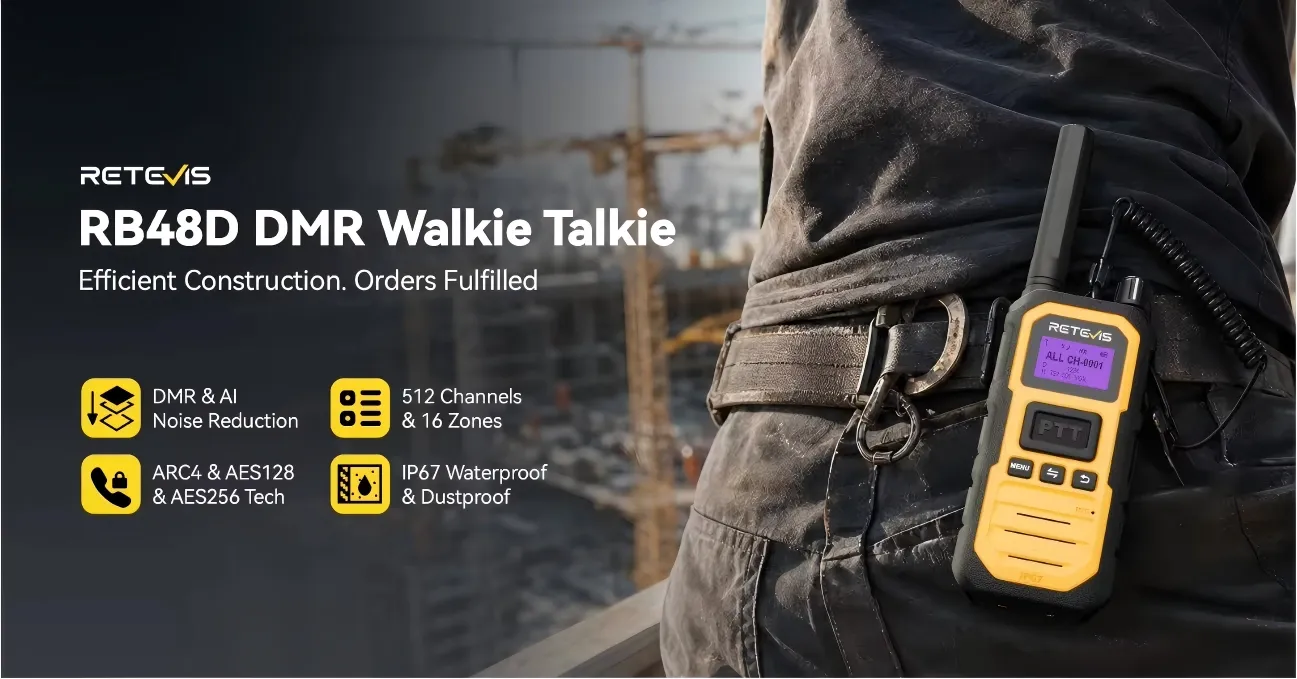
- 5W/1W output, 512 channels across 16 zones for cross-channel coordination
- Man-down alarm, AES128/AES256 encryption, AI noise reduction, VOX, dual PTT, IP67
- 2000mAh battery and an operating range of -30°C to +60°C for winter lifting
- Best for the Appointed Person, crane supervisor and anyone working alone at height
Link to Retevis RB48D IP67 Waterproof DMR Walkie Talkie with Noise Reduction
Fleet rollout follows the frame. Start with a small licensed fleet in Stage 1, add units as crews grow in Stages 2 and 3, and redistribute around floors in Stage 4.
Keep the chain alive until top-out
Equipment alone never closes the risk. The radio discipline around it is short:
- Run a full radio check before every shift, with no lifting until coverage is confirmed.
- Use unique call signs on every command. Operators ignore any instruction without a call sign except "Stop".
- Use standard commands — take the weight, hoist, lower, slew left, slew right, stop now — and have the operator repeat them back.
- Repeat commands continuously during fine positioning. If the repetition stops, the driver stops.
- Record crane communications where possible for training and incident review.
A steel frame is assembled one lift at a time. The jobsite communication radios that control those lifts must grow with it: checked every shift, re-planned every stage, and owned by a named party in the contract. Get that rhythm right and a two way radio for lifting operations stays clear from the first column to top-out.




 Google
 Amazon

Comments
No data Yet