


Table of Contents
CB Radio vs Ham Radio: Features, Licensing, and Real-World Scenarios
- Posted by:Retevis
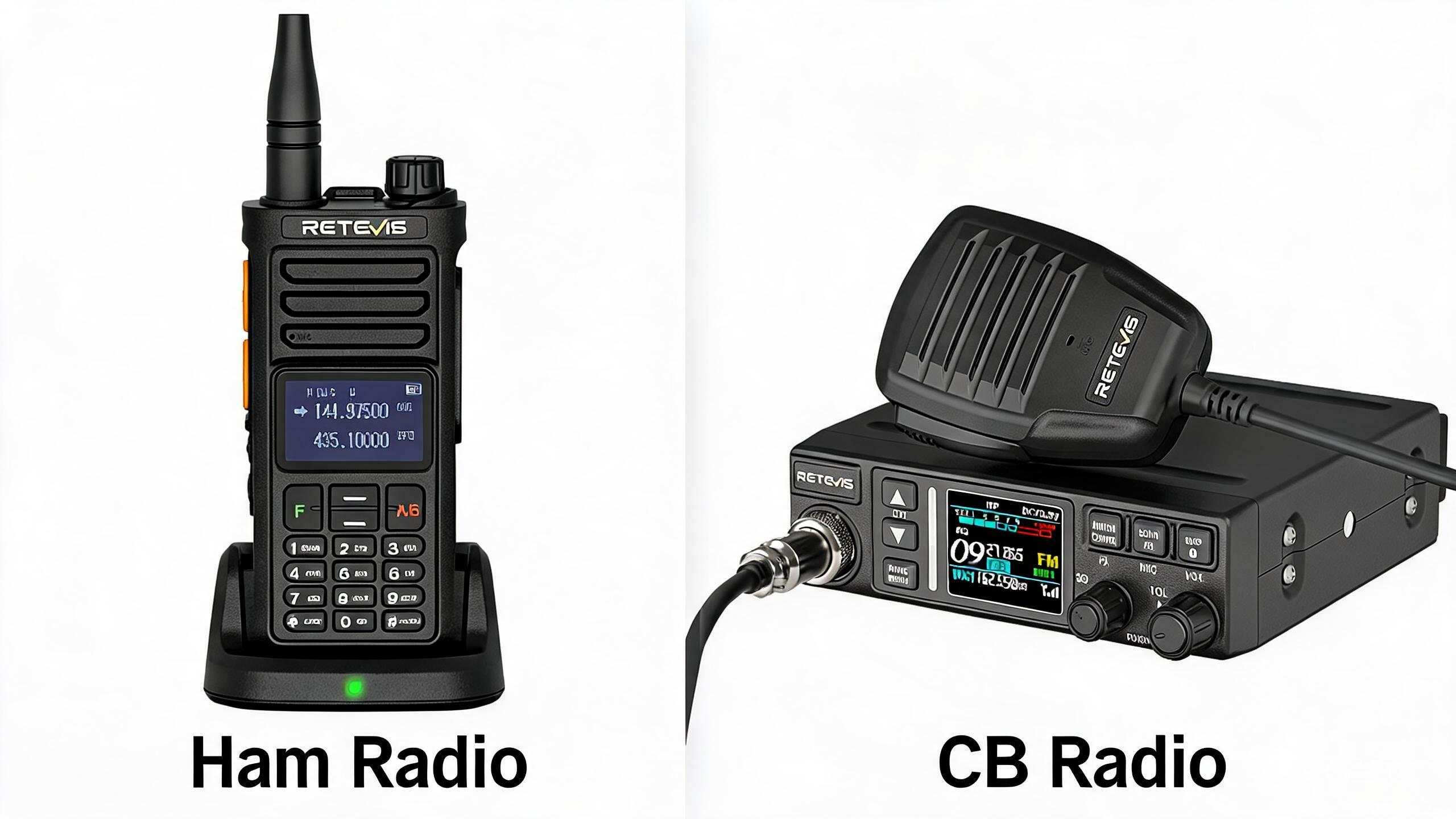
When choosing a two-way radio, one of the first questions beginners face is: CB radio vs ham radio – which one is right for me? Both allow wireless communication, but they differ significantly in licensing, range, audio quality, and use cases. This article draws from actual user experiences, regulatory documents, and feedback from longtime operators to provide an objective comparison and help you make an informed choice.
What Is CB Radio? – A License-Free Civilian Communication Tool
CB Radio (Citizens Band Radio) is a short-range radio service that does not require a license in many countries (including the US). It operates on the 11-meter band around 27 MHz and has 40 fixed channels (early models had 23). Most CB radios use AM (Amplitude Modulation) , though some support SSB (Single Sideband).
Key Features
- No license required – Anyone can buy and use it (within power limits).
- Power limit – Legally capped at 4 watts (carrier power) in the US, which limits range.
- Very easy to use – Select a channel and start talking; almost no learning curve.
- Typical users – Truck drivers (for traffic updates & real-time alerts), off-road beginners, families for short-distance contact.
CB Radios Limitations
Short range – A few miles under ideal conditions; less in cities.
AM noise – Prone to static and interference from electrical devices.
Chaotic channels – Some channels (e.g., Channel 6) are notorious for illegal high-power jamming, music playing, and arguments, making normal conversation difficult.
What Is Ham Radio? – Licensed, Experimental, Global Communication
Ham Radio (Amateur Radio) is a licensed radio service regulated by the FCC (in the US) or similar bodies worldwide. Operators must pass an exam to obtain a call sign before transmitting. Amateur radio is not for commercial use – it encourages technical experimentation, emergency communication, and international friendship.
Key Features
- License required – Pass a test (Technician / General / Extra in the US) and get a call sign.
- Multiple bands – From 135 kHz to several GHz, including HF (shortwave), VHF, and UHF.
- Multiple modes – FM, AM, SSB, CW (Morse code), digital modes (FT8, PSK31), even email and satellite relay.
- Higher power – Legally up to 100 watts on VHF/UHF and 1,500 watts on some HF bands (depending on license class).
- Clear audio – FM mode is clean and free of the static typical of AM.
Requirements & Responsibilities
Study and pass an exam – Learn basic electronics, regulations, and operating practices.
Identify with your call sign – Required every 10 minutes or at the end of a contact.
Self-policing – Ham bands generally have good order and few intentional interference.
Detailed Comparison: CB Radio vs Ham Radio
|
Aspect |
||
|
License |
None required |
License and call sign required |
|
Typical Band |
27 MHz (11 meters) |
HF, VHF, UHF (many bands) |
|
Modes |
Mostly AM, some SSB |
AM / FM / SSB / CW / Digital |
|
Max Power (US) |
4 watts (carrier) |
Up to 1,500 watts (depending on license) |
|
Typical Range |
A few miles (ground wave) |
Global (via ionosphere or repeaters) |
|
Entry Cost |
~$50-60 for handheld |
~$75-80 for basic handheld |
|
Ease of Use |
Extremely easy – pick a channel and talk |
Moderate – requires programming and learning |
|
Typical Users |
Truckers, off-road beginners, families |
Hobbyists, emergency volunteers, explorers |
|
Air Environment |
Some channels are chaotic with jamming |
Generally orderly and self-regulated |
Choosing Between Ham and CB Radio: A Scenario-Based Comparison
The decision to implement Ham or CB radio depends on specific communication requirements, technical interests, and the operational environment. The following breakdown assists in determining the most suitable system.
CB Radio is Optimal When:
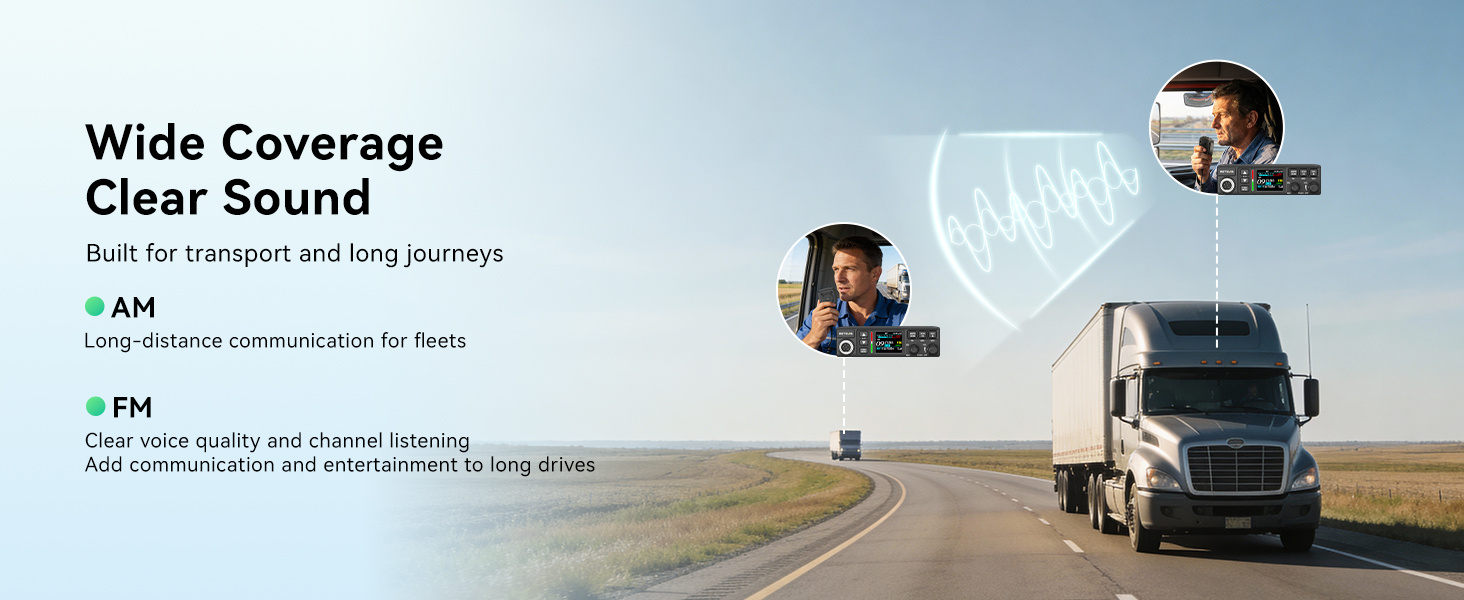
- Localized Coordination is Sufficient: Communication is primarily short-range (1–5 miles), such as maintaining contact within a nearby convoy.
- Immediate Accessibility is Required: The system offers a "plug-and-play" experience with no testing or licensing mandates.
- Real-Time Traffic Monitoring is Necessary: Monitoring trucker channels provides essential updates on road conditions and local hazards.
- Group Compatibility is the Priority: An existing social circle or off-road club already utilizes the CB standard.
Ham Radio is Optimal When:
- Expansive Range is Required: Connectivity must span across cities, nations, or even continents.
- Audio Fidelity is Critical: Clear, static-free FM and digital modes are preferred over traditional AM-based signals.
- Technical Experimentation is of Interest: There is a desire to explore antenna design, signal propagation, and diverse digital modes.
- Emergency Reliability is Paramount: The system serves as a professional-grade lifeline when cellular networks and other infrastructure fail.
- Organizational Membership Mandates It: Specific emergency response teams or off-road clubs require Ham radio for safety and coordination.
The Balanced Perspective: A Complementary Approach
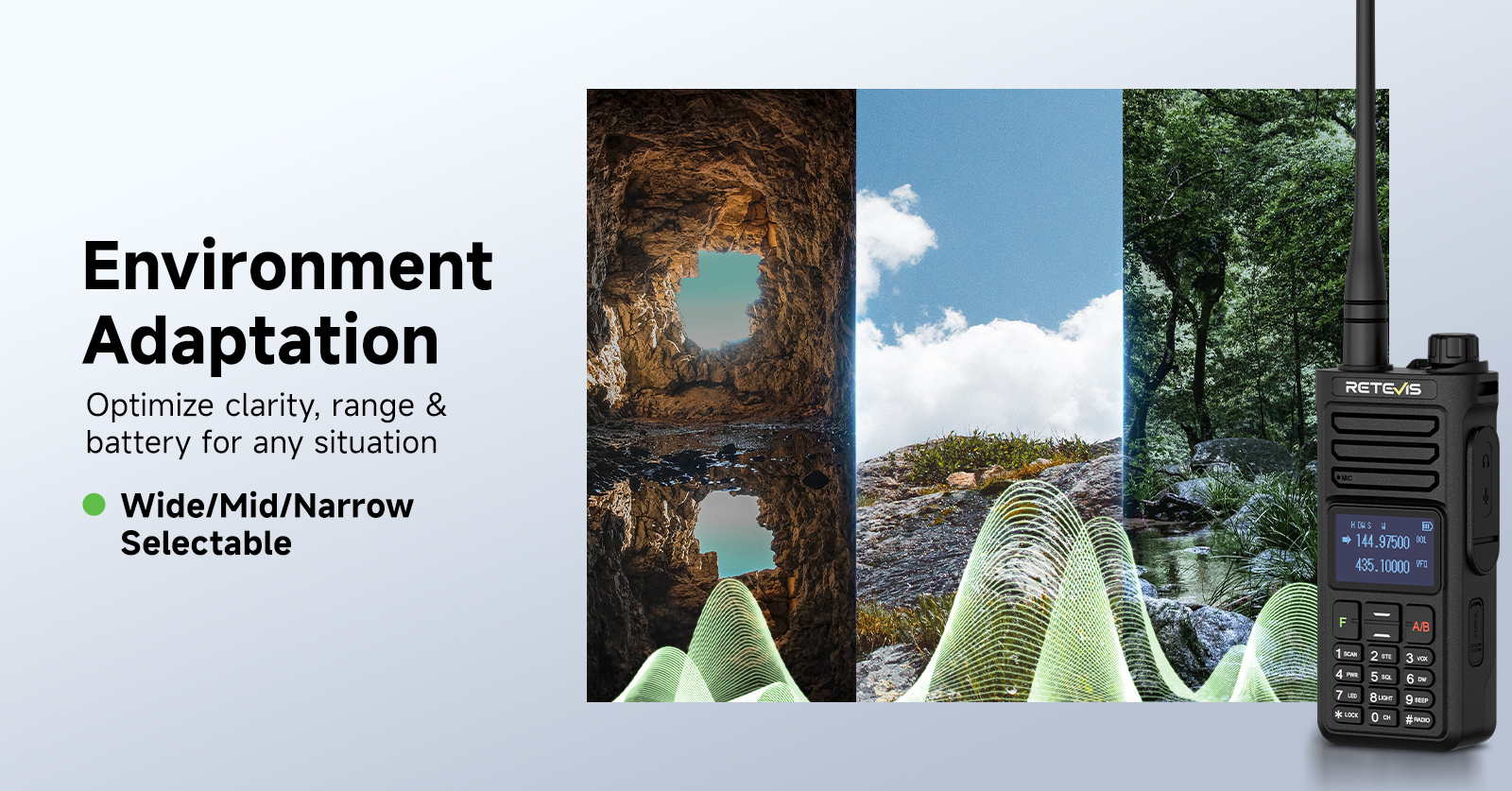
Experienced operators often find that integrating both systems is the most effective strategy. These technologies are complementary rather than competitive; a fixed CB radio remains the standard for localized convoy monitoring and traffic updates, while a handheld Ham unit provides a critical long-distance backup for reaching repeaters when traveling beyond cellular coverage. Utilizing both ensures total connectivity across all scenarios.
Common Misconceptions on Radios
Myth 1: “Ham radios are too expensive. CB is cheaper.”
Reality: Entry-level ham handhelds (like the Baofeng UV-5R) cost about $75, while basic CB handhelds are around $50-60. The price difference is small, but ham offers far more capability.
Myth 2: “The license is a hassle, and I don’t want to be on a government list.”
Reality: The US Technician exam has only 35 questions. You can study online and take a local test – many people get licensed in a few weeks. And your information is already on many lists (driver’s license, credit cards, etc.). This fear is largely outdated.
Myth 3: “In an emergency, I can use any frequency without a license.”
Reality: US law does allow using any frequency to save life or property in a genuine emergency. But if you have never learned how to operate a ham radio, you may not be able to call for help effectively when it matters. Learning and getting licensed beforehand is responsible preparation.
Conclusion: A Choice Based on Experience and Expertise
Citizens Band (CB) radio provides a practical, low-barrier solution for localized, non-technical communication, making it ideal for short-range coordination during recreational activities. Conversely, Amateur (Ham) radio serves as a comprehensive gateway to global connectivity and technical mastery; although it necessitates formal study and licensing, the system rewards users with superior audio fidelity, expansive range, and a sophisticated understanding of signal propagation. While CB remains sufficient for basic vehicle-to-vehicle contact, Ham radio offers a significantly more robust platform for those seeking to transcend local limitations and explore the advanced capabilities of international radio communication.
References & Further Learning
US license exam prep: hamradioprep.com
Practice tests: QRZ.com
Find a local club: ARRL.org
Whichever path you choose, use the airwaves legally, respectfully, and enjoy the journey.
Leave a Reply

$4,879.99
$3,317.99
$1,780.99
$1,014.99

$749.99
$426.99


© 2026 RETEVIS, Inc. All rights reserved.
 Google
 Amazon
Comments
No data Yet