

Table of Contents
Ham Radio vs GMRS: Key Differences, Interoperability, and How to Choose
- Posted by:Retevis
1. Introduction
When deciding on a two-way radio, Ham Radio (Amateur Radio) and GMRS (General Mobile Radio Service) are the two options people most often compare.
At first glance, they look quite similar: handheld devices with antennas that let you talk to others within a certain distance. But they differ in important ways—licensing requirements, usage, and communication range.
A common question is: “Can a Ham Radio talk to a GMRS radio?” This guide compares Ham and GMRS radios and addresses that question directly.
2. What Are Ham Radio and GMRS?
2.1 What Is GMRS?
GMRS is a civil radio service defined by the FCC, primarily used for personal and family short-distance communication.
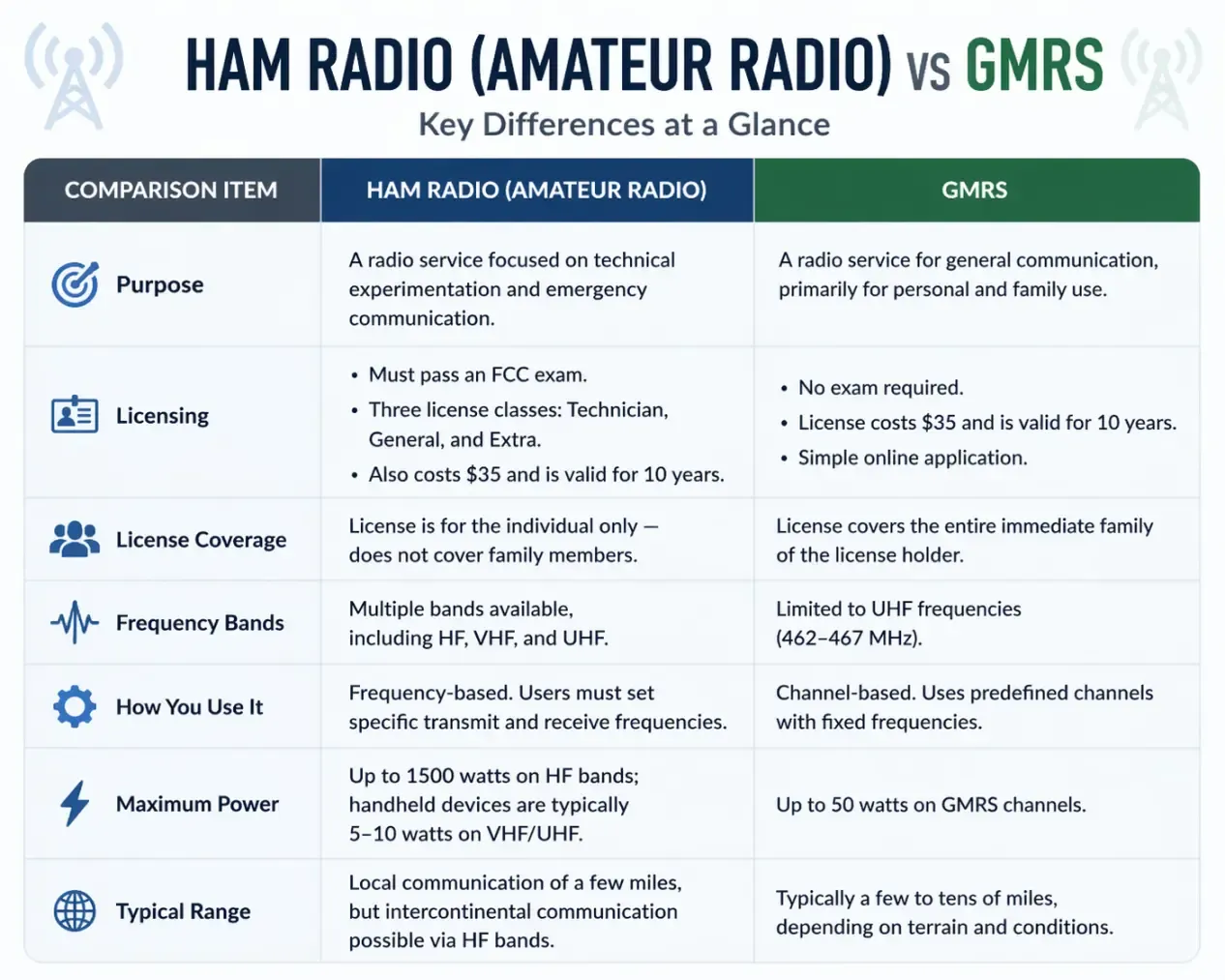
- Licensing: License required, but no exam. Costs $35 and is valid for 10 years.
- License coverage: One GMRS license covers the applicant and their immediate family members.
- Frequency band: UHF band only (462MHz and 467MHz).
- How you use it: Channelized. Users do not need to set specific frequencies — just select a channel number.
- Maximum power: Handheld devices typically 5 watts or less; mobile or base stations up to 50 watts.
- Typical range: 1-5 miles (approximately 1.6-8 kilometers), depending on terrain.
2.2 What Is Ham Radio?
Ham radio is a radio service focused on technical experimentation and emergency communication.
- Licensing: Must pass an FCC exam. Three license classes: Technician, General, and Extra. Also costs $35 and is valid for 10 years.
- License coverage: License is for the individual only — does not cover family members.
- Frequency bands: Multiple bands available, including HF, VHF, and UHF.
- How you use it: Frequency-based. Users must set specific transmit and receive frequencies.
- Maximum power: Up to 1500 watts on HF bands; handheld devices are typically 5-10 watts on VHF/UHF.
- Typical range: Local communication of a few miles, but intercontinental communication possible via HF bands.
3. Ham Radio vs GMRS: Seven Key Differences
3.1 How You Obtain a License
This is the most fundamental difference:
- GMRS: You buy the license. No radio knowledge required, no exam.
- Ham Radio: You earn the license by passing an exam. Requires studying radio regulations, basic electronics, and operating practices.
3.2 Who Can Use Your License
- GMRS: One license covers the applicant plus their spouse, children, parents, and other immediate family members.
- Ham Radio: License is for the individual only. Every person who wants to transmit legally must hold their own license.
3.3 What Frequencies You Use
- GMRS: Only operates on 22 specific UHF channels, plus 8 repeater channels. Frequencies are fixed.
- Ham Radio: Can freely choose frequencies across multiple bands. For example, a Technician-class license allows access to the VHF 2-meter band (144-148MHz) and the UHF 70-centimeter band (420-450MHz).
3.4 How You Operate Your Device
- GMRS: Channelized operation. Users simply select a channel number — no frequency programming required.
- Ham Radio: Frequency-based operation. Users must enter or select specific frequencies, or pre-program channels using software.
3.5 Communication Range
- GMRS: Primarily line-of-sight. Terrain and buildings significantly affect signal. Repeaters can extend range significantly, but there are only around 700+ GMRS repeaters across the United States.
- Ham Radio: VHF/UHF handheld range is similar to GMRS. However, Ham Radio can use HF bands to communicate hundreds or thousands of miles via ionospheric reflection. Additionally, there are thousands of Ham repeaters available nationwide.
3.6 Equipment Features and Cost
- GMRS: Devices are relatively simple and ready to use out of the box. Prices range from $30 to $300.
- Ham Radio: Devices offer more features, supporting digital modes, satellite communication, APRS location tracking, and more. Entry-level devices cost $30-50; high-end handhelds can reach several hundred dollars.
3.7 Typical Users and Use Cases
- GMRS: Family outdoor activities, off-road convoys, worksite communication, small venue operations.
- Ham Radio: Radio enthusiasts, emergency communication volunteers, users needing long-distance communication, satellite and space communication hobbyists.
4. The Core Question: Can a Ham Radio Talk to GMRS?
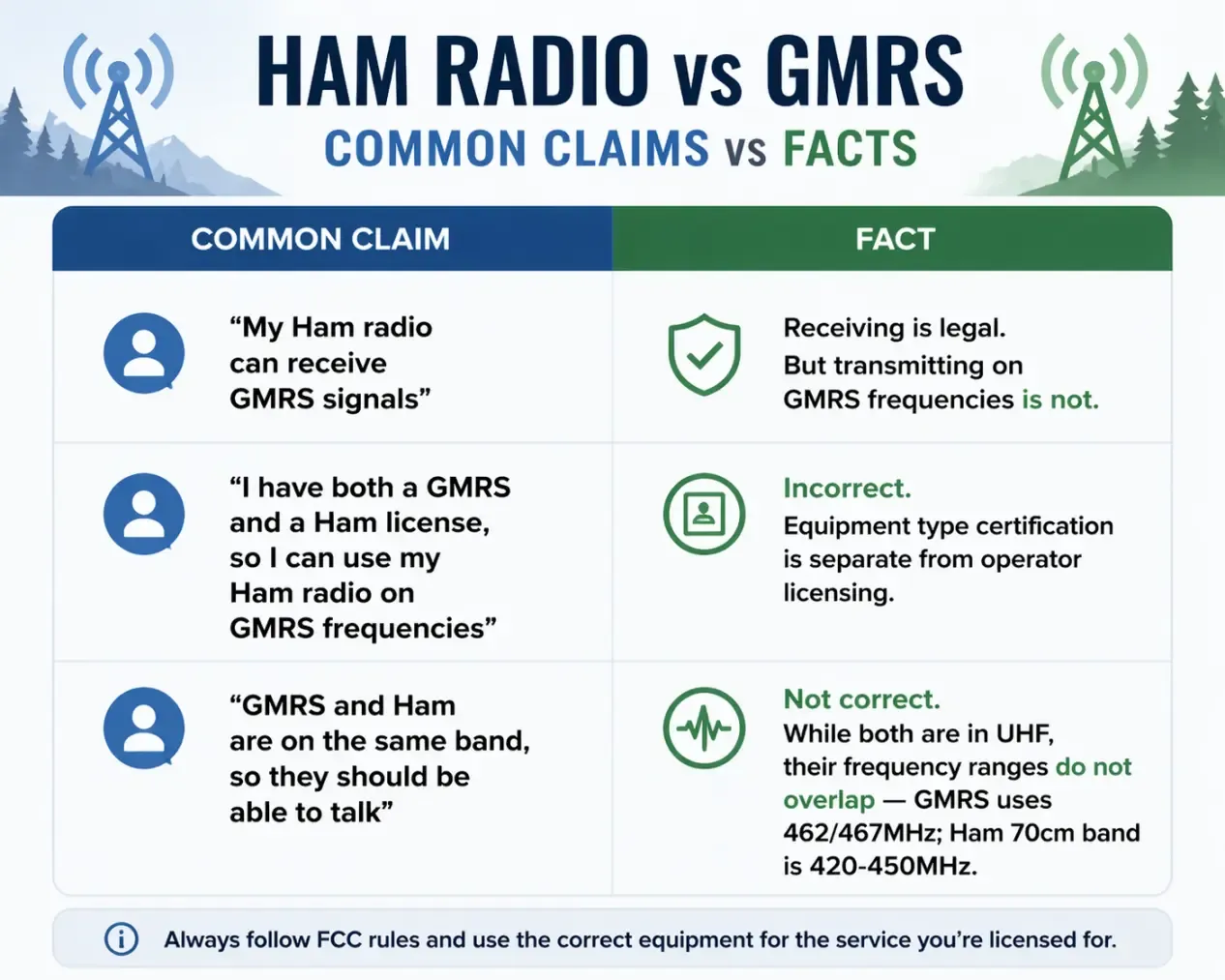
This is the question users care about most, and also where online information is most confusing. Under legal and compliant conditions, Ham Radio and GMRS cannot talk to each other directly. Here‘s why:
- GMRS radios are only legally allowed to transmit on their designated 22 UHF channels.
- A Ham radio can operate on UHF bands, but a Ham license does not typically grant operating privileges on GMRS-specific frequencies.
- The FCC explicitly states that any device transmitting on GMRS frequencies must be GMRS type-certified. The vast majority of Ham radios do not have this certification.
4.2 Technical Level: Possible in Hardware, Not Legal in Practice
Many Ham radios can technically cover GMRS frequencies, but transmitting on those channels without proper certification is illegal—even if you hold both licenses.
4.3 Best Practice: What to Do If You Need Cross-Communication
If you need to communicate with family or friends who use GMRS radios, here is the recommended approach:
- Get your own GMRS license. No exam required — just pay the $35 fee.
- Purchase an FCC-certified GMRS radio. These devices work on GMRS channels right out of the box.
- For those who hold both a GMRS license and a Ham license, use the corresponding device for each service — but cross-service communication is not possible. Each service communicates within its own device type.
5. How to Choose: Ham Radio or GMRS?
5.1 Why GMRS
- Keep in touch with family/friends outdoors.
- Avoid exams or studying.
- Prefer simplicity and short-range communication.
5.2 Why Ham Radio
- Interested in radio technology.
- Need long-distance capability.
- Want to join emergency networks.
- Don’t mind studying and taking an exam.
5.3 Using Both
Many users hold both licenses:
- GMRS for local communication.
- Ham Radio for long-range or emergency purposes.
- One GMRS license covers your family.
6.Product Recommendations for Each Use Case
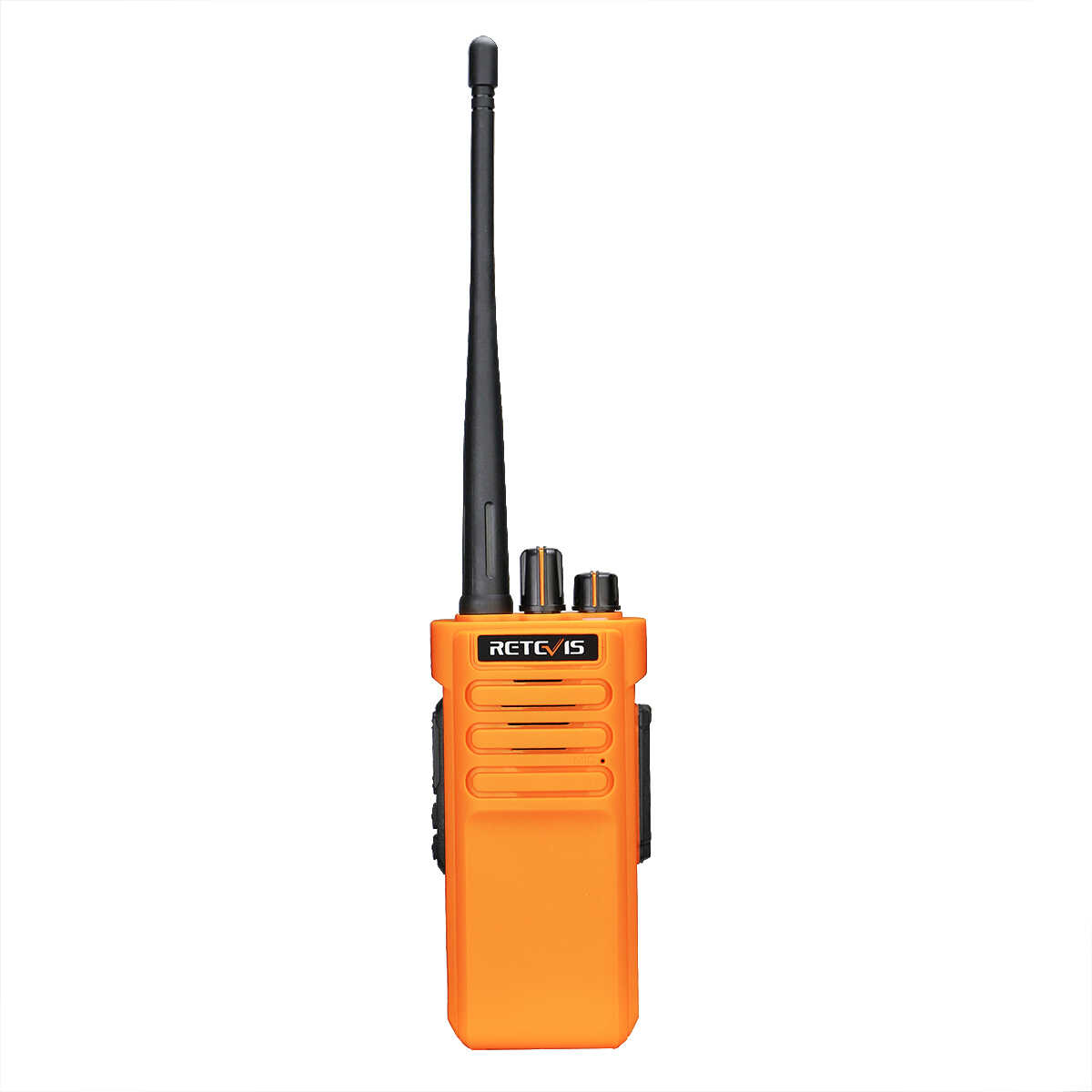
6.1 GMRS Recommendation: RETEVIS EZTalk 5
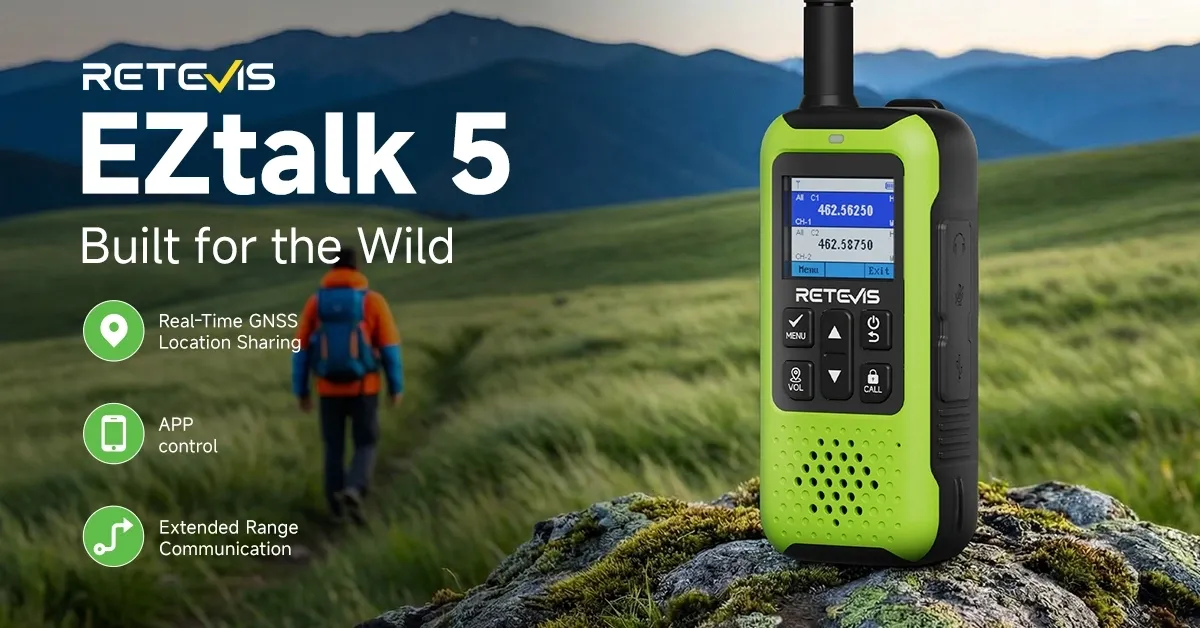
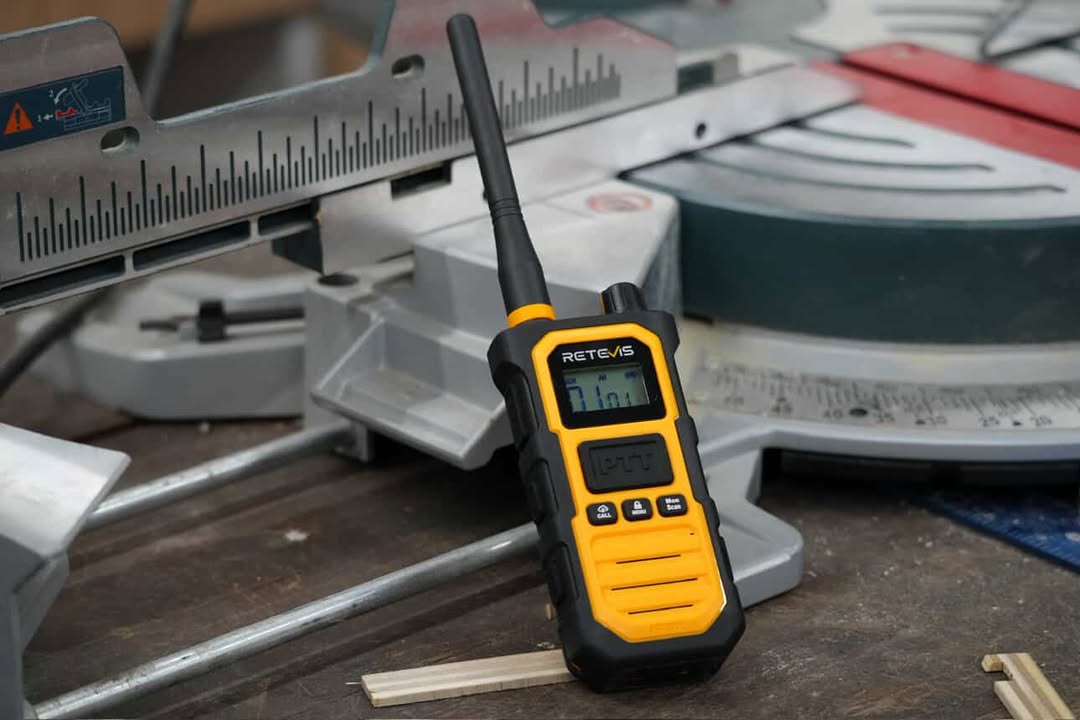
The EZTalk 5 is a GMRS-certified handheld radio designed for family outdoor activities, off-road convoys, and worksite communication.
Reliable Positioning
- Supports GPS + BeiDou dual-satellite positioning for fast location fixes in canyons, forests, and other challenging environments
- Works with a mobile app to view team members‘ locations and movement tracks — ideal for convoy travel and hiking
- Supports electronic fences, hand-drawn maps, and quick team grouping
Clear Audio
- 9-level squelch adjustment to filter background noise
- One-touch CTCSS/DCS tone control reduces interference from unrelated signals, providing cleaner channel access
- Microphone gain adjustment optimizes transmit signal stability
- 2-watt high-volume speaker ensures clear audio even in noisy environments
Communication Range
- Up to 56 kilometers in ideal line-of-sight conditions
- Approximately 10 kilometers in open areas
- 4-5 kilometers in urban environments
The EZTalk 5 is an excellent choice for GMRS users who want a license without an exam and a radio that works right out of the box.
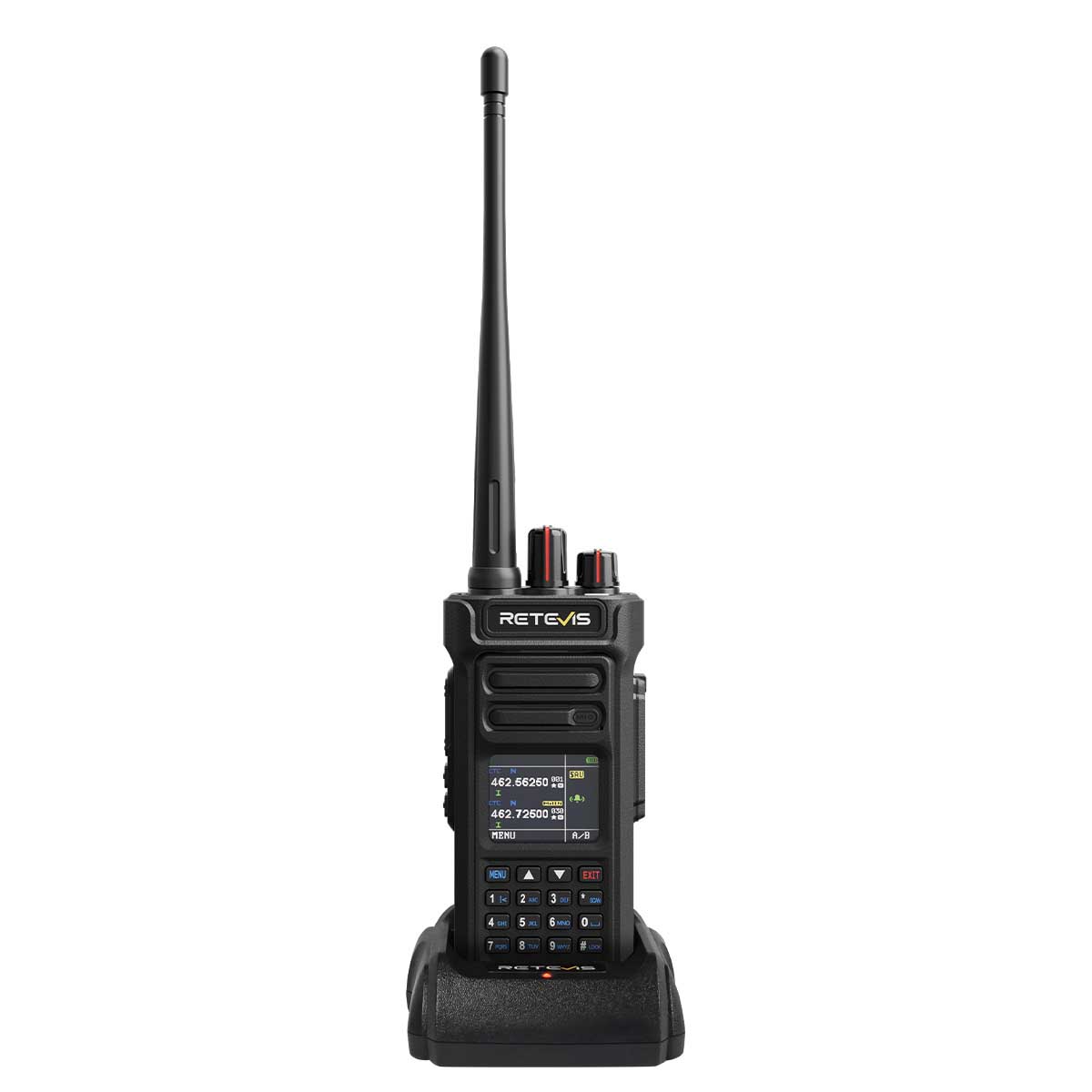
6.2 Ham Radio Recommendation: RETEVIS Ailunce HA2
The Ailunce HA2 is a handheld radio supporting Ham Radio VHF/UHF bands, designed for radio enthusiasts and emergency communication scenarios.
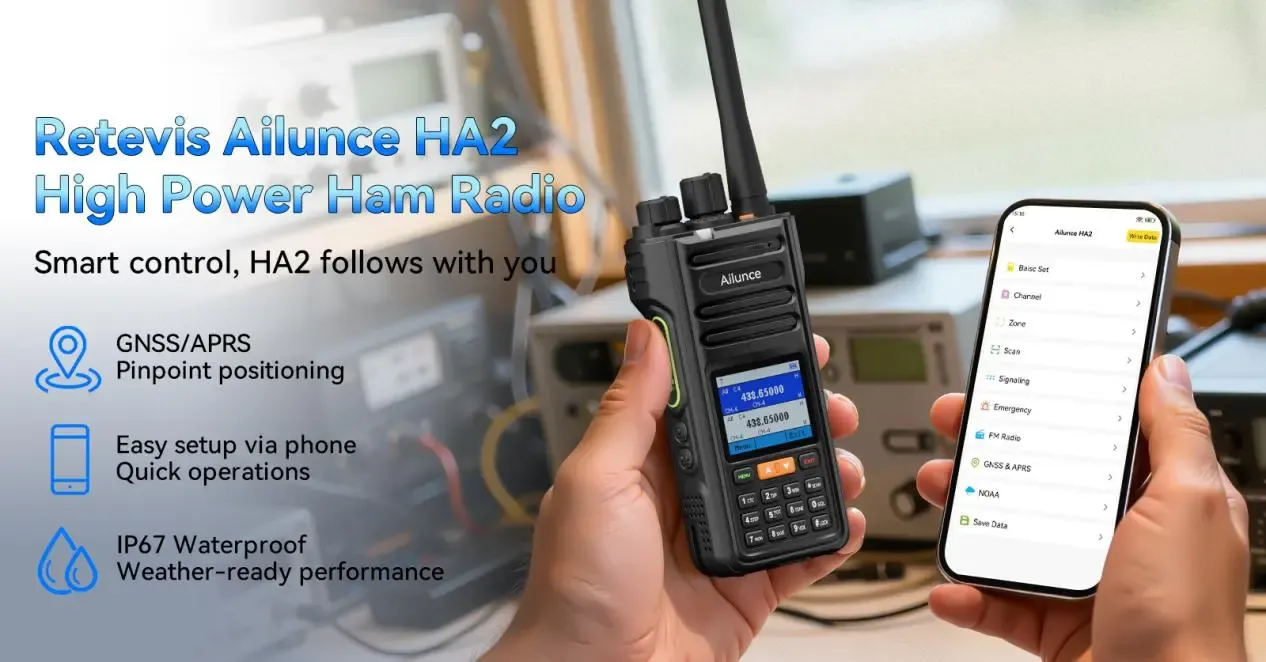
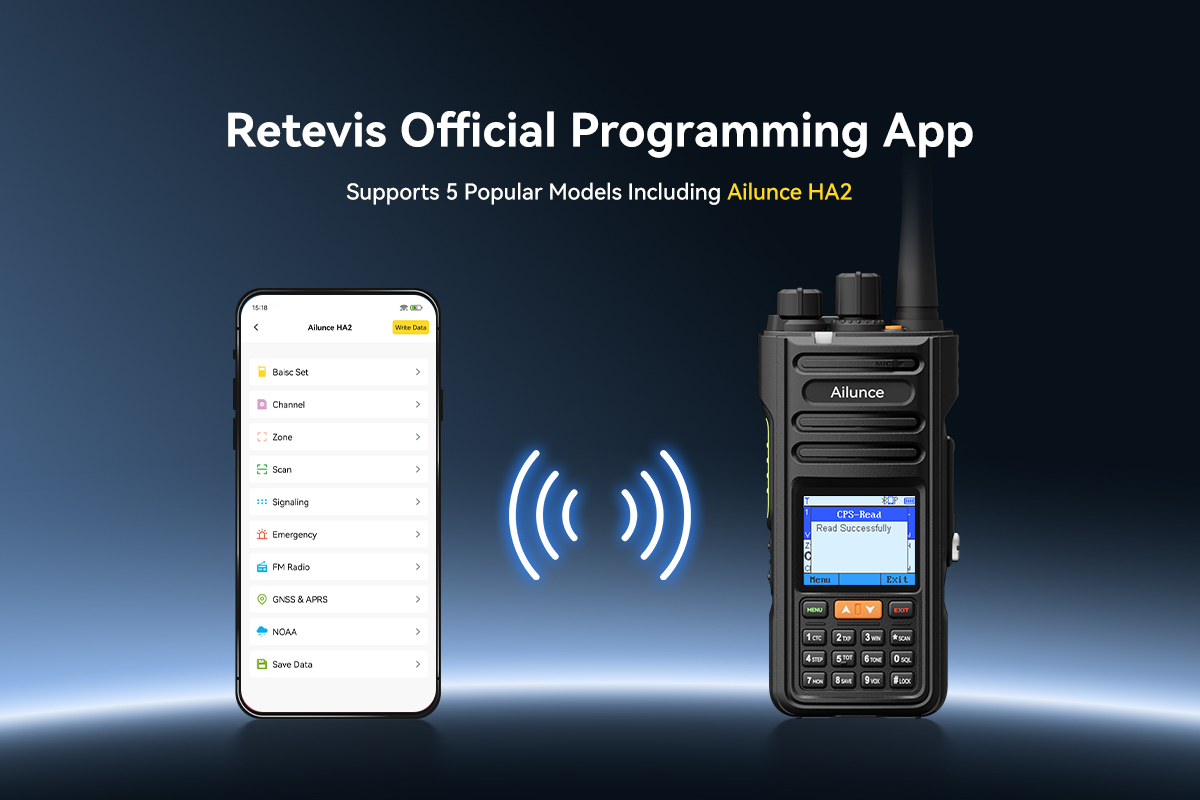
Smart Control & APP Programming
- Program frequencies via Bluetooth connection to a phone or tablet — no manual button pressing on the device
- Suitable for rapid field deployment with high programming efficiency and accuracy
- Supports secure pairing and data encryption to prevent unauthorized reading/writing
Bluetooth Audio Transmission
- Supports Bluetooth headsets and Bluetooth speaker mics for wireless communication
- Reduces cable clutter, ideal for long-duration wear
- Simplifies on-site wiring and deployment
Aviation Band Reception
- Receives aviation band frequencies, useful for weather information, air rescue, and other situational awareness
- Uses dedicated chips and filters for strong interference rejection
- Preset common aviation frequencies for one-touch switching
GPS / APRS / Compass
- GPS module supports location tracking and route logging
- APRS capability supports position sharing and short message broadcasting, suitable for convoys and emergency drills
- Built-in electronic compass assists with direction finding when GPS signals are weak or unavailable — ideal for hiking, bushwhacking, and rescue scenarios
The Ailunce HA2 is a strong option for Ham users who need APP-based configuration, Bluetooth audio, GPS/APRS position tracking, and an electronic compass for orientation assistance.
7. Summary
Ham Radio and GMRS serve different user needs. Neither is universally better — the right choice depends on your situation. If you need reliable short-distance communication with family and prioritize ease of use, start with GMRS. If you are interested in the technical aspects of radio communication or require longer-range capabilities, Ham Radio is worth considering. Many users choose to hold both licenses for maximum flexibility.
Leave a Reply






 Google
 Amazon
Comments
No data Yet