

Table of Contents
Keeping Oil & Gas Teams Connected: The Role of Explosion-Proof Radios in Hazardous Operations
- Posted by:Retevis
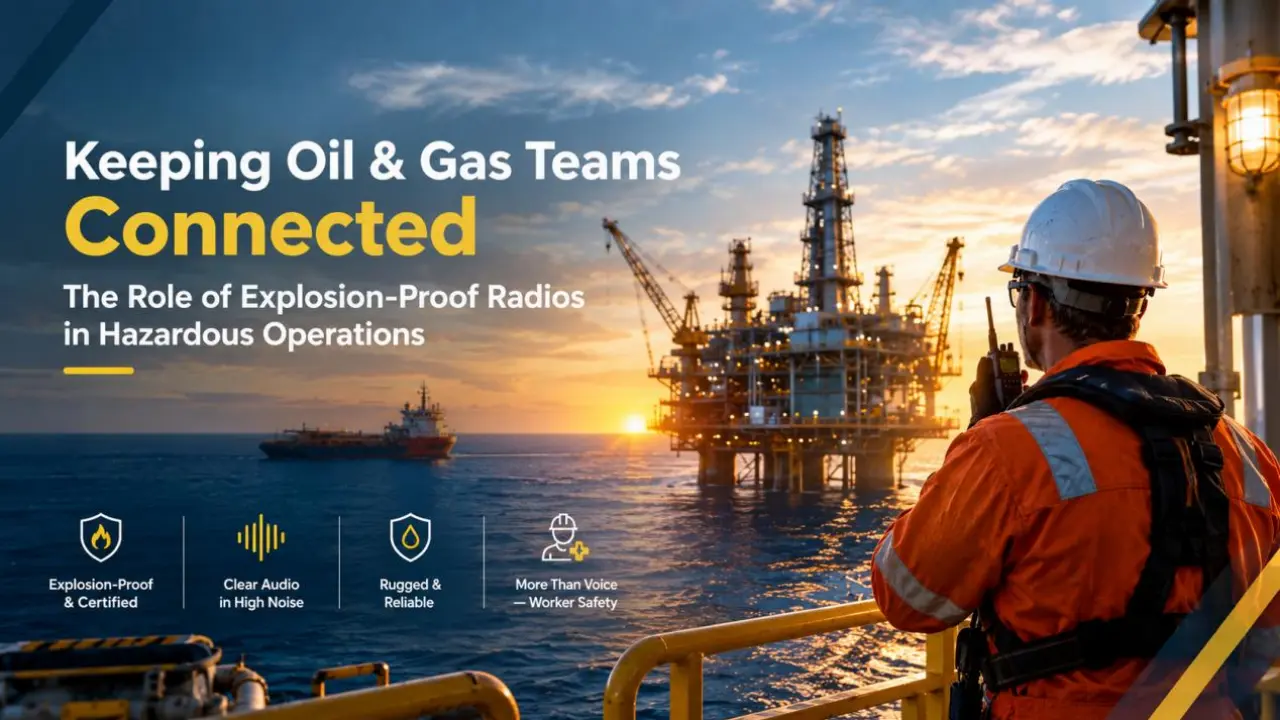
In the 2010 Deepwater Horizon disaster, the U.S. Department of the Interior investigation found that 12 minutes elapsed between the high gas alarms sounding and the general alarm reaching the full crew. The general alarm was not configured to trigger automatically when gas alarms activated. On a drilling platform losing control of a well, 12 minutes is not a delay. It is the gap between an organized response and a catastrophe.
Communication Challenges in Oil and Gas Operations
Oil and gas operations span some of the most communication-hostile environments on earth. Offshore platforms stretch across multiple decks and modules, with steel bulkheads and pipework that attenuate radio signals. Onshore refineries and pipeline compressor stations cover square kilometers of processing units, tank farms, and loading docks. Drilling rigs operate 24 hours a day across rotating shifts, with crews moving between well control, mud logging, crane operations, and maintenance.
Four challenges define communication in this industry.
Jobsite Scale
A single offshore platform can house 100 to 200 workers across multiple teams — drilling, production, maintenance, catering, and medical. Coordinating these groups requires instant, reliable voice contact across distances that cellular networks do not cover.
Hazard density
Wellheads, separators, compressors, and loading arms all handle flammable hydrocarbons. Any area where gas can accumulate is a classified hazardous area, and the equipment used there must meet specific explosion protection standards.
Ambient Noise
Turbines, compressors, drilling motors, and ventilation fans create ambient noise levels that make ordinary conversation impossible. Radio audio must cut through this background noise without distortion.
Urgency
A gas release, a well control event, a fire, or a man-down incident requires immediate communication across the entire facility. Delays of minutes — not hours — determine outcomes.
Why Reliable Communication Is Non-Negotiable
The Piper Alpha disaster in 1988, which killed 167 workers, remains the deadliest offshore oil platform accident in history. Subsequent investigations identified multiple communication failures. Shift handover procedures did not convey critical safety information about maintenance work. The public address system and control room were destroyed in the initial explosion, leaving no means of coordinated evacuation. Connected platforms continued pumping hydrocarbons to Piper Alpha for nearly an hour after the first explosion because there was no automatic isolation protocol.
More recently, the U.S. Bureau of Safety and Environmental Enforcement (BSEE) has cited communication failure as a direct cause in multiple incident investigations. A 2025 BSEE safety alert documented a valve maintenance injury caused by miscommunication. A worker began work without supervisor approval or a clear discussion of the scope and hazards. The worker assumed the line was depressurized based on earlier comments.
Regulators have codified these lessons. OSHA's 29 CFR Part 1910 and API RP 54 specify electrical equipment requirements in classified areas on drilling rigs and well service operations. BSEE's 30 CFR Part 250 and SEMS requirements mandate that offshore facility operators maintain written procedures for hazardous area communication control, including radio silence or intrinsically safe radio requirements during well control events.
What Hazardous-Area Communication Equipment Must Deliver
A radio for oil and gas operations must meet four requirements simultaneously.
Certified for the hazardous area
Standard consumer and commercial radios produce internal electrical arcs and can reach surface temperatures capable of igniting hydrocarbon vapors. Intrinsically safe radios limit electrical and thermal energy to levels below ignition thresholds, even under fault conditions.
Clear audio in high-noise environments
Compressors, turbines, and drilling equipment generate noise that masks ordinary radio audio. Receivers with high sensitivity and strong signal selectivity, paired with digital noise cancellation, ensure that instructions are heard the first time.
Survive the physical environment
Offshore platforms face salt spray, humidity, and drops from height. Onshore sites deal with dust, mud, vibration, and extreme temperatures. IP68 dust and water protection, impact-resistant housings, and military-grade durability testing are baseline requirements, not optional features.
Support worker safety beyond voice
Lone workers, confined-space entries, and night shift inspections create scenarios where a worker may be incapacitated without anyone knowing. Man-down detection, lone worker monitoring, and emergency alarms turn the radio into a safety device that triggers help automatically.
Retevis E1: Explosion-Proof Communication for Oil and Gas Sites
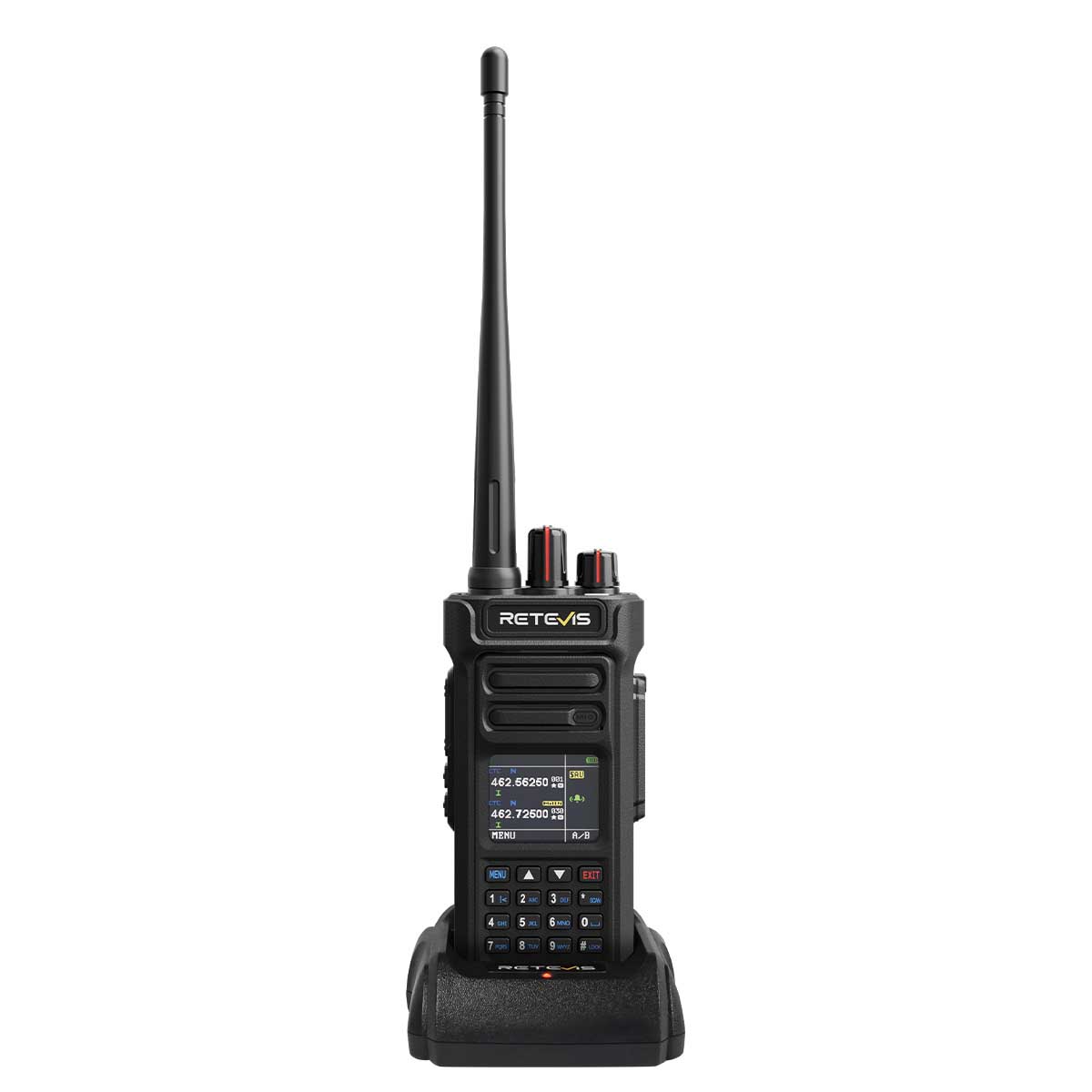
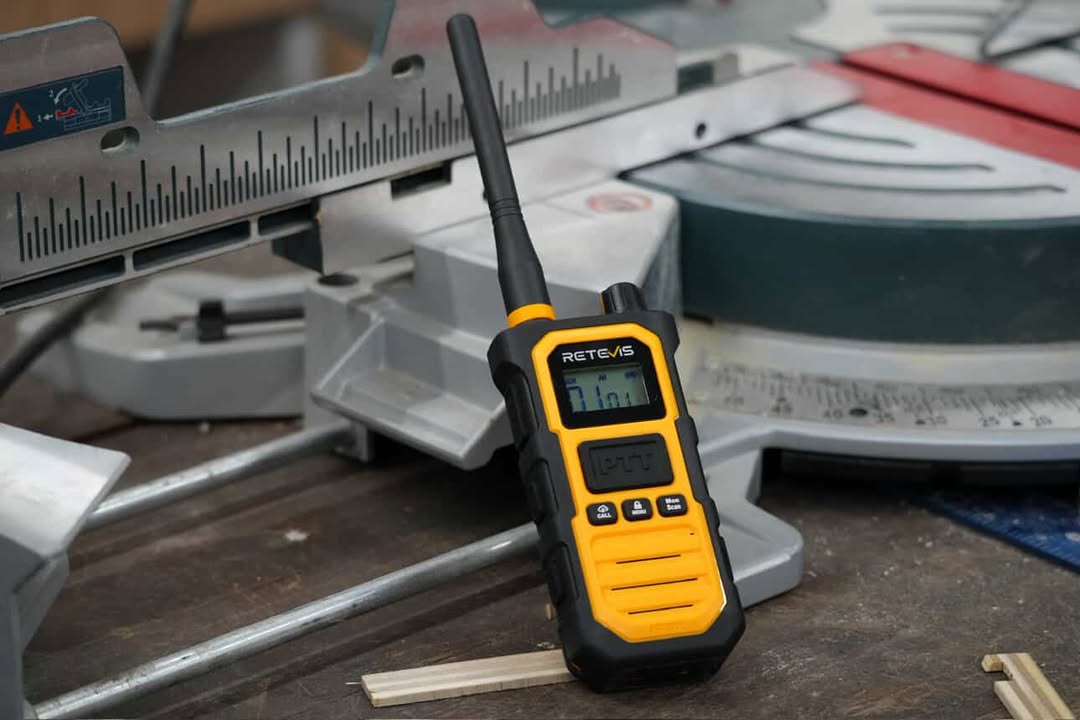
The Retevis E1 is built for the conditions described above. Its intrinsically safe construction limits electrical and thermal energy to prevent ignition in both gas and dust hazardous atmospheres. A superheterodyne receiver provides higher sensitivity and stronger selectivity than standard radio architectures, reducing cross-channel interference in facilities dense with steel structures, pipework, and electromagnetic noise. On a drilling floor or near a compressor bank, this means a shut-in instruction or a gas alert reaches the intended recipient without distortion or dropout.
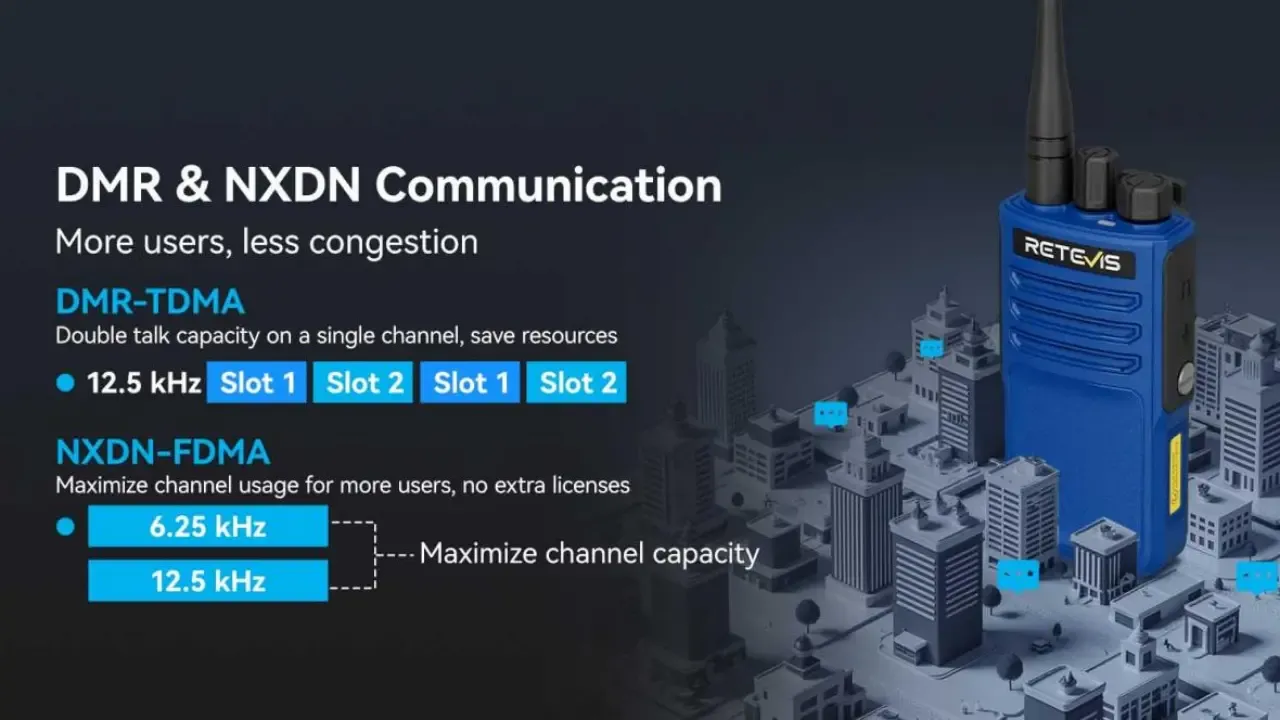
The E1 supports both DMR and NXDN digital modes alongside analog, which matters for operators running mixed fleets or migrating from legacy analog systems. Digital mode includes noise cancellation that improves voice clarity in high-noise production areas.
Three alarm functions — emergency alert, lone worker monitoring, and man-down detection — address the safety requirements of solo inspections and confined-space work. If a worker on a remote pipeline section or inside a separator vessel falls or becomes unresponsive, the man-down alarm triggers automatically and alerts the team.
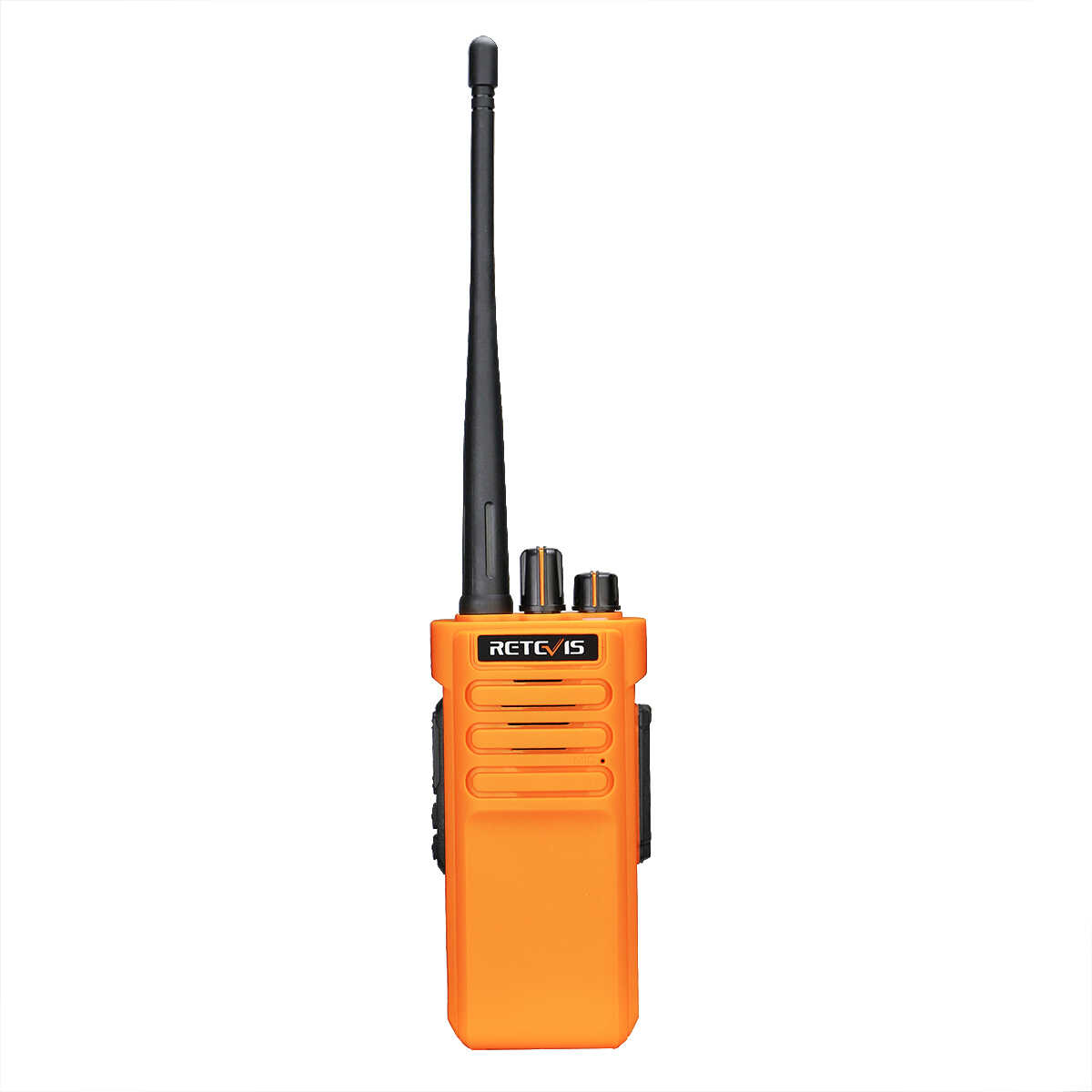
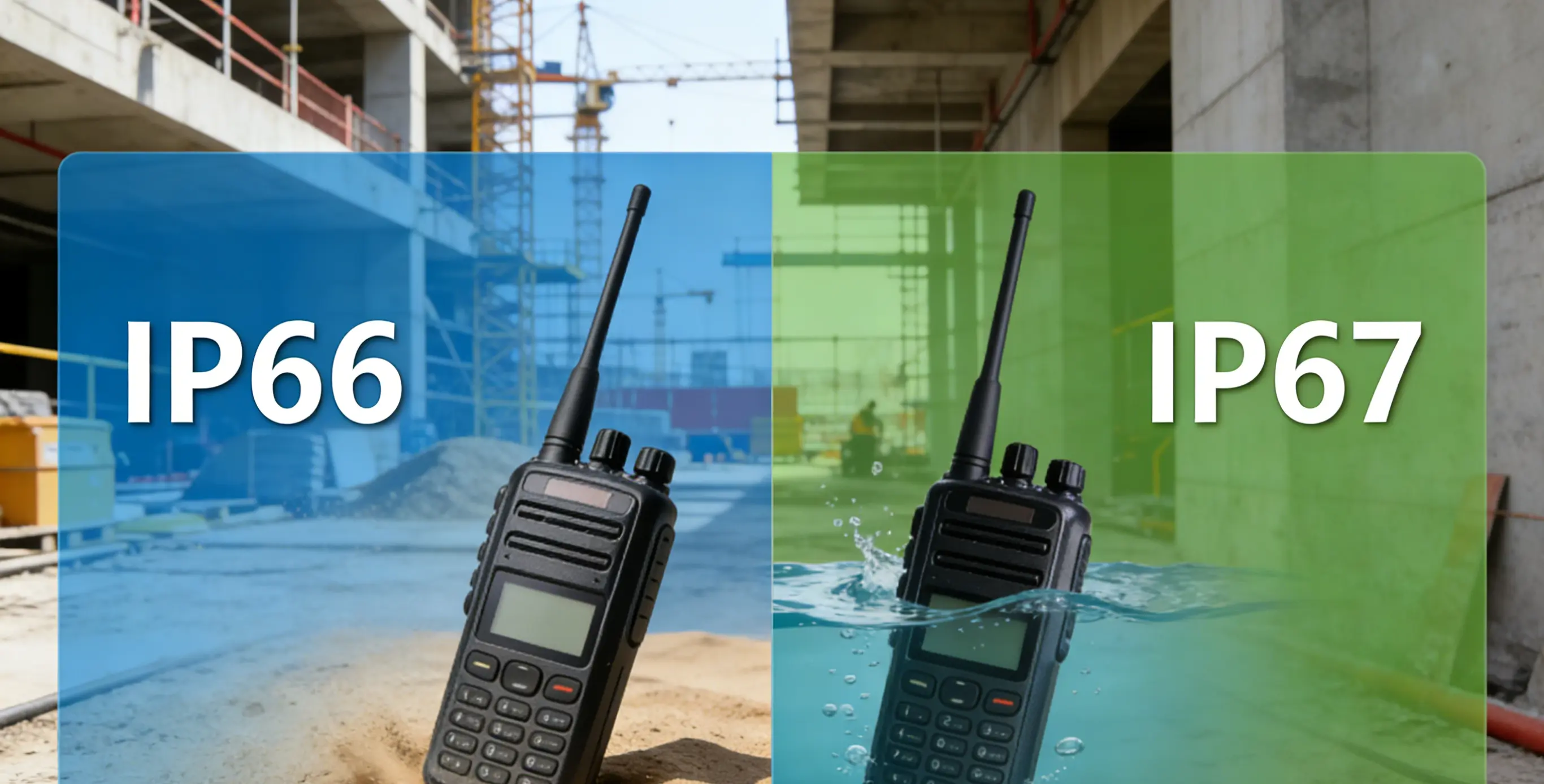
An IP68 rating means the radio is fully dust-tight and submersible to one meter for one hour, handling the salt spray, rain, and mud common to oilfield environments. The ABS and PC housing resists drops and abrasion, and a 2450mAh battery delivers over 24 hours of continuous use — enough for a full shift plus overtime without a mid-shift charge.
Retevis E2: ATEX and IECEx for Multinational and Higher-Certification Sites
For operators working across borders or on projects requiring international certification, the Retevis E2 offers ATEX and IECEx certification — the two most widely accepted explosion protection standards globally. This matters for multinational oil and gas companies, engineering contractors, and service firms that move equipment between jurisdictions.
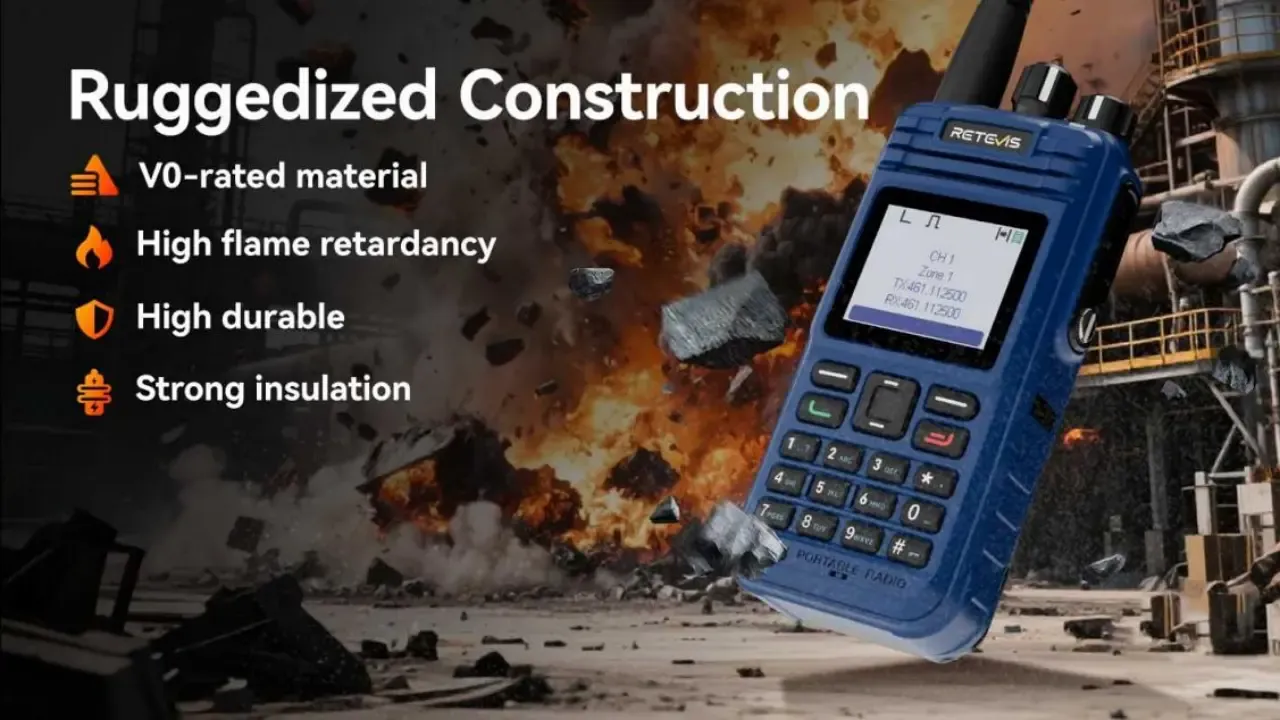
The E2's certification covers IIC gases, the highest gas group, which includes hydrogen and acetylene, broadening gas-group coverage in Zone 2 areas where IIB coverage is not sufficient. Built-in GPS adds location data to emergency and man-down alarms — on a platform spanning multiple decks, knowing where an injured worker is can save critical minutes. AES256 encryption protects voice communications from interception on sites handling proprietary processes.
The E2 also meets MIL-STD-810G for shock, vibration, and temperature resistance, paired with an IP68 rating. It is a complementary option for sites that specifically require ATEX/IECEx certification, IIC gas coverage, GPS, or encryption — not a replacement for the E1.
Conclusion
Reliable communication is infrastructure in oil and gas operations, not a convenience. The Deepwater Horizon and Piper Alpha investigations, along with ongoing BSEE incident reports, show that communication failures contribute directly to injury, loss of life, and environmental damage. Regulators on both sides of the Atlantic have responded with mandatory requirements for certified equipment and written communication procedures in hazardous areas.
The Retevis E1 provides intrinsically safe, gas-and-dust certified communication with superheterodyne reception, dual-mode digital compatibility, triple-alarm worker safety, and 24-hour battery life for oil and gas sites. The E2 extends the lineup with ATEX and IECEx certification, IIC gas coverage, GPS, and encryption for multinational and higher-certification operations.
Matching the right certified radio to the specific hazard classification and operational environment is a safety decision. Explore the Retevis E1 and E2 product pages, or contact the Retevis team to discuss certification requirements for your site.





 Google
 Amazon
Comments
No data Yet