
Table of Contents
Outdoor Gear Guide: Why a Professional Two-Way Radio Is Essential for Any Trip
- Posted by:Retevis
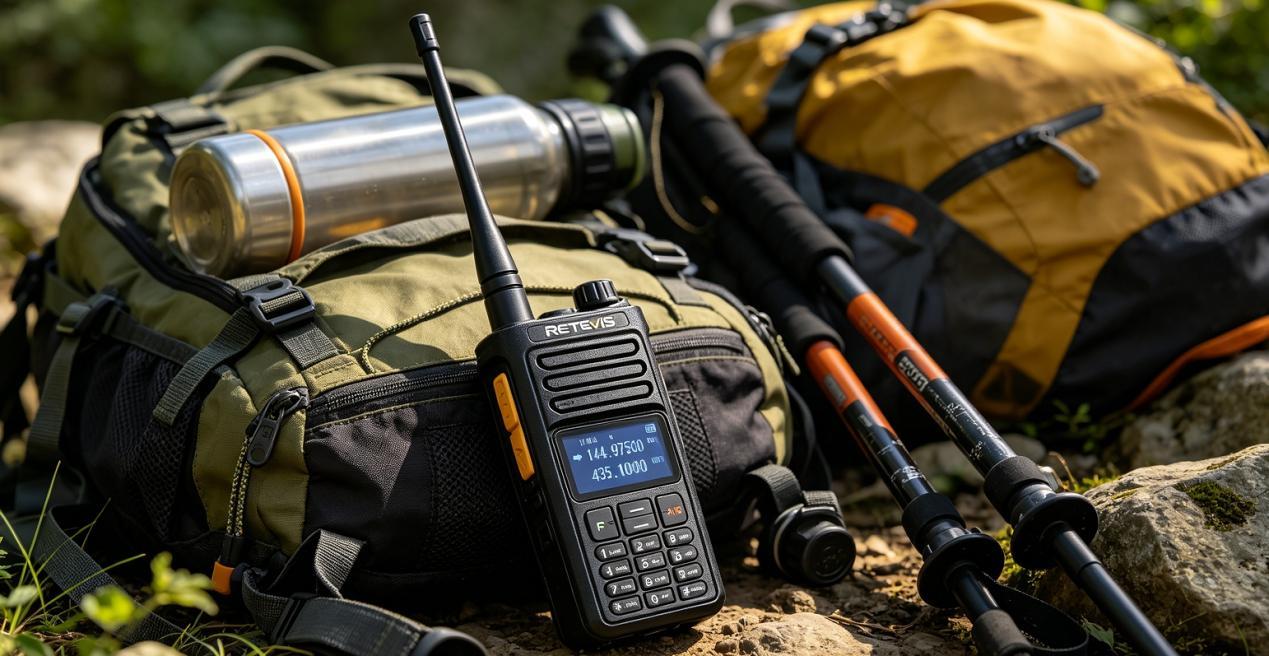
The Real Outdoor Communication Problem
Most outdoor packing lists focus on shelter, sleep, food, tent, sleeping bag, stove, water filter, headlamp and first aid kit. A two-way radio is rarely on that list. Many hikers believe a smartphone is enough. But a phone is not an outdoor tool. It is a city tool.
Once you leave the trailhead by 30 minutes, cellular signal often disappears. In canyons, behind ridges, or deep in forests, your phone becomes a camera and a GPS receiver at best. It cannot call for help. It cannot reach your team members who walked ahead or fell behind.
Why Outdoor Communication Is Different from City Use
When people think of two-way radios, they imagine construction sites or retail stores – short distance, flat ground, clear line of sight. Outdoor communication is completely different. Outdoor terrain creates three specific challenges:
Line of sight is broken – Hills, trees, rock walls block signals. A radio that works for 5 km in a city may only reach 500 meters in a forest.
Distance stretches unpredictably – A group can spread from 200 meters to 2 kilometers within an hour, depending on pace and trail conditions.
No infrastructure exists – No repeaters. No cell towers. No Wi-Fi. Your radio is the only link between team members.
This is why experienced outdoor leaders do not rely on consumer “walkie talkies.” They use professional equipment designed for the outdoors – with greater reliability and practical features.
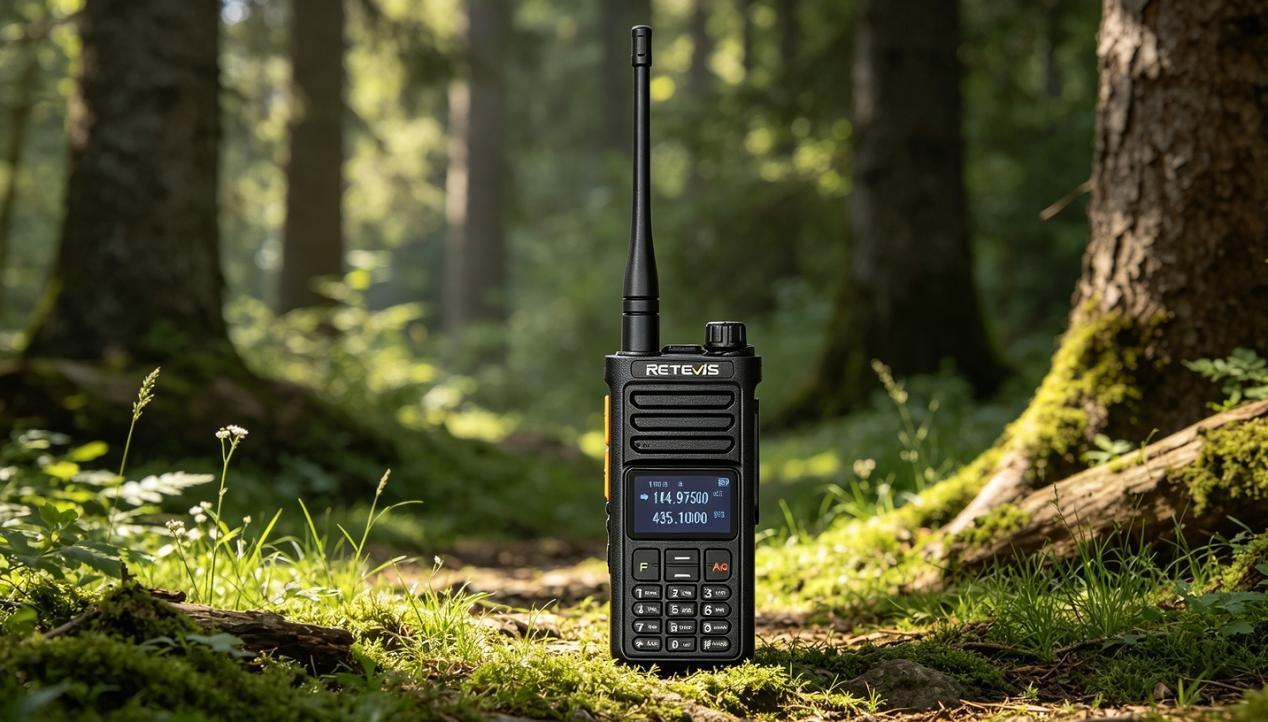
What a Radio Must Do for the Outdoors
To close the outdoor communication gap, a radio must solve five real-world problems that occur on every multi-hour trip:
-
Overcoming Terrain Between Front and Rear Groups
The front group may be on one side of a ridge. The rear group on the other. Direct radio contact fails. What is needed: A way for one radio to receive a signal and re-transmit it on a different band – automatically. This is called cross-band repeating.
-
Changing Channels Without a Computer
Outdoor plans change. Maybe you meet another team and need to share a frequency. Maybe a ranger gives you a temporary channel. What is needed: Programming that does not require a laptop, a special cable, or driver software. Ideally, programming from a phone.
-
Keeping Batteries Charged with Minimal Gear
Every extra cable is extra weight. Every unique charger is something to forget. What is needed: A universal charging port – the same one your phone uses – so one power bank serves all devices.
-
Knowing When Weather Turns Dangerous
In the backcountry, you cannot check a weather app. Storms arrive with little warning. What is needed: Automatic reception of official weather alerts, giving at least 30 minutes to find shelter.
-
Knowing Who Is Talking, Instantly
When visibility is low – fog, dusk, dense trees – you cannot see who is calling. What is needed: Each transmission shows the caller’s name. And two dedicated talk buttons for two priority channels.
These five needs come directly from experience – the first “E” in Google’s EEAT framework. They are not marketing claims. They are failure points observed on real trails.
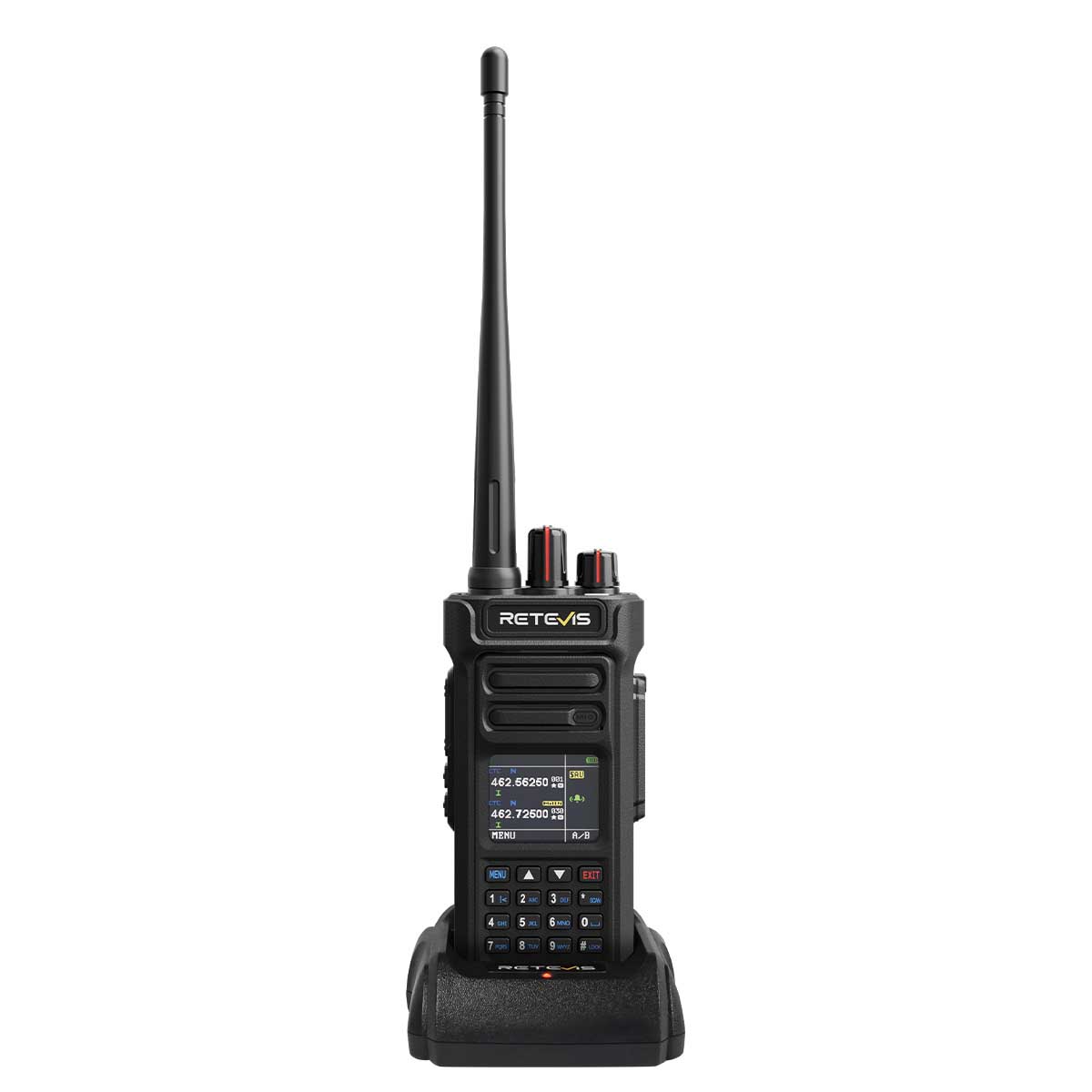
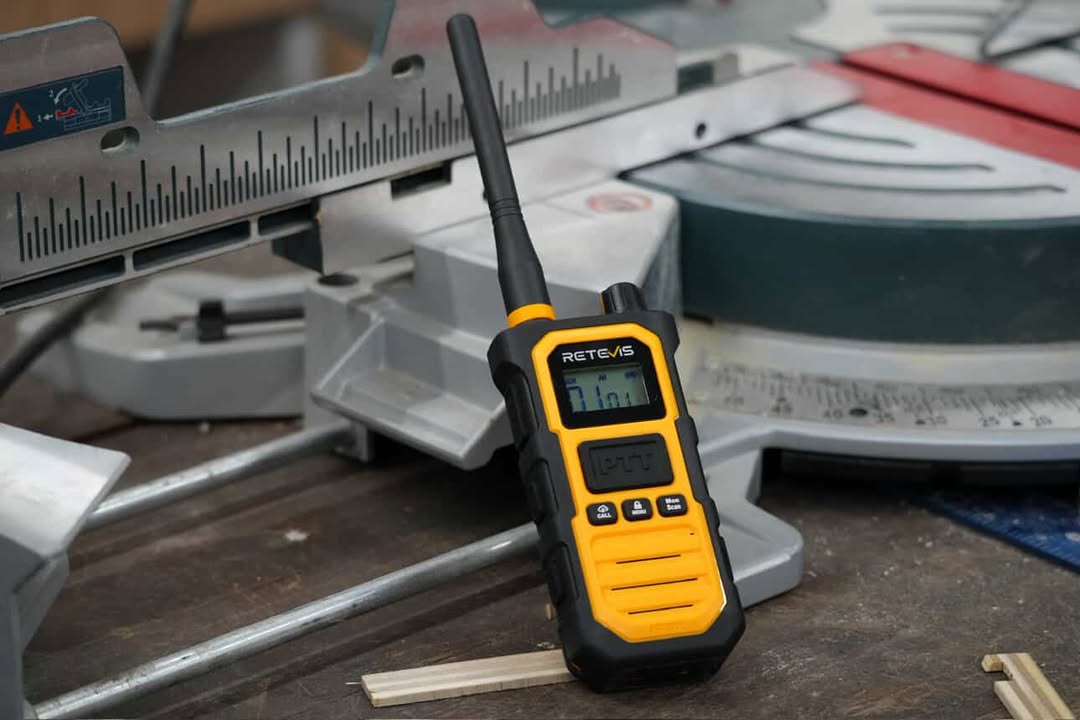
The Two Way Radio Product as a Solution: RETEVIS RA89R
RETEVIS RA89R is not a general-purpose radio. It is designed specifically for the five problems described above, with five directly corresponding features:
Cross-band repeater – When front and rear groups are separated by a ridge, it automatically receives UHF signals and retransmits on VHF, making terrain no longer a barrier.
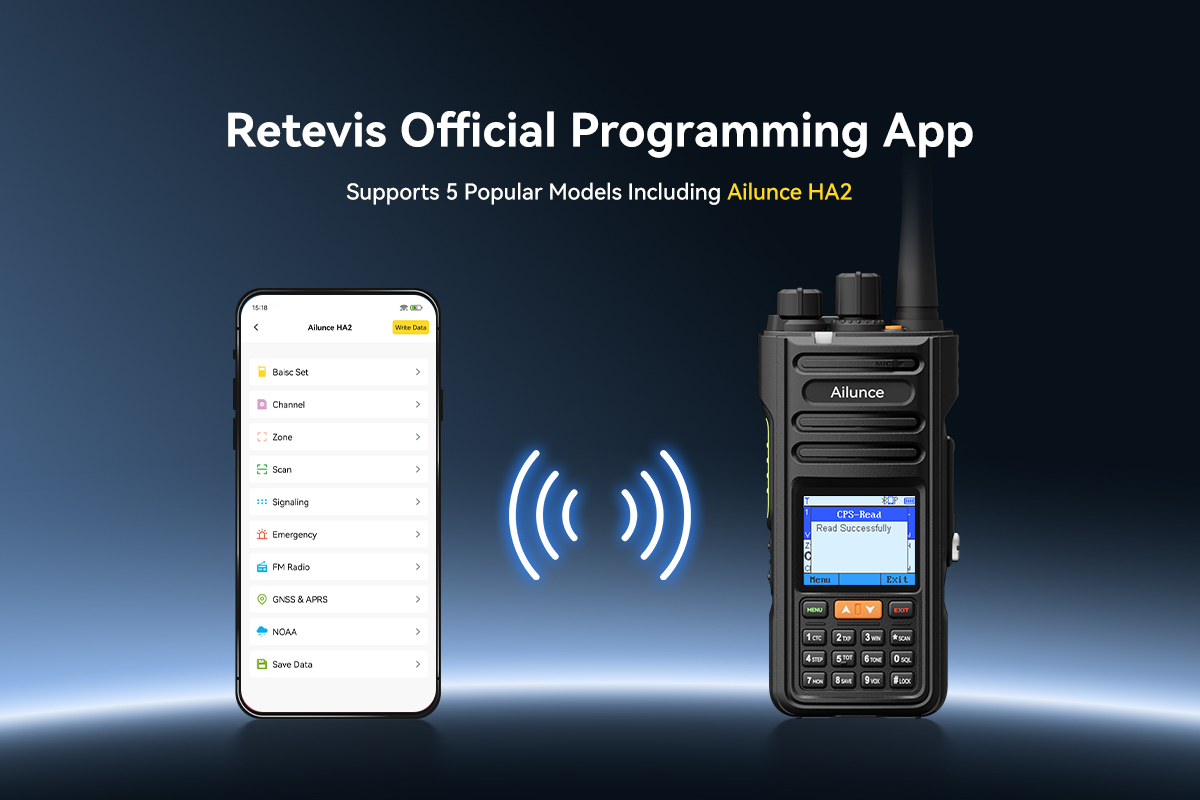
Smartphone programming – No computer or cable needed. Program via Bluetooth app with a few taps, or even by voice command. Configure before departure, adjust on the go.
Type-C port – Charge and program using the same cable as your phone. 3-hour fast charging delivers 15 hours of use. One less cable to carry.
Weather alert – Automatically receives official weather warnings, giving the team a 30-minute heads-up before severe weather arrives – enough time to find shelter.
ANI + Dual PTT – Every transmission shows the caller’s name on screen, no guessing who is talking. Dual PTT switches between two priority channels instantly for faster communication.
These features directly address real outdoor communication gaps. The RA89R does not ask “what else can a radio do?” It solves the specific weaknesses that cause communication to fail in outdoor environments.
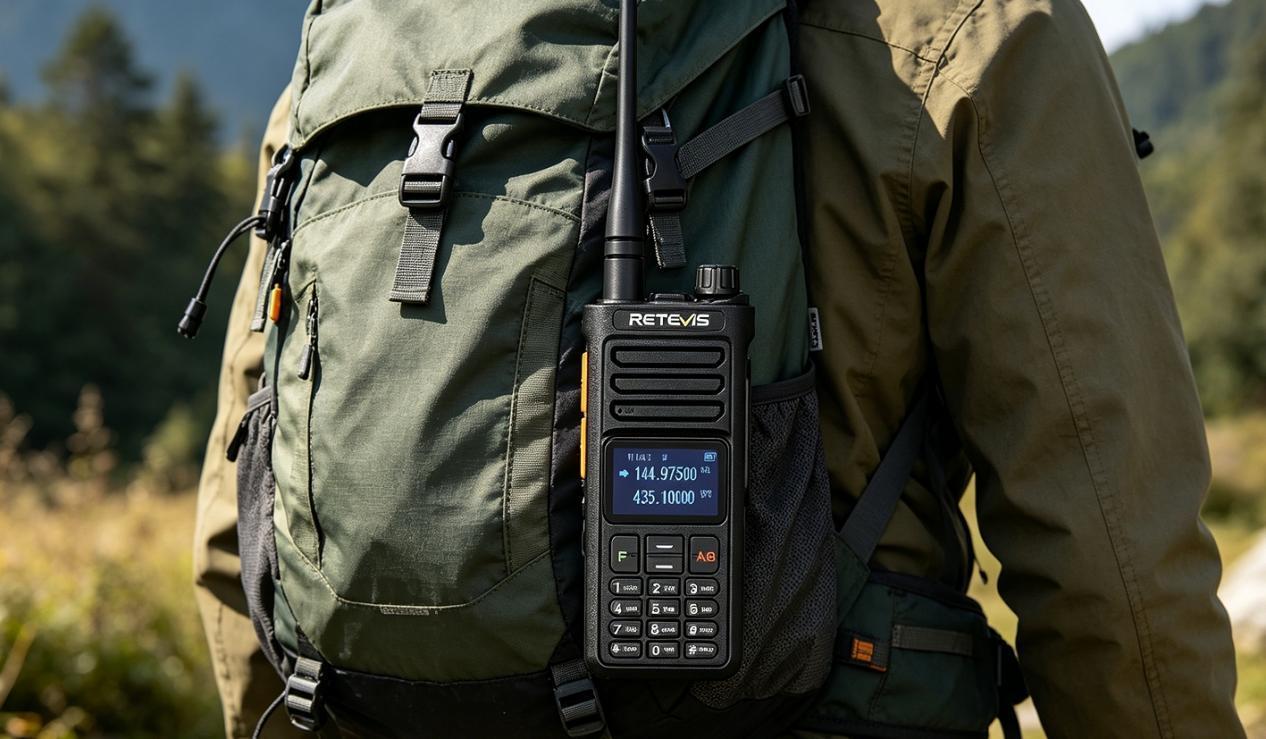
What Your Outdoor Gear List Should Include
Every outdoor gear list should be split into two categories: comfort items (better tent, warmer sleeping bag) and safety items (first aid, navigation, communication).
A professional two-way radio designed for the outdoors belongs in the safety category. Not because you will use it every trip, but because when you need it, nothing else works.
Before your next trip, check your list. Do you have a solution for the five outdoor communication gaps? If not, consider the RETEVIS RA89R. It is built for the 60% – the real outdoor conditions that most radios ignore.



 Google
 Amazon
Comments
No data Yet